How scientists plan to stop deadly doomsday asteroid from hitting Earth
Astronomers have frequently detected asteroids ranging from tens to hundreds of metres wide
_updates.jpg)
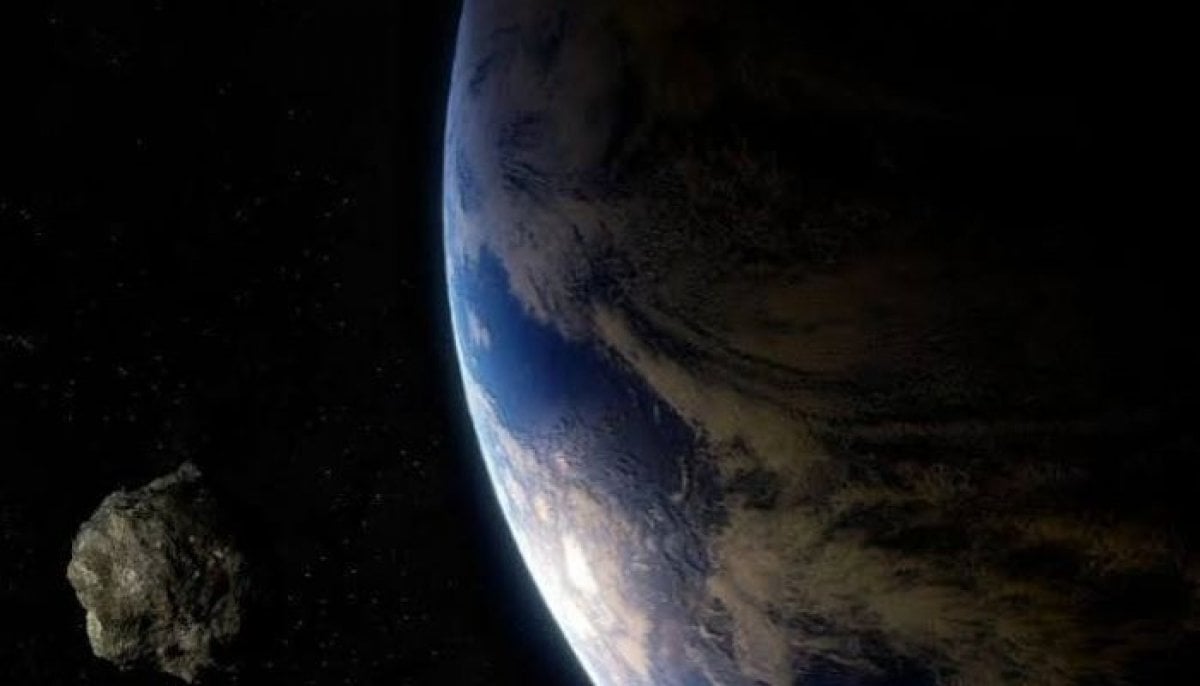
Chinese scientists have reportedly discovered the most effective way to destroy a doomsday asteroid aimed at protecting Earth from destructive effects of collision.
For human civilization, asteroids pose a significant threat, responsible for causing mass extinctions and catastrophic environmental damages.
In recent years, astronomers have frequently detected asteroids ranging from tens to hundreds of metres wide as they swept dangerously close to Earth.
According to the researchers at the China Academy of Launch Vehicle Technology, when it comes to destroying or deflecting large asteroids, “nuclear detonation” is the most effective method.
The researchers are planning to bury and detonate a nuclear device inside the asteroid in the best way to shield the planet. Especially in short warning times, this method seems more feasible as argued by the team in a study published in Space: Science & Technology. Because NASA's Dart mission did not achieve the deflection within a short time frame.
Here is the downside of this methodology as one cannot precisely assess the impact of nuclear detonation on an asteroid. The Chinese scientists have improvised this by simulating a planetary defense method involving a spacecraft.
The spacecraft will release a penetration device to create a deep crater on an asteroid followed by guiding a nuclear device into the crater for detonation.
The blast could be effective against the small asteroids as an explosion equivalent in size to 200 Hiroshima bombs can completely blast apart an asteroid approximately 100 meters across.
For a kilometer-scale asteroid, a deep crater detonation at 20 meters could achieve a velocity increment exceeding 30 centimeters per second away from Earth.
According the scientists, this method “can provide references for the engineering design of defence against large near-Earth asteroids.”





-
 Elon Musk, SpaceX eyes 1 million satellites for orbital data centers
 -
 Small asteroid to create fireball over ocean near Australia today: What to know
 -
 AI model flags possible cyclone near Hong Kong
 -
 First private rocket reaches orbit from Continental Europe as Isar Aerospace launches Spectrum
 -
 49 years of Voyager 1: The epic journey that took us beyond the solar system
 -
 Earth's next supercontinent could trigger mass extinctions, says scientists
 -
 China warns moon could become Earth’s next battleground
 -
 How was the Moon formed? Scientists uncover new clues in recent breakthrough
-
 Scientists just discovered diamonds can generate electricity
 -
BepiColombo spacecraft enters its biggest test near Mercury
-
NASA Hubble spots strange 10-sided ‘decagon’ swirling around Saturn’s south pole
-
Rare population of world's heaviest parrot 'Kakapo' soars past 300 after record-breaking breeding season