How Pokémon Go helped train AI with potential military drone applications
Pokémon Go could potentially help military drones find their location on the battlefield
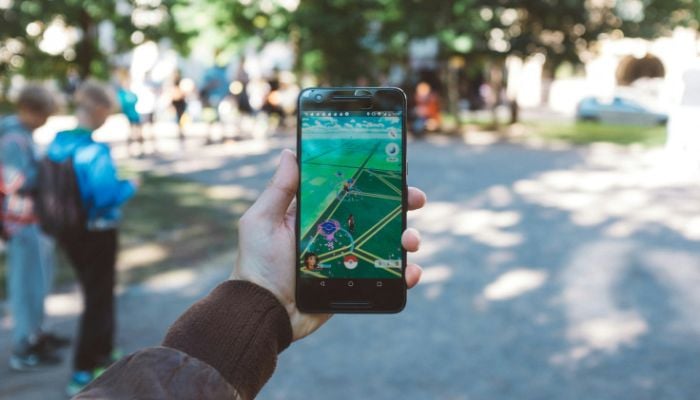
According to an investigative report by a Dutch newspaper, new details reveal that 30 billion environmental scans were captured by Pokémon Go players who used to train AI models, potentially helping military drones find their location in war zones.
Pokémon Go is primarily a reality mobile game that helps players to catch Pokémon in the real world using their mobile phones.
The announcement reads: “When satellite signals are compromised, autonomous systems and field teams lose their ability to orient, coordinate or maintain accurate situational awareness.”
The prominent video game company, Niantic, which created Pokémon Go in collaboration with Nintendo, collected geographic scanning data before the company sold its gaming division in 2025.
The archival scans were used to train the company’s AI models to determine and fill in blanks spaces in the physical world, according to details revealed by DroneXL last week.
Vantor’s chief product officer, Peter Wilczynski said: “The modern battle space is going to be complete with different systems, and you’re going to want to upgrade those systems quickly bringing new hardware online faster than new software.”
On the other hand, Tom Sulston, head of policy said: “While they may have disclaimers in their Ts&Cs, we know that most people don’t read vast legal documents when they want to play a video game,” he said.
“We need regulators to focus on ‘best interests of the user’ or ‘fair and reasonable’ tests to keep users safe from exploitation like this.
“While we’re waiting for the government to catch up, it’s important that we remember that ‘free’ software services often treat the user not as a customer but as the product to be sold.” It is worth mentioning that the company reported more than 800 million downloads globally in 2018.
Vantor previously announced a deal with the US Army of up to $127million for terrain software. It is pertinent to mention that Niantic spun off its gaming arm to Saudi Arabian-owned Scopely for US $3.5billion in 2025.






-
 Is Nvidia's OpenAI financing deal circular risk?
 -
 Meta ran 7,600 China-linked AI nudify ads, report says
 -
 Why Sam Altman thinks AI singularity isn't as ‘terrifying’ as other tech moguls fear
 -
 Nvidia invests $1 billion in South Korea's Naver to expand AI infrastructure
 -
 Nvidia in talks to back OpenAI with $250 billion financing guarantee for mega data center: WSJ
 -
 Three levels of AI leadership every CEO needs
 -
 Global semiconductor market set to pass $1tn in 2026
 -
 Britain bets on chips to power its AI ambitions