How Elon Musk fueled investor demand for SpaceX stock despite persistent risks
Early investors used personal connections and restricted financial disclosures

Space X’s CEO Elon Musk has been careful about who he allows to invest in the company, which makes its highly awaited stock market debut this week. The company is expected to list a market valuation of $1.75 market trillion, marking one of an astronomical rise from its roughly $30 billion valuation in 2018.
According to early investors, they have seen investments skyrocket. It is crucial to note that the upcoming IPO represents a massive $75 billion offering.
The 54-year-old is completely controlling the process. Meanwhile, prominent Wall Street banks-including Goldman Sachs and Morgan Stanley were also told how to market the stock, whom to market it to, and what specific order sizes they needed to be filled.
Sources weigh in on that the banks signed on to underwrite the IPO without even being told what they would be paid.
When we invested, it was straight up: Elon controls everything, and you're not going to know anything unless you put in $250 (million),” said Ross Gerber.
SpaceX presents a myriad of risks to those who buy its public stock; meanwhile weak corporate governance is entirely in Musk's control, as well as hard to evaluate goals such as colonizing Mars, and putting data centers in space. The upcoming IPO looks like it will bring a massive windfall for SpaceX’s early investors and employees.
The fund manager who acquired Rive’s stock for $10 million is now sitting on more than $200 million in gains. He was of the view that he would speak freely when he was first introduced as a possible investor for the company.
It has been observed that such tight vetting is now becoming more common as private companies grow big and gain market dominance.
SpaceX maintained a tight ownership structure for a company of its size. According to Reuters, while they could not determine how many shareholders are on SpaceX’s official finances, the corporate industry can have at most 2,000 shareholders before federal regulations weigh in.
In this regard, Bradford Briner, North Carolina said in an interview: “I can see both sides of this. But getting Elon Musk has been a mistake, in hindsight.”
A common IPO suggests that the exchange collects incoming buy and sell orders before trading begins, which allows investors to cancel orders repeatedly and place new ones at different prices.
SpaceX has turned the conventional process on its head while allocating their financial commitments and geographies in what market participants described as a “lane structure.” This setup directed firms to focus on defined parts of the offering rather than competing against the entire level on a larger level.


-
 ‘It's time to say goodbye’: Gary Stevenson pauses YouTube channel amid mental health struggles
 -
 US-Russian space crew returns to Earth after eight-month mission on the International Space station
 -
 Lamine Yamal’s girlfriend Ines Garcia hits 4 million Instagram followers after Spain’s World Cup win
 -
 Are we closer to a real-life ‘genie’ that grants any wish: Here's what Sam Altman thinks
-
 UK lawmaker sues Musk's xAI to stop Grok generating sexualised images
 -
 Apple unveils Klarna-powered ‘Apple Upgrade’ plan for iPhone, Mac and iPad in US
 -
 Apple dethrones Nvidia as world's most valuable company: Will it last?
 -
 Google hit with new legal threat after record $1 billion EU fine
 -
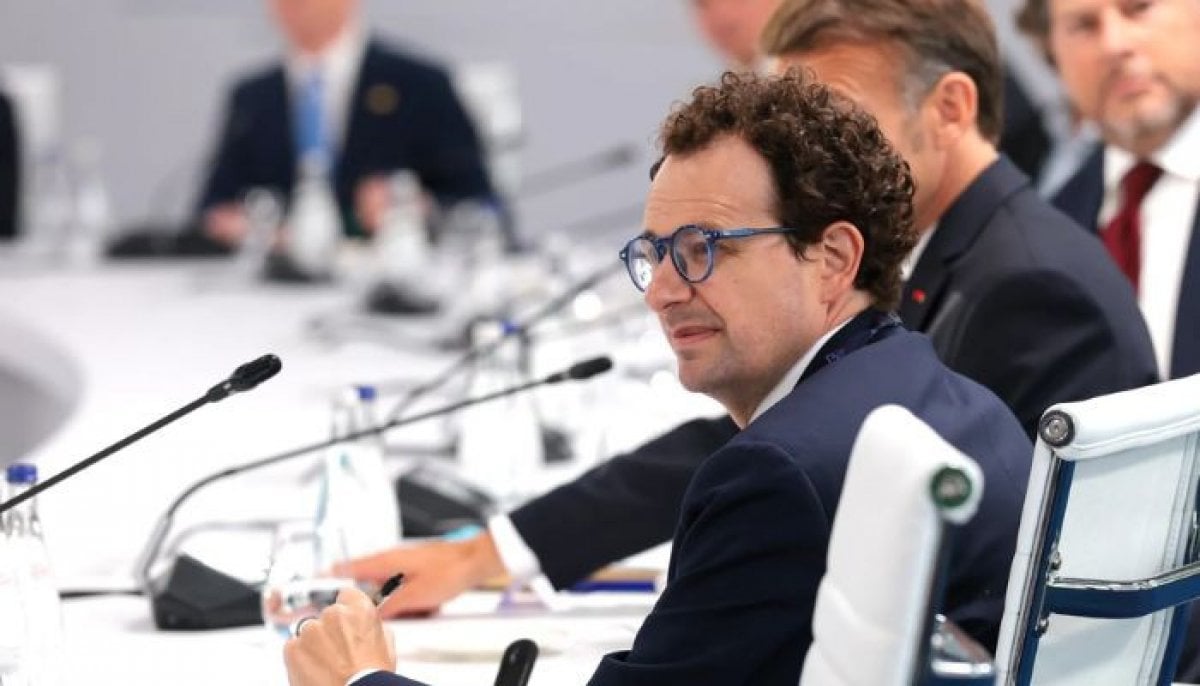 Anthropic CEO Dario Amodei breaks silence on open-weight AI ban debate
 -
 Meta accused of disregarding teen harm research in landmark child safety trial
 -
 China reaches major milestone as domestic DUV chip tools enter mass production
 -
 China vs US tech rivalry escalates as Beijing accuses Washington of ‘AI hegemonism and distillation’