China reaches major milestone as domestic DUV chip tools enter mass production
The move marks a major step in China's push for semiconductor self-reliance as it seeks to reduce dependence on foreign chipmaking technology
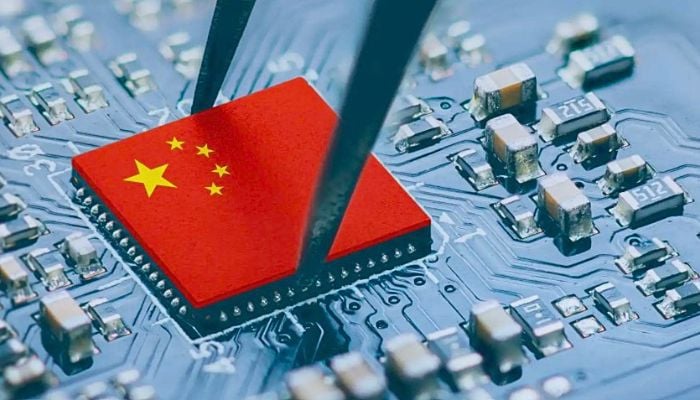
China has begun the mass production of domestically developed immersion deep ultraviolet (DUV) lithography machines.
It is important as Lithography has long been considered one of the most difficult bottlenecks in the semiconductor supply chain for China to reproduce independently, as the market has historically been dominated by foreign giants like ASML.
According to a report by The Information, the newly manufactured homegrown DUV tools are expected to be delivered to major Chinese chipmakers this year, including Semiconductor Manufacturing International Corp (SMIC), Hua Hong Semiconductor, and ChangXin Memory Technologies (CXMT).
The report also weighed on the shares of companies exposed to the global chip equipment supply chain. BE Semiconductor Industries, tumbled about 8.5%, Soitec, fell 5%, while Infineon Technologies, dropped nearly 3%.
Key details from the report:
The people did not identify the state-backed manufacturer due to the sensitivity of the matter.
The breakthrough could eventually challenge ASML in China, but the system still lags on performance and reliability and needs further testing before mass production, leaving the Dutch company's advantages intact for now.
Production will be limited initially, with about five DUV machines this year and roughly 20 in 2027.
Immersion DUV machines, which print circuit patterns onto silicon wafers, are the most advanced lithography tools available to Chinese chipmakers after restrictions cut off access to extreme ultraviolet lithography (EUV) systems.
China is also developing a domestic EUV machine, though it remains at the prototype stage.
The technology could give Chinese chipmakers an alternative source of critical equipment as the U.S. considers tighter restrictions on foreign lithography tool exports and servicing in China.
This milestone marks a major step forward in Beijing's broader campaign to minimize reliance on Western technology and achieve complete self-sufficiency in semiconductor manufacturing.


-
 TikTok $400M privacy settlement: California judge blocks key part
 -
 Do people trust China more than the US on AI?
 -
 Trump-Xi state dinner guest list: Tech leaders in focus
 -
 Russian store robot ‘kicks’ customer who shoved it
 -
 New Android malware uses AI to take over your phone
 -
 Claude Code's new projects feature acts like a chief of staff: Here’s what it does
 -
 Google’s Gemini hacked 3 companies in first known AI breakout—What happened?
 -
 OpenAI and Microsoft quotes on AI threaten news copyright defense, media outlets argue