50-year mystery solved: Astronomers finally detect wind from Milky Way’s giant black hole
Sagittarius A is located about 26,000 light-years from Earth and contains about 4 million times the mass of our sun

Astronomers in a recent scientific breakthrough have unravelled the 50-year-old mystery of this Universe by finally discovering wind emanating from our Milky Way Galaxy’s supermassive blackhole.
Using the 5 years of observation from the Chile-based ALMA telescope and NASA's orbiting Chandra X-ray Observatory, the researchers detected a 20,000-year-old wind blowing out of Sagittarius A, the giant black hole of our galaxy. Previously, despite decades of research and efforts, the scientists failed to detect it.
In a recent research study co-led by astrophysicists Mark Gorski and Elena Murchikova, the team identified a large and conical shaped cavity near Sag A, which was filled with hot and electrically charged gas.
As per findings published in the Astrophysical Journal Letters, the cavity was developed by powerful winds blowing outward from the black hole. Although the wind was like a gentle breeze it would effectively sweep away or heat up the cold gas previously existing in the region.
The researchers concluded that such a feature is the result of immense energy that could only be provided by a supermassive black hole. The study holds a significant importance as it has proved the existence of wind which was previously theorized by astronomers.
"This discovery resolves a half-century-old mystery," said Lena Murchikova, a professor of physics and astronomy at Northwestern University in Illinois and co-leader of the study.
Murchikova said, "While some gas keeps falling in, other gas is ejected. In fact, more of the gas is ejected than falls into the black hole. This ejected gas is the wind we are talking about.”
"When we look at distant galaxies far-far away, it is much easier to see violent phenomena. We see huge, powerful jets ripping through the galaxy and everything else in their path. We see violent winds ejecting nearly all gas from their galaxies."
In broader context, the findings are important as they create alignment between Sag A and other supermassive black hole behaviours, confirming that our galaxy functions similarly to those observed elsewhere in the universe.





-
 Why China is crashing a spacecraft into asteroid 2015 XF261
 -
 Australia's Great Barrier Reef at extreme risk of ‘ecosystem collapse’, scientists warn
 -
 James Webb Space Telescope reveals how black holes feed themselves
 -
 Japan’s upper-close asteroid flyby: Why scientists said it was too dangerous
 -
 Scientists find hidden structure inside Orion Nebula
 -
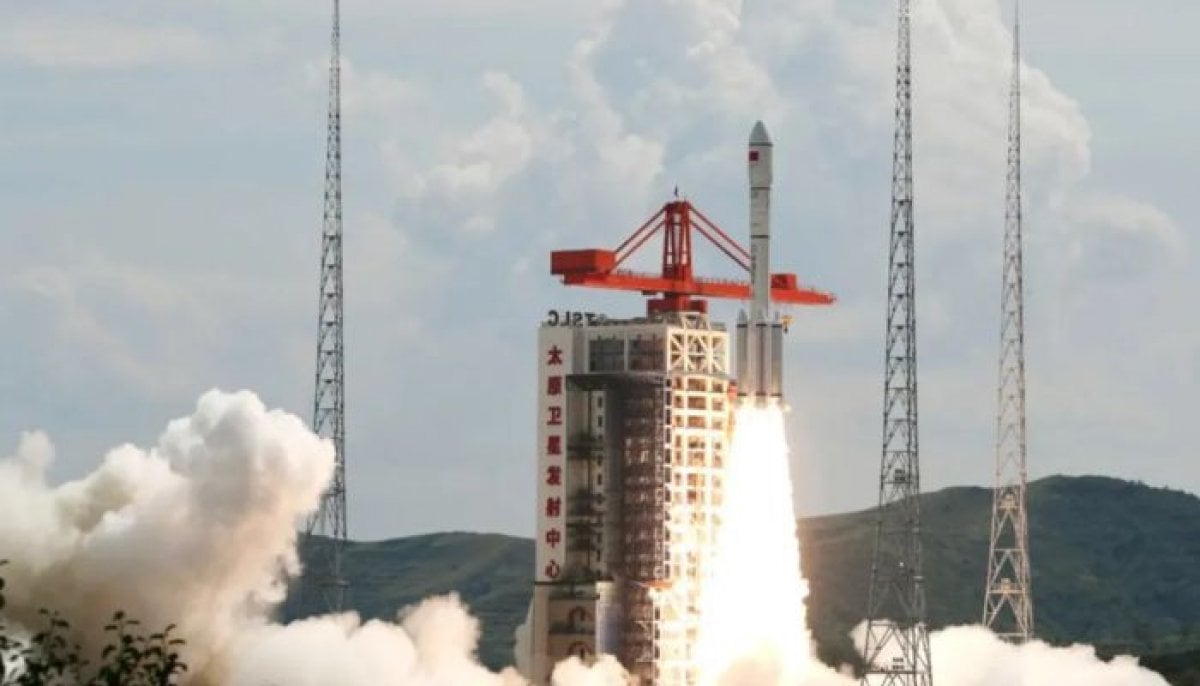 China launches first of 1,000 space-computing satellites
 -
 Perseid meteor shower 2026: Here is everything to know about peak dates and best viewing times
 -
 Solar storm risks may be worse than previously thought, study finds
-
 Actor James Franco claims mysterious video shows alien outside his home
 -
Rare New Jersey meteorite reveals 'alien world chemistry', study finds
-
Astronomers find universe's faintest planet after 11 years of hide-and-seek
-
Scientists discover new ‘unusual-looking’ monkey species hidden in DR Congo forest