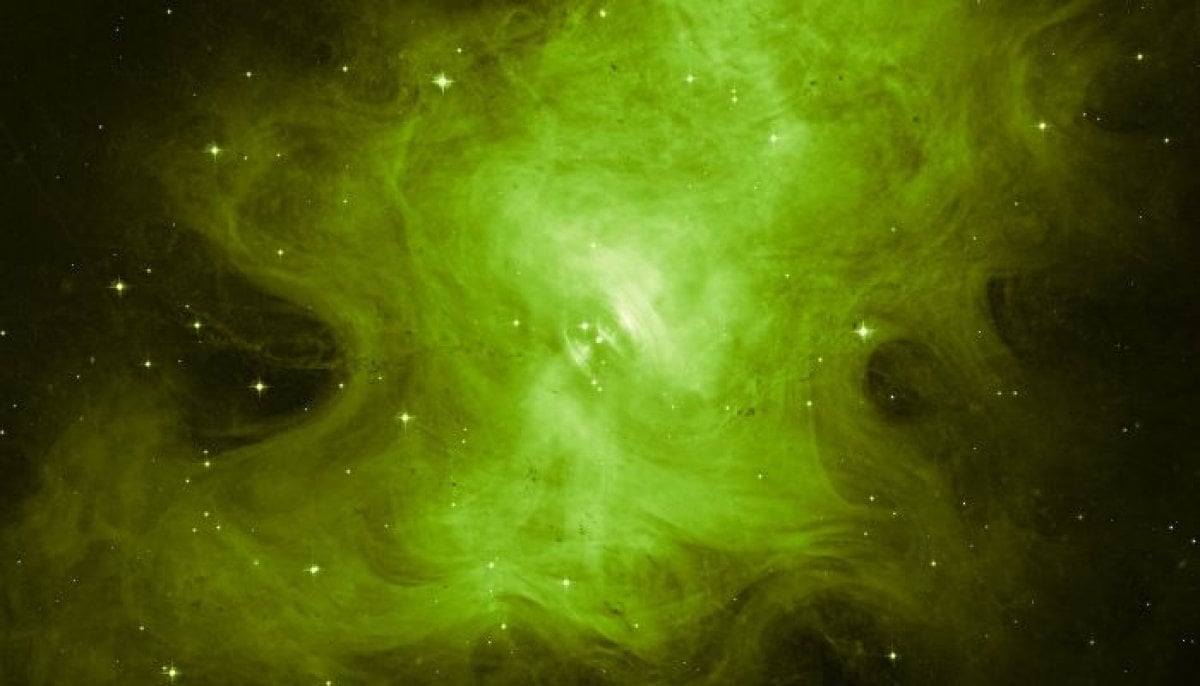
Astronomers discover myriad of stellar streams at the periphery of Milky Way
Scientists state that stellar streams can be multiplied four times more than what is usually found in our Milky Way

In the outskirts of the Milky Way, astronomers have found a myriad of faint ribbons of stars.
Using a new algorithm with the help of the European Space Agency's Gaia mission’s data, scientists revealed that the number of these "stellar streams” can be multiplied four times more than what is usually found.
According to Space.com, this fresh finding can help reveal how our galaxy evolved as well as the distribution of its dark matter.
It is pertinent to mention that when the compact star clusters travel through the Milky Way's gravitational field, stars form arcing threads which are called “stellar streams.” Arcing threads shed stars that hang in long, trailing ribbons.
Oleg Gnedin, a theoretical astrophysicist at the University of Michigan, issued a statement, explaining, "It's like riding a bike with a bag of sand, only the bag has a hole in it. Those grains of sand are like the stars left behind along their trajectory."
Notably, the patterns and movements of stellar streams keep a record of gravitational forces they have experienced, making them a major tool to record the mass of the Milky Way, which also helps in measuring the dark matter halo.
It is important to note that dark matter works as an invisible "glue" that holds galaxies together; however, it has not yet been seen directly despite years of research and findings.


-
 A ‘neglected’ neutrino may hold the key to why the Universe exists
 -
 Can cancer drugs be made in space? Here’s what the new mission aims to find out
 -
 SpaceX Falcon 9 successfully launches Bandwagon-5 mission with 32 payloads
 -
 Europe launched 8 orbital rockets last year, can it rival Starlink?
 -
 Japan launches world’s first mission to bring sample back from phobos
 -
 Orionid meteor shower 2026: Peak date, viewing tips and what to expect
 -
 Why Mars looks blue in NASA’s unedited curiosity panorama?
 -
 Blue Origin upgrades new Glenn rocket launch infrastructure to take on SpaceX