Are babies growing up on screens? 75% of infants in England get daily screen time
In single-parent households, infants’ screen limit was for an average of 47 minutes a day
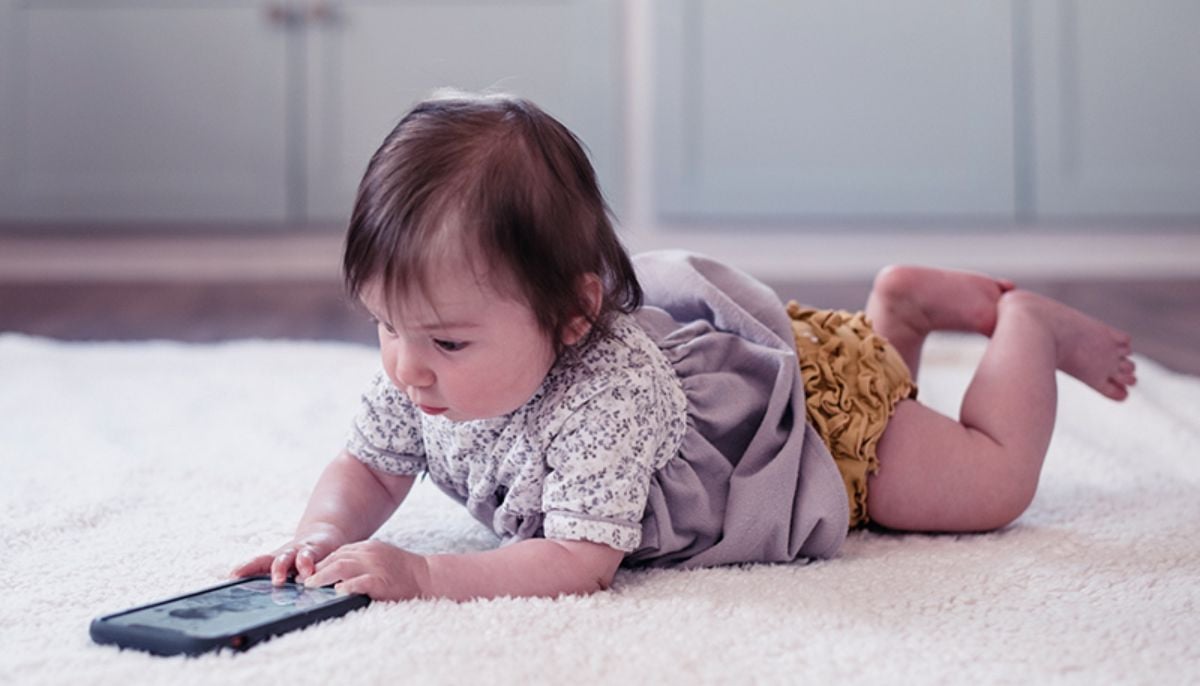
In today’s tech-driven world, digital tools and technology have been claiming many roles ranging from navigator, and assistant, to productivity booster. With people’s growing dependency on tech devices, It has taken another role of digital babysitter.
It is no mistake to say that besides adults, infants are also growing up on screens. The recent study conducted by the Education Policy Institute (EPI) England raises the concerns regarding growing reliance of babies on smartphones.
According to findings, around 75 percent of 9-month-old babies in England engage in daily screen time, averaging 41 minutes per day.
The researchers found that screen time habits remain consistent across the various households regardless of lifestyle and wealth. Parents also argued that screen time and active childhood can also coexist.
Dr Tammy Campbell, the director for early years, inequalities and wellbeing at the EPI, said, “Instead of simply focusing on demonising any use, and cutting minutes, policymaking and guidance should help families use digital tools to enhance development, bonding and enjoyment of babyhood.”
72 percent of the babies in the study reportedly experienced at least some screen time at nine months, while just over a quarter (28 percent) experienced none.
As per study’s findings, the babies who do not have any siblings are found to be more engaged in screen time (80 percent) compared to the infants with siblings (57 percent).
In single-parent households, infants’ screen limit was for an average of 47 minutes a day, compared to those (39 minutes a day) with two-parents at home.
As a result of heavy-use of smartphones and digital devices, the researchers observed a decline in regular enrichment activities, such as reading, playing, or trips outside.
Rachel de Souza, co-chair of the panel drawing up government guidance and children's commissioner for England, said, “Parents today are raising children in a world where screens are part of everyday life – for many, especially in the earliest months of a child’s life, it can be difficult to know what the right balance looks like.”
“As children’s commissioner, I understand screens feel like both a help and worry for parents, which is why the upcoming early years guidance will offer clear, trustworthy advice, giving parents confidence when managing how their children see screens.”


-
 FBI data theft probe: What to know about ShinyHunters hacker detained in Jordan
 -
 U.S. proposes AI emergency alert system with China: What to know
 -
 Is AI deskilling you? 2 habits that weaken your skills
 -
 Can Trump's voluntary AI safety agreement be enforced?
 -
 China's new battery charges to 80% in nearly 3 minutes
 -
 Could a department of AI prevent an ai market crash?
 -
 OpenAI reveals new detail on Australia Medicare hack probe
 -
 Data centre backlash hits $42bn of Europe projects