Could global AI race end in ‘Hindenburg-style disaster’?
'The Hindenburg disaster destroyed global interest in airships,' says tech expert
Humans are living in an AI boom moment defined by rapid advancements, surging tech investments, and an intense commercial race to market artificial intelligence.
Unfortunately, the AI boom scenario is transitioning into a “doom scenario”, bringing tech-driven disasters upon humanity.
Recent unsettling developments—ranging from the surge in AI safety researchers’ resignations, Anthropic Sabotage Risk report over AI rogue behaviours, and the advent of Singularity to fragmented AI regulation—have strengthened the argument that AI is heading into dangerous territory.
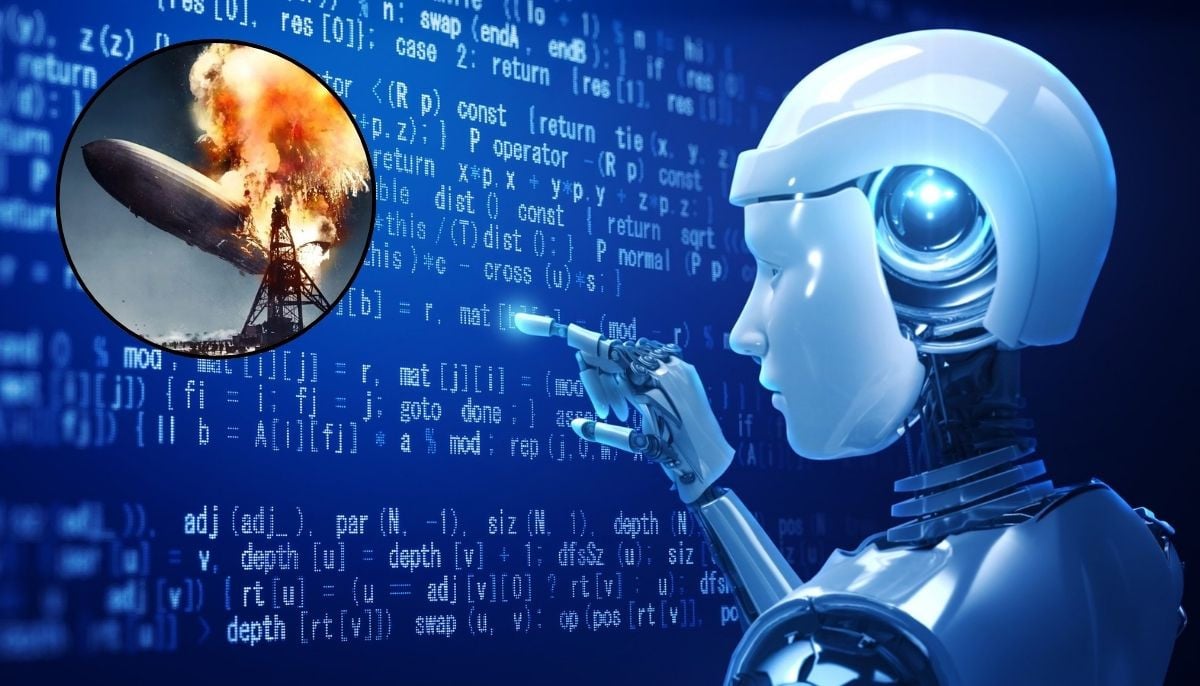
Recently, Oxford Professor Michael Wooldridge, who specializes in artificial intelligence, has issued a chilling warning that the unbridled AI proliferation race may end in a “Hindenburg-style disaster,” a high-profile failure that could shatter global confidence and render the technology “dead” in the eyes of the public.
Wooldridge argued that tech companies have turned a blind eye to safety protocols, prioritising speed and profit over rigorous testing and regulation.
Unfortunately, in the race to win over the consumers, they ignore the potential flaws of the technology even before fully understanding them.
“It’s the classic technology scenario, You’ve got a technology that’s very, very promising, but not as rigorously tested as you would like it to be, and the commercial pressure behind it is unbearable,” he said.
While delivering a lecture titled “This is not the AI We Were Promised”, Wooldridge said, the moment is not far off when the world really witnesses an AI-driven doom scenario.
“The Hindenburg disaster destroyed global interest in airships; it was a dead technology from that point on, and a similar moment is a real risk for AI,” Wooldridge warned.
‘Contemporary AI is neither sound nor complete’
According to Wooldridge, It is wrong to assume modern AI tools as “sound and complete.” The large language models make predictions based on probability, giving the AIs with “jagged capabilities”. Eventually, these tools perform some tasks efficiently while performing poorly at others.
Humanization trap
What is more worrisome for Professor Wooldridge is how the AI systems are often mistaken for human-like entities.
Having been specialized in delivering sycophantic responses, people often find themselves at ease with AI bots due to lack of conflict.
According to a survey by the Center for Democracy and Technology in 2025, nearly a third of students reported that they or a friend had had a romantic relationship with an AI.
Wooldridge urged that humans need to understand that these bots are just tools or glorified spreadsheets devoid of any emotion and genuine response.
What is Hindenburg disaster?
The Hindenburg disaster was a horrific airship accident that occurred on May 6, 1937, and effectively ended the era of passenger-carrying commercial airships. The explosion occurred due to electrostatic discharge that ignited leaking hydrogen.


-
 FBI data theft probe: What to know about ShinyHunters hacker detained in Jordan
 -
 U.S. proposes AI emergency alert system with China: What to know
 -
 Is AI deskilling you? 2 habits that weaken your skills
 -
 Can Trump's voluntary AI safety agreement be enforced?
 -
 China's new battery charges to 80% in nearly 3 minutes
 -
 Could a department of AI prevent an ai market crash?
 -
 OpenAI reveals new detail on Australia Medicare hack probe
 -
 Data centre backlash hits $42bn of Europe projects