U.S. on verge of losing measles-free title due to outbreak
The first known case of measles was a patient in Texas who developed the rash on January 20, 2025

It's been a year since a measles outbreak began in West Texas, and international health authorities say they will meet in April to determine if the U.S. has lost its measles-free designation.
Experts fear that the virus which can be prevented with vaccine, has regained a foothold and that the U.S. may soon follow Canada in losing the achievement of having eliminated it.
The reevaluation is largely symbolic and would be based on whether a single measles chain has spread uninterrupted within the U.S. for at least 12 months.
Public health scientists around the country are investigating whether the now-ended Texas outbreak is linked to active ones in Utah, Arizona, and South Carolina.
But doctors and scientists say the U.S. and North America overall, has a measles problem, regardless of the decision.
"It is really a question of semantics," said Jonathan Temte, MD, PhD, a Wisconsin family physician who helped certify the U.S. was measles-free in 2000.
"The bottom line is the conditions are sufficient to allow this many cases to occur. And that gets back to de-emphasizing a safe and effective vaccine,” he added.
Last year, the CDC confirmed 2,144 measles cases across 44 states, which is the most since 1991, and nearly 50 separate outbreaks.
"The most important thing that we can do is to make sure the people who aren't vaccinated get vaccinated," said Jennifer Nuzzo, DrPH, director of Brown University's Pandemic Center. "We have not issued a clear enough message about that."
There is little room for error in trying to stop measles. The virus is one of the most contagious, infecting nine out of every 10 unvaccinated people who are exposed to it.
The patient in Texas' first known case developed the rash on January 20, 2025, according to state health department data.
From there, the outbreak exploded. Officially, 762 people fell ill, most of them in rural Gaines County, and two children died.
Scientists have confirmed the same measles strain in Texas, New Mexico, Utah, Arizona, South Carolina, Canada, Mexico, and several other North American countries, said Sebastian Oliel, a spokesperson for the PAHO, which will make the final decision on U.S. measles elimination at an April 13 meeting.
Oliel said when there is a case of unknown origin in a country with ongoing local spread, "the most conservative approach is to consider the case part of the existing national transmission."



-
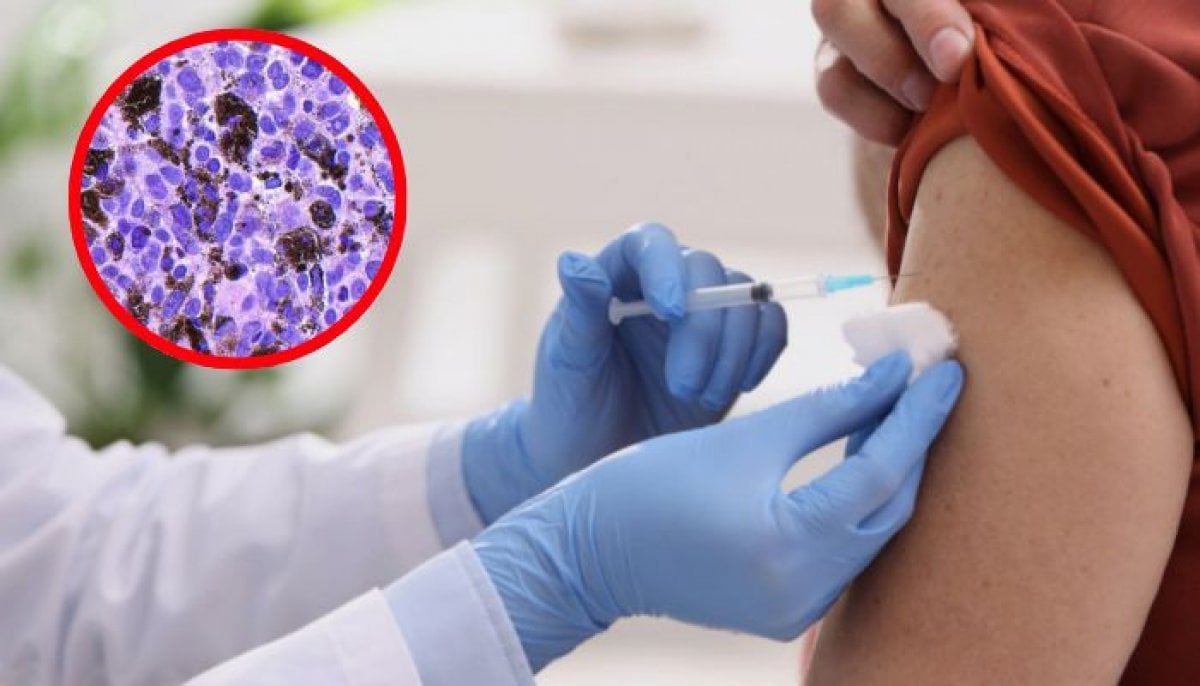 New personalized cancer vaccine cuts Melanoma recurrence risk by 42%, trial shows
-
 Prime editing rewrites DNA inside human body for the first time
-
 WHO investigates mystery Ebola case in Nigeria as outbreak spreads beyond DR Congo
-
 Virginia Sen. Louise Lucas indicted on racketeering and marijuana charges
-
 France confirms world's first human case of Shamonda virus; patient dies
-
 OpenAI agents uncover brain disease leads: Here’s how
-
 AI tool can now predict cancer survival by a single patient selfie: Find out how
-
 Scientists identify a new type of depression affecting 1 in 4 patients
-
 Everything to know about US FDA’s new guidance on apps used with prescription drugs
-
‘Immortal’ jellyfish could hold clues to slowing human ageing
-
Ebola crisis worsens in DR Congo as virus reaches eighth province with over 4,500 dead
-
Study finds eating blueberries every day can surprisingly boost your mood