Cancer treatment breakthrough: ‘Nanodots’ kill tumours, sparing healthy cells
Nanodots are made from widely used metal oxide, offering a more affordable and safer option
The researchers in a recent breakthrough have discovered a revolutionary cancer treatment in which healthy cells would be largely unharmed.
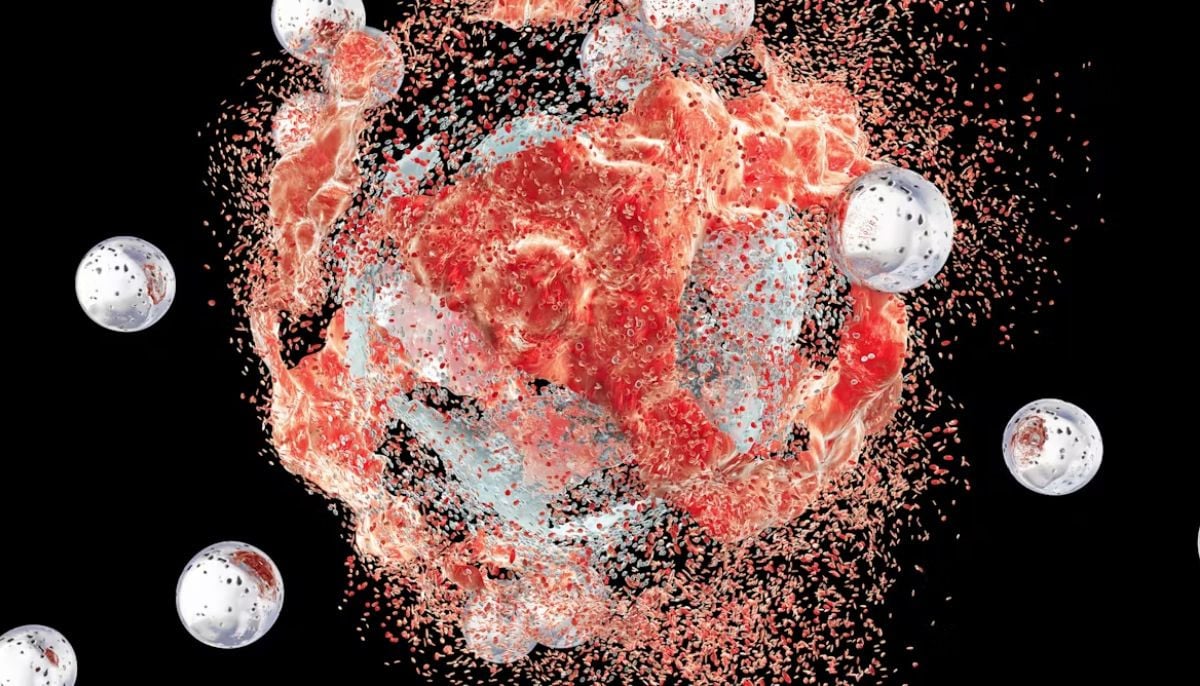
Scientists belonging to RMIT University have developed cancer-destroying very small particles called “nanodots” which can destroy cancerous cells while protecting the healthy cells.
Made from molybdenum oxide, these nanoparticles release reactive oxygen molecules. These unstable molecules can push cancer cells into apoptosis, programmed cell death, as reported by study's lead researchers Professor Jian Zhen Ou and Dr. Baoyue Zhang.
During the experimental stage, these nanodots show high efficiency in killing cervical cancer cells at three times the rate of healthy cells over 24 hours.
“Cancer cells already live under higher stress than healthy ones. Our particles push that stress a little further -- enough to trigger self-destruction in cancer cells, while healthy cells cope just fine,” Zhang said.
The recent experiment offers key advantages over existing cancer treatments. The existing cancer therapies damage healthy body cells along with tumors. Unlike the light-required therapies, the nanodots can work effectively in complete darkness as well.
Moreover, Nanodots are made from widely used metal oxide, so they offer a more affordable and safer option.
The research study involves a global collaboration between The Florey Institute of Neuroscience and Mental Health (Melbourne) and several institutions in China (Southeast, Hong Kong Baptist, and Xidian Universities).
The research is in its early stages as it has only been tested to lab-grown cells. It has not yet been tested on animals or humans.


-
 Measles cases in US top 4,000 nationwide, CDC reports
 -
 Sexually transmitted diarrhea spread in US, UK: Why antibiotics are failing against Shigella
 -
 Who is Song Li? China puts her forward for WHO leadership role
 -
 CDC monitors travelers from Siberia after plague worker’s death, director says
 -
 Russia pushes back on plague death reports, defends WHO notification
 -
 WHO deems Russia plague risk 'low' following lab technician’s fatal illness
 -
 New York declares Measles state of emergency amid nationwide disease resurgence
 -
 First-of-its-kind treatment shrinks unborn baby’s tumour before birth