Dark matter mystery solved? New study claims major 100-year 'breakthrough'
Gamma-ray data from NASA’s Fermi Telescope may have finally detected its elusive signature
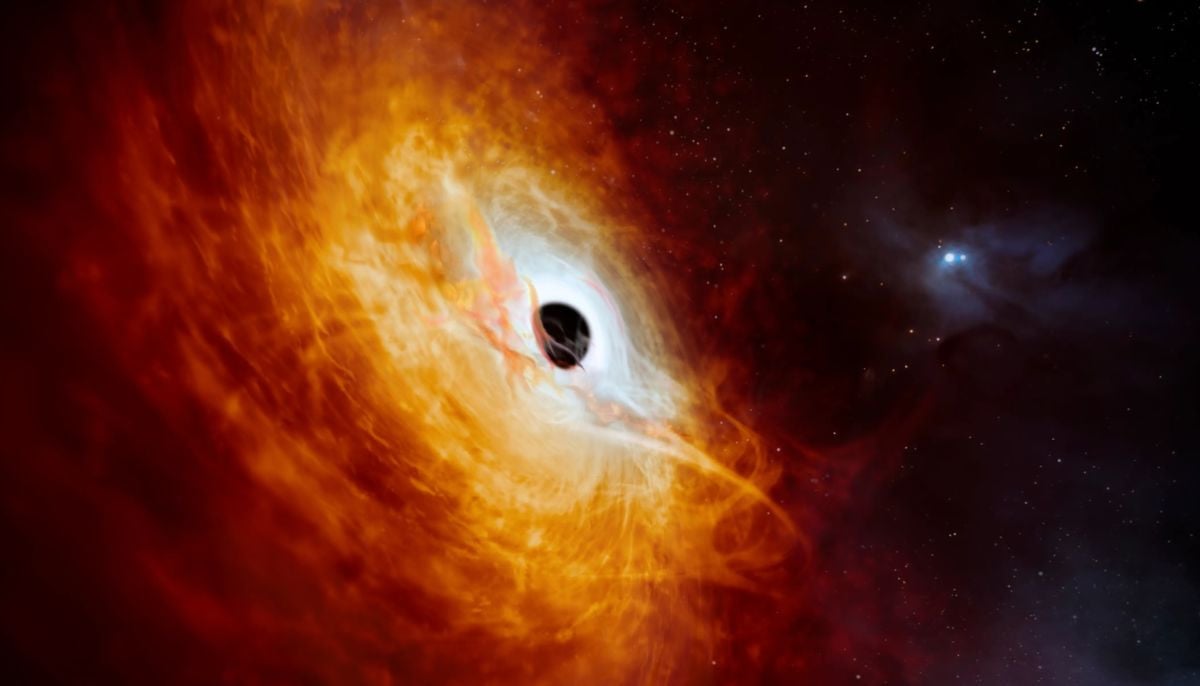
For over a century, one of the most mysterious components of the universe, dark matter, has kept scientists perplexed due to its enigmatic nature.
Finally after a 100-years long search, the researchers may have finally seen the existence of dark matter, the elusive substance that makes up 27 percent of the cosmic world.
According to findings published in the Journal of Cosmology and Astroparticle Physics on November 25, a team led by Tomonori Totani of the University of Tokyo has unlocked this nearly-impossible breakthrough for the very first time.
By using gamma-ray data from NASA’s Fermi Space Telescope, the researchers have finally detected the signs of colliding dark matter particles.
“This could be a crucial breakthrough in unraveling the nature of dark matter,” said Prof Tomonori Totani.
According to the astrophysicist, these gamma rays emanating from the centre of the Milky Way contain evidence of the substance.
As per observations, the spatial distribution and energy coming from our galaxy are equivalent to theoretical model calculations for dark matter particles.
“The gamma-ray emission component closely matches the shape expected from the dark-matter halo," Totani said.
First described in the 1930s by the Swiss astronomer Fritz Zwicky, when he observed the higher spinning rate of the distant galaxies than their mass allowed, thereby leading to the idea of dark matter.
Being elusive in nature, dark matter neither emits nor absorbs light. It is also known for exerting an unseen gravitational pull on the surrounding galaxies.
“If this is correct, to the extent of my knowledge, it would mark the first time humanity has ‘seen’ dark matter," Totani added.


-
 New study explains 364-day Qumran calendar puzzle
 -
 Why does time feel faster as you age? Science explains
 -
 Scientists name newly discovered snake after Guns N' Roses' Slash
 -
 SpaceX secures three new NASA crew flights: What to know
 -
 Sovereign AI fund in talks to back Political Sciences: What to know
 -
 What recent discovered Moon Crater Means for Future Astronauts
 -
 Scientists discover new wild cat species in Bolivia for the first time in a century
 -
 SpaceX turns to failed startups for AI training: Here’s why