China seeks US easing of chip-export controls under trade deal
HBM chips closely watched by investors due to their use alongside AI graphic processors, per FT
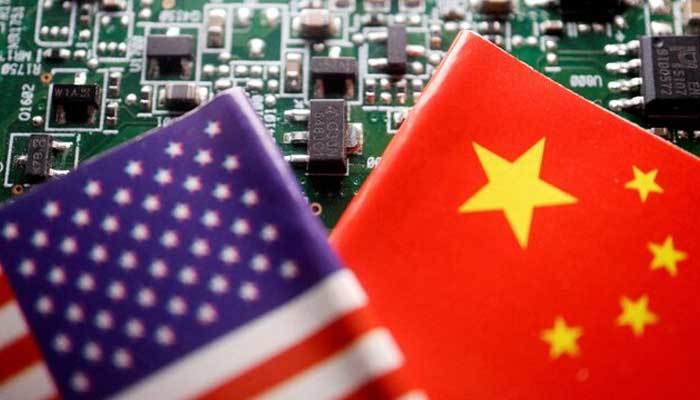
Ahead of potential meeting between Presidents Donald Trump and Xi Jinping, China wants the United States to ease export controls on chips critical for artificial intelligence.
Financial Times citing unnamed people familiar with the matter said Chinese officials have told experts in Washington that Beijing wants the Trump administration to relax export restrictions on high-bandwidth memory chips as part of trade deal.
The White House, State Department and China's foreign ministry did not immediately respond to requests for comment on the report.
HBM chips, which help perform data-intensive AI tasks quickly, are closely watched by investors due to their use alongside AI graphic processors, particularly Nvidia's opens new tab.
The FT said China is concerned because the US HBM controls hamper the ability of Chinese companies such as Huawei to develop their own AI chips.
Successive US administrations have curbed exports of advanced chips to China, looking to stymie Beijing's AI and defence development.
While this has impacted US firms' ability to fully address booming demand from China, one of the world's largest semiconductor markets, it still remains an important revenue driver for American chipmakers.


-
 AI tools for health generated nearly $1 billion in extra costs: report
 -
 Qualcomm and Apple extend global patent licensing agreement: What to know
 -
 Chinese AI startup DeepSeek hits $1 billion annualized revenue run rate following API price hikes
 -
 Morgan Stanley staffer accidentally emails Asia deal to outsiders: Key details to know
 -
 Oil prices drop for fifth straight session amid hopes for Iran diplomacy and Saudi pipeline
 -
 Apple aims to take on Microsoft, Nvidia in a rush to lower AI costs with new devices
 -
 SoFi launches first U.S. stablecoin settlements on Mastercard: What users need to know
 -
 Banks raise red flags over AI shopping bots and scam risks: What to know