Animation dilemma: Is AI muse or menace?
The rise of AI in animation industry has sparked debate among critics and proponents
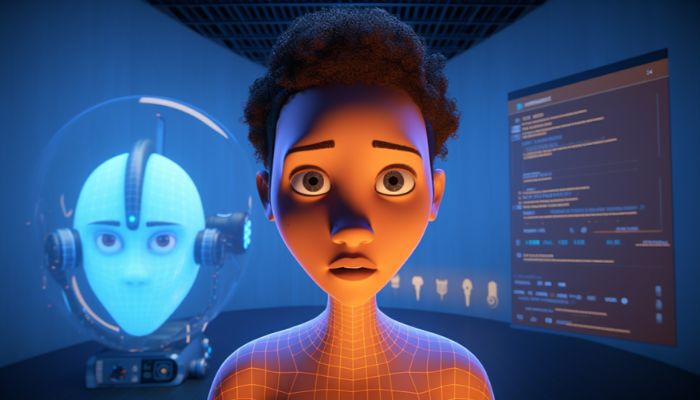
The Artificial Intelligence (AI) moment is here—and it’s not going anywhere. Amid unprecedented AI advancements, the animation industry is facing a wave of uncertainty and creativity dilemmas.
It is evident from the efforts of the International Animation Unions to stage the protest at the Annecy Animation Festival against the potential use of generative AI in the field of animation.
The use of AI in the creative realm has been a debatable issue. Some naysayers consider it a menace to ingenuity; the proponents vouch for AI as a constructive tool.
The muse: AI is revolutionizing the animation industry
Undoubtedly, human creativity is irreplaceable. However, AI can play significant role in amplifying the industry through following ways:
AI to rescue: Solving the labour crisis
AI can help bridge skilled labour shortages by automating tasks. AI tools like Ebsynth automate the process of creating in-between frames, reducing the need for manual labour in traditional frame-by-frame animation.
As it successfully served a practical solution to mitigate the labour crisis of Japan’s animation industry. Given this, K&K Design, an anime production studio, has embarked on the journey to integrate AI in anime, reducing the time and manual efforts of weeks and months.
A creativity multiplier
It is a widely held perspective that AI is the originator of mediocrity. However, some optimists consider it a creativity multiplier, meant to enhance the artistic vision and innovation.
Cathal Gaffney, managing director of Dublin-based Brown Bag Films, has described AI as “a productive and creative tool to assist artists in realizing their vision.”
Turbocharging speed and efficiency
Generative AI also plays an important role in turbocharging speed and efficiency, reducing the dependence on manual tasks. These tools also reduce costs and deliver lucrative gains.
As reported by the study conducted on Animation Production Efficiency, 30-70% AI integration in the tasks helps the animators to achieve notably superior efficiency scores.
The menace: AI doubles down animation crisis
While some hail AI as a muse, others see it as a menace, exacerbating an already fragile ecosystem of the animation industry.
Undermining human creativity
The widespread apprehension regarding the “death of creativity” is often tied to unprecedented advancements in Generative AI.
Once a realm of animation ruled by pencils, pixels and pure imagination, is now at the crossroads with AI, bringing a paradigm shift in the animation industry.
Creativity and imagination have turned into data points. Emotions no longer remain at the helm of humans. Originality and diversity are becoming obsolete; homogenization is gaining ground due to replicated narratives.
For instance, the pervasive use of viral “Ghibli-ifying” filters has sparked the debate over the erosion and richness of human creativity and originality.
Disruptions in jobs & role shifts
Another concern is job displacement and role shifts driven by the integration of AI into anime.
As AI tools become more advanced, there is a looming worry that human roles in creative professions could be marginalized, relegated, or eliminated.
According to The Animation Guild, 204,000 total jobs, with 118,500 of those in animation will be hit by generative AI tools in the next three years (2024-2026).
Copyrights & ethical concerns
When one talks about the deployment of AI in the artistic domain, the issues of copyright always surface. AI-generated visuals and graphics have been responsible for breaching artistic integrity without their proper consent, credit, and acknowledgement.
Cathal Gaffney elucidates how AI companies have been cannibalizing and disrespecting other people’s copyright and cashing in on others’ original content.
Disney and Universal have sued Midjourney for alleging copyright infringement, calling its AI-powered image generator a “bottomless pit of plagiarism” for its alleged development of the studios’ best-known characters.
A Way Forward
AI is not inherently evil–how we use AI tools makes a difference. Humanity’s most powerful defence is its creativity and originality against conformity. The defence only weakens when one voluntarily succumbs.
Therefore, it is a need of the hour to strike a balance in its use. There should be concerted efforts to enact uniform AI regulation-based policy to address ethical and legal issues.
The responsible integration of AI should be promoted without disrupting the highly skilled and creative jobs. The artists must learn digital, particularly AI skills, to strengthen their position in the industry.
Related: Google unveils AI tool to revive lost Roman inscriptions


-
 Meghan Markle has eyes on surprising new career move
 -
 Dolly Parton’s upcoming song to leave fans in tears?
 -
 Trump proposes mandatory prison terms for benefits fraud: Here’s why
 -
 Kim Kardashian reveals how long it took her to feel ready to date again
 -
 Tom Cruise’s star power fails to save ‘Digger’ at box office?
 -
 Trump revives $5,000 payments promise if GOP wins Congress
 -
 Cornell University sexual assault: Women voice support for Jane Doe
 -
 Trump to rally in Ohio as Republicans’ Senate race heats up