
Belgium uses shipwreck to bring rare oysters back from the brink
Laying of oyster stash is culmination of two years' work for Belgian government project
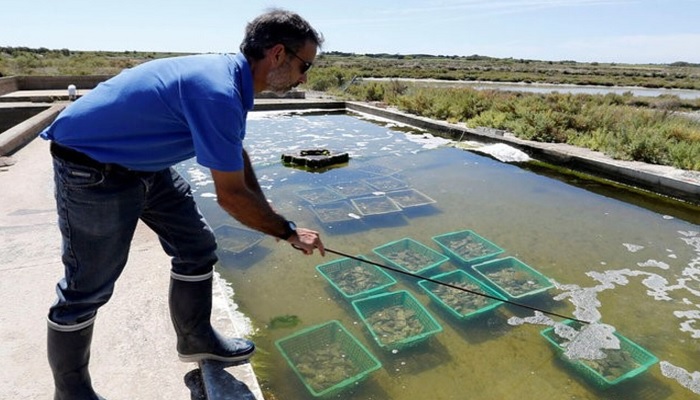
A cargo ship lying at the bottom of the sea off the Belgian coast has been fitted with a new treasure chest: a stash of rare flat oysters.
The mollusc has mostly disappeared from the North Sea due to human activity, including overfishing.
Now, a Belgian project is trying to reintroduce it in a move scientists believe will help boost other marine species.
"We have to bring them back because they are essential elements in our marine ecosystems," Vicky Stratigaki, an engineer working on the restoration project, told AFP.
In mid-July, a load of 200,000 oyster larvae attached to biodegradable materials was deposited 30 metres under the sea in the ship's hull.
The environmental project, named "Belreefs", aims to turn the wreckage into a biodiversity sanctuary.
Flat oysters form reefs that purify water and that other sea animals, from fish to algae, use as breeding and feeding grounds, explained Stratigaki.
"There is a lot of predation in the sea; it's a wild environment," she said, with about 30,000 of the oyster larvae expected to survive their first year at sea.
"Then they will start reproducing, extending the reef and also supporting the biodiversity of the reef."
The laying of the oyster stash is the culmination of two years' work for the Belgian government project, which is supported by European Union funding.
"Until around the 1850s, the North Sea and the European waters were full of these oyster reefs," Stratigaki explained.
Then, overfishing, the spreading of an imported parasite called Bonamia and "climatic adverse effects" caused them to disappear, she said.
The 1906 wreckage, located about 30 kilometres off the coastal city of Ostend, was selected to house the pilot as fishing and other disruptive activities are banned around it.
"In Belgium, every wreck that is for more than one hundred years on the sea bottom gets protected automatically as cultural heritage, because it's nice for divers to go there," said Merel Oeyen, a marine environment expert at the Belgian ministry of health.
"It's also a hot spot for biodiversity".






-
 Greenland ice sheet acts like ‘churning molten rock,’ scientists find
 -
 Space-based solar power could push the world beyond net zero: Here’s how
 -
 Hidden ‘dark galaxy' traced by ancient star clusters could rewrite the cosmic galaxy count
 -
 Astronauts face life threatening risk on Boeing Starliner, NASA says
 -
 Giant tortoise reintroduced to island after almost 200 years
 -
 Blood Falls in Antarctica? What causes the mysterious red waterfall hidden in ice
 -
 Scientists uncover surprising link between 2.7 million-year-old climate tipping point & human evolution
 -
 NASA takes next step towards Moon mission as Artemis II moves to launch pad operations following successful fuel test