Trump withdraws US from WHO pandemic reforms
Trump administration rejects WHO pandemic treaty changes citing sovereignty concerns
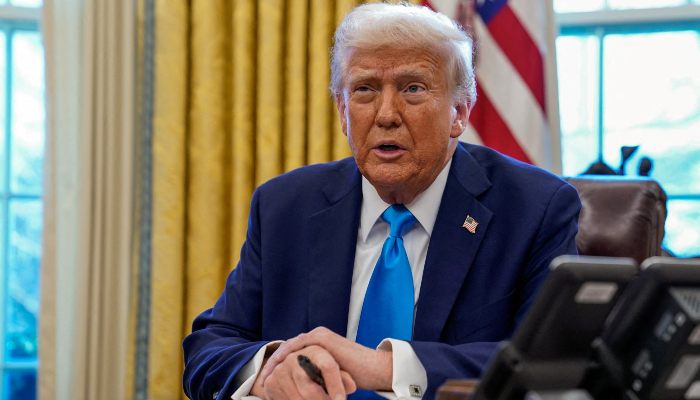
WASHINGTON: President Donald Trump's administration said Friday the United States was rejecting changes agreed last year for the World Health Organisation on its pandemic response, saying they violated the country's sovereignty.
Trump on returning to office on January 20 immediately began his nation's withdrawal from the UN body, but the State Department said the language from last year would still have been binding on the United States.
Secretary of State Marco Rubio and Health and Human Services Secretary Robert F Kennedy Jr, who is a longtime critic of vaccines, said the changes "risk unwarranted interference with our national sovereign right to make health policy."
"We will put Americans first in all our actions and we will not tolerate international policies that infringe on Americans' speech, privacy or personal liberties," they said in a joint statement.
Rubio and Kennedy disassociated the United States from a series of amendments to the International Health Regulations, which provide a legal framework for combating diseases, agreed last year at the World Health Assembly in Geneva.
"We regret the US decision to reject the amendments," WHO chief Tedros Adhanom Ghebreyesus said in a statement posted on X.
He stressed the amendments "are clear about member states sovereignty," adding that the WHO cannot mandate lockdowns or similar measures.
The changes included a stated "commitment to solidarity and equity" in which a new group would study the needs of developing countries in future emergencies.
Countries have until Saturday to lodge reservations about the amendments. Conservative activists and vaccine sceptics in Britain and Australia, which both have left-leaning governments, have waged public campaigns against the changes.
The amendments came about when the Assembly failed at a more ambitious goal of sealing a new global agreement on pandemics.
Most of the world finally secured a treaty this May, but the United States did not participate as it was in the process of withdrawing from the WHO.
The United States, then under president Joe Biden, took part in the May-June 2024 negotiations, but said it could not support consensus as it demanded protections for US intellectual property rights on vaccine development.
Rubio's predecessor Antony Blinken had welcomed the amendments as progress.
In their rejection of the amendments, Rubio and Kennedy said the changes "fail to adequately address the WHO's susceptibility to the political influence and censorship — most notably from China — during outbreaks."
WHO's Ghebreyesus said the body is "impartial and works with all countries to improve people's health."


-
 Putin calls emergency cybersecurity meeting amid rising tensions with Europe
 -
 Why is SpaceX restricting Starlink in Ukraine?
 -
 Nvidia pledges $250 million in compute resources to boost UK AI safety and security research
 -
 Why Meloni calls US-Russia diesel deal a ‘very risky choice’
 -
 Vatican issues Pope Leo health update after surgery amid lung cancer reports
 -
 China, EU pledge to stabilize bilateral trade ties and balance economic relations
 -
 Germany’s Nuremberg airport briefly shut down after mid-air communication malfunction
 -
 El Niño fuels Indonesia wildfires, destroying nearly 300 homes in Sumatra
-
 Poilievre heads to Michigan to demand end to US tariffs on Canadian vehicles
 -
Will Alberta leave Canada? Advance voting opens in historic separation referendum
-
False hijack alert sends German fighter jets scrambling
-
Nigel Farage defends ‘lethal force’ policy for English Channel migrants amid backlash