Trump’s row with Musk casts shadow over US space plans
"There are very few launch vehicles as capable as Falcon 9 — it isn't feasible to walk away," says space analyst Laura Forczyk
WASHINGTON: SpaceX's rockets ferry US astronauts to the International Space Station. Its Starlink satellite constellation blankets the globe with broadband, and the company is embedded in some of the Pentagon's most sensitive projects, including tracking hypersonic missiles.
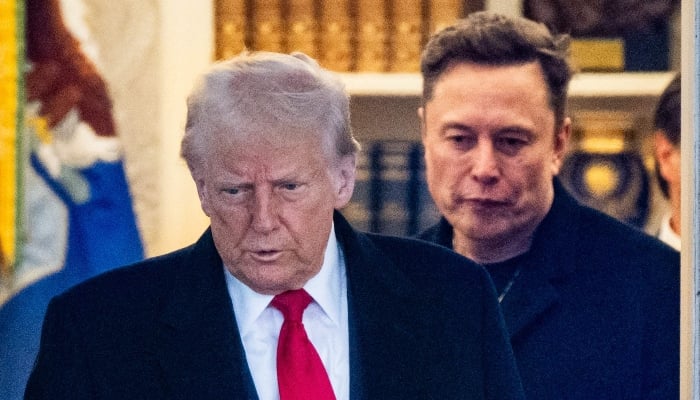
So when President Donald Trump threatened on Thursday to cancel Elon Musk's federal contracts, space watchers snapped to attention.
Musk, the world's richest person, shot back that he would mothball Dragon — the capsule Nasa relies on for crew flights — before retracting the threat a few hours later.
For now, experts say mutual dependence should keep a full-blown rupture at bay, but the episode exposes just how disruptive any break could be.
Founded in 2002, SpaceX leapfrogged legacy contractors to become the world's dominant launch provider.
Driven by Musk's ambition to make humanity multiplanetary, it is now Nasa's sole means of sending astronauts to the ISS — a symbol of post-Cold War cooperation and a testbed for deeper space missions.
Space monopoly?
The company has completed 10 regular crew rotations to the orbiting lab and is contracted for four more, under a deal worth nearly $5 billion.
That's just part of a broader portfolio that includes $4 billion from Nasa for developing Starship, the next-generation megarocket; nearly $6 billion from the Space Force for launch services; and a reported $1.8 billion for Starshield, a classified spy satellite network.
Were Dragon grounded, the United States would again be forced to rely on Russian Soyuz rockets for ISS access — as it did between 2011 and 2020, following the Space Shuttle's retirement and before Crew Dragon entered service.
"Under the current geopolitical climate, that would not be optimal," space analyst Laura Forczyk told AFP.
Nasa had hoped Boeing's Starliner would provide redundancy, but persistent delays — and a failed crewed test last year — have kept it grounded.
Even Northrop Grumman's cargo missions now rely on SpaceX's Falcon 9, the workhorse of its rocket fleet.
The situation also casts a shadow over Nasa's Artemis program.
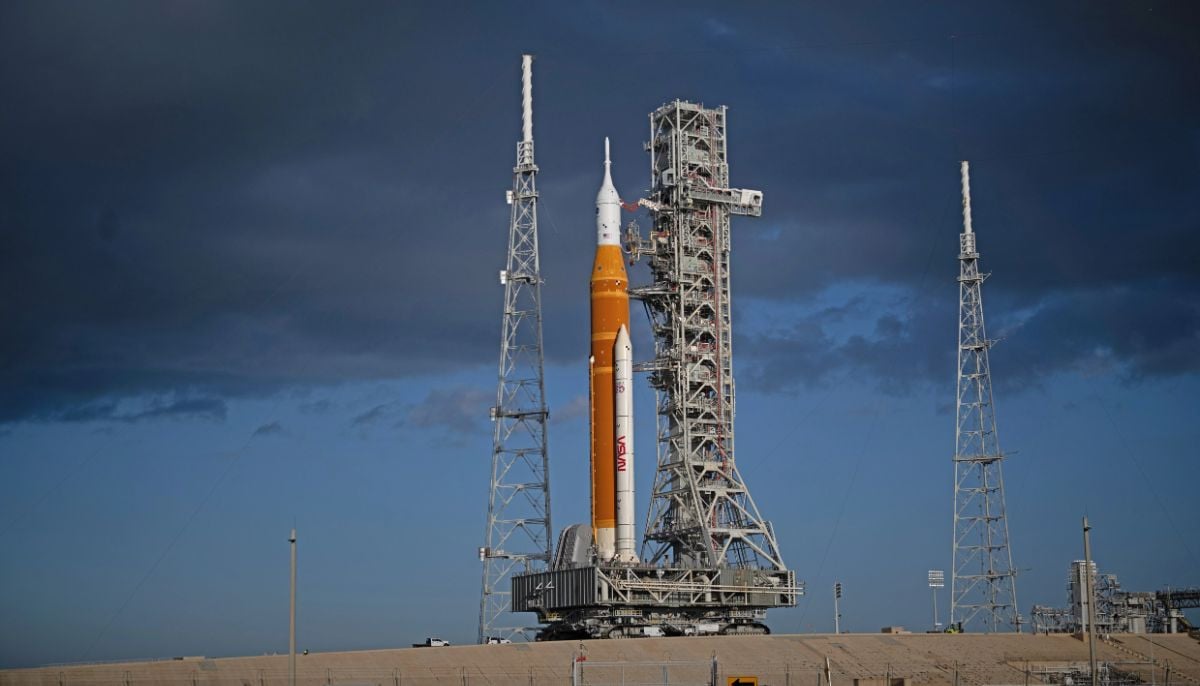
A lunar lander variant of Starship is slated for Artemis III and IV, the next US crewed Moon missions. If Starship were sidelined, rival Blue Origin could benefit — but the timeline would almost certainly slip, giving China, which aims to land humans by 2030, a chance to get there first, Forczyk warned.
"There are very few launch vehicles as capable as Falcon 9 — it isn't feasible to walk away as easily as President Trump might assume," she said.
Nasa meanwhile appeared eager to show that it had options.
"Nasa is assessing the earliest potential for a Starliner flight to the International Space Station in early 2026, pending system certification and resolution of Starliner's technical issues," the agency said in a statement Friday to AFP.
Still, the feud could sour Trump on space altogether, Forczyk cautioned, complicating Nasa's long-term plans.
SpaceX isn't entirely dependent on the US government. Starlink subscriptions and commercial launches account for a significant share of its revenue, and the company also flies private missions.
The next, with partner Axiom Space, will carry astronauts from India, Poland, and Hungary, funded by their respective governments.
Private power, public risk
But losing US government contracts would still be a major blow.
"It's such a doomsday scenario for both parties that it's hard to envision how US space efforts would fill the gap," Clayton Swope, deputy director of the Aerospace Security Project at the Center for Strategic and International Studies, told AFP.
"Both sides have every reason to bridge the disagreement and get back to business."
Signs of a rift emerged last weekend, when the White House abruptly withdrew its nomination of e-payments billionaire Jared Isaacman — a close Musk ally who has twice flown to space with SpaceX — as Nasa administrator.
On a recent podcast, Isaacman said he believed he was dropped because "some people had some axes to grind, and I was a good, visible target."
The broader episode could also reignite debate over Washington's reliance on commercial partners, particularly when one company holds such a dominant position.
Swope noted that while the US government has long favored buying services from industry, military leaders tend to prefer owning the systems they depend on.
"This is just another data point that might bolster the case for why it can be risky," he said. "I think that seed has been planted in a lot of people's minds — that it might not be worth the trust."


-
 Real-life ‘Project Hail Mary’ moment: 45 planets that may support alien life discovered
 -
 CERN successfully transports antimatter for first time in historic breakthrough
 -
 Astronomers spot solar system lookalike 87 light-years away
 -
 From Moon base to nuclear spacecraft: Inside NASA’s strategic overhaul to win space race against China
 -
 Northern lights wane, but watch for midnight surprise to dazzle the sky
 -
 NASA, South Korea team up for L4 deep space exploration mission
 -
 Scientists use ‘Space Archaeology’ to rebuild hidden history of giant spiral galaxy
 -
 How to see NASA’s SLS rocket before the Artemis II launch: Here’s everything to know