Shenzhou-19 spacecraft of China lands in country's north
Shenzhou crewed spaceflights have been regular fixture of country's space programme for past two decades
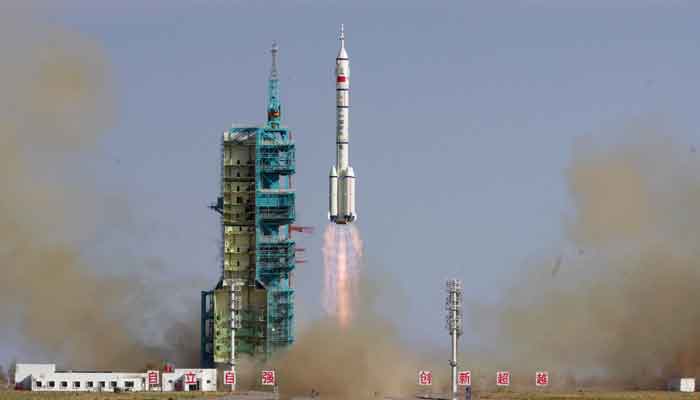
HONG KONG: After a one-day delay due to weather conditions at the landing site, China's Shenzhou-19 crewed spacecraft landed in the north of the country on Wednesday, state broadcaster CCTV reported.
In October last year, the spacecraft and its three crew were sent into space to work on China's "Tiangong" permanently inhabited space station.
Shenzhou crewed spaceflights have been a regular fixture of the country's space programme for the past two decades and have increased in frequency in recent years after China officially completed "Tiangong" in November 2022.
The fast development of China's manned and unmanned space programme has alarmed the United States, which has encountered issues with its own crewed spaceflights.
China is aiming to achieve a manned landing on the moon by 2030.
The Shenzhou-19 crew was made up of two male astronauts aged 48 and 34 and China's third female astronaut, aged 35. It was the first spaceflight for the two younger astronauts.
All part of the Chinese military's air force, the crew have been conducting experiments, some related to the construction of human habitats.
One of these experiments was expected to involve exposing bricks made from simulated lunar soil to conditions in space.
Should the tests prove successful, the bricks could be a key material used in the construction of a permanent lunar research station, which China hopes to complete by 2035.
Shenzhou missions have involved trios of astronauts and six-month stays in space, with an overlap period of several days where the departing crew hand over the station to the newly arrived group.


-
 How dogs became man’s best friend 15,800 years ago: New study reveals
 -
 Real-life ‘Project Hail Mary’ moment: 45 planets that may support alien life discovered
 -
 CERN successfully transports antimatter for first time in historic breakthrough
 -
 Astronomers spot solar system lookalike 87 light-years away
 -
 From Moon base to nuclear spacecraft: Inside NASA’s strategic overhaul to win space race against China
 -
 Northern lights wane, but watch for midnight surprise to dazzle the sky
 -
 NASA, South Korea team up for L4 deep space exploration mission
 -
 Scientists use ‘Space Archaeology’ to rebuild hidden history of giant spiral galaxy