German startup's space rocket explodes seconds after takeoff from Norway
Isar Aerospace, earlier warned initial launch could end prematurely, says team can learn from data produced

OSLO: A test rocket aimed at kickstarting satellite launches from Europe fell to the ground and exploded 40 seconds after takeoff from a Norwegian space port on Sunday, in what German startup Isar Aerospace had described as an initial test.
The uncrewed Spectrum rocket was billed as the first attempt at an orbital flight to originate from Europe, where several nations, including Sweden and Britain, have said they want a share of a growing market for commercial space missions.
Isar Aerospace, which had warned that the initial launch could end prematurely, said the test produced extensive data that its team can learn from.
Blasting off from Norway's Arctic Andoeya Spaceport, the Spectrum is designed for small and medium-sized satellites weighing up to one metric tonne, although it did not carry a payload on its maiden voyage.
Global players in the satellite launch market include Elon Musk's SpaceX, which launches from the United States, and French ArianeGroup, a joint venture between Airbus and Safran that uses a spaceport in South America's French Guiana.
SpaceX also operates the Starlink satellite service, a communications network spanning much of the globe.
Germany's BDLI aerospace industries association said Isar's first flight would lead to further progress.

"Europe urgently needs to ensure its sovereignty in space. Elon Musk's Starlink is not without alternatives — nor should it be," BDLI Managing Director Marie-Christine von Hahn said in a statement.
Sunday's mission was intended to collect data on the company's in-house developed launch vehicle, in a first integrated test of all its systems, Bavaria's Isar Aerospace said last week.
Sweden, with its Esrange launch site and Britain with its SaxaVord Spaceport in the Scottish Shetland Islands, are the nearest rivals to the Norwegian site, all of which aim to give Europe greater autonomy in space flights.
SaxaVord, which suffered a setback when a rocket engine exploded during a test last year, plans its first satellite launch in the third quarter of 2025, and Esrange also aims to stage its inaugural launch this year.


-
 How dogs became man’s best friend 15,800 years ago: New study reveals
 -
 Real-life ‘Project Hail Mary’ moment: 45 planets that may support alien life discovered
 -
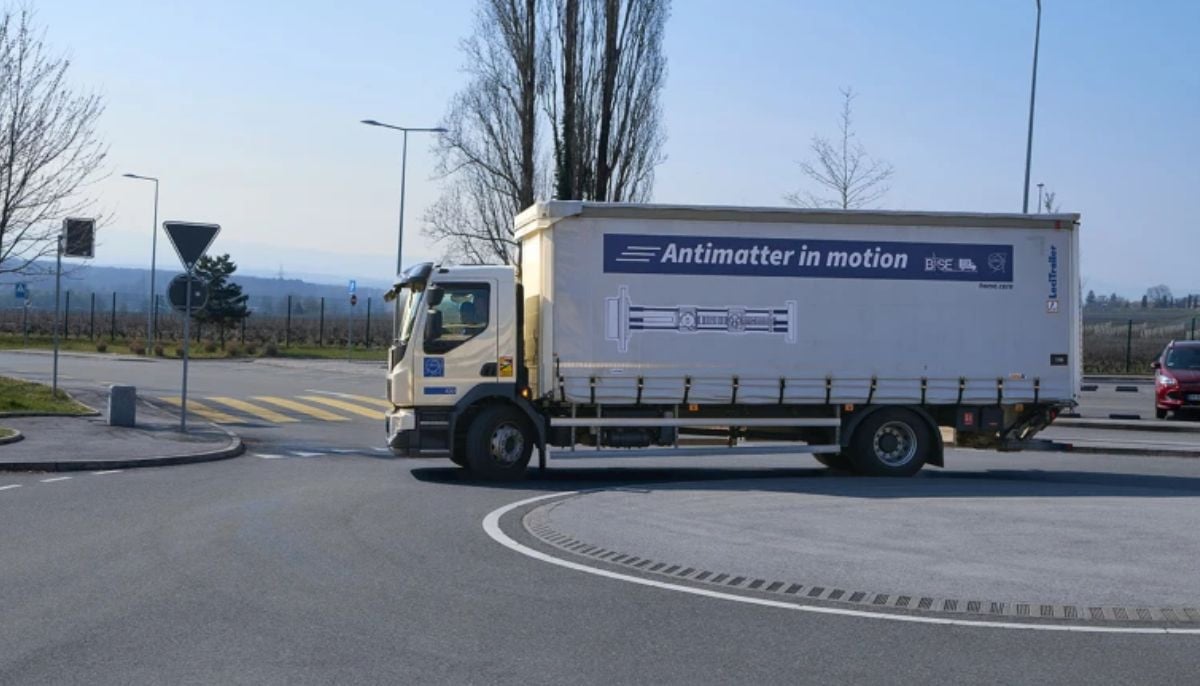 CERN successfully transports antimatter for first time in historic breakthrough
 -
 Astronomers spot solar system lookalike 87 light-years away
 -
 From Moon base to nuclear spacecraft: Inside NASA’s strategic overhaul to win space race against China
 -
 Northern lights wane, but watch for midnight surprise to dazzle the sky
 -
 NASA, South Korea team up for L4 deep space exploration mission
 -
 Scientists use ‘Space Archaeology’ to rebuild hidden history of giant spiral galaxy