Chinese scientists grow 'climate-proof' potatoes to combat food security threats
China is world’s biggest producer of potatoes, which are crucial to global food security
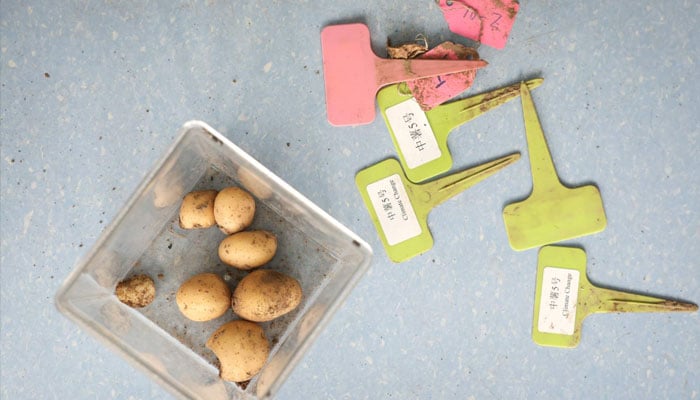
In a research facility in northwest Beijing, molecular biologist Li Jieping and his team have made significant strides in combating the challenges posed by climate change to food security, Reuters reported.
The team recently harvested a cluster of unusually small potatoes, one as tiny as a quail’s egg, from a potted plant grown under conditions designed to simulate the high temperatures expected by the end of the century.
These small potatoes, weighing just 136 grams (4.8 oz), were much smaller than the typical potatoes grown in China, where varieties are often twice the size of a baseball.
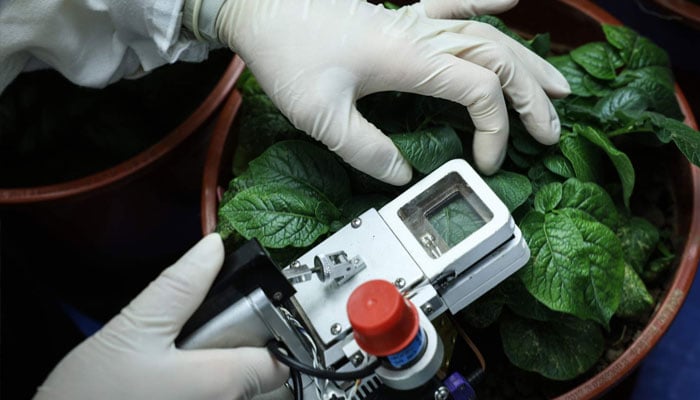
Potatoes are crucial to global food security due to their high yield compared to other staple crops, and China, as the world’s largest producer, plays a central role in ensuring their availability.
However, the crop is highly vulnerable to heat, and as climate change accelerates, rising temperatures, alongside intensifying droughts and floods, are threatening crop yields.
Li and his team are leading a groundbreaking, three-year study to examine how higher temperatures will affect the vegetable, with a focus on China’s two most commonly grown potato varieties.
“I worry about what will happen in the future,” Li said. “Farmers will harvest fewer potatoes, and that will impact food security.” The research, published this month in Climate Smart Agriculture, reveals that higher temperatures accelerate tuber growth by 10 days but also drastically reduce potato yields by over 50%.
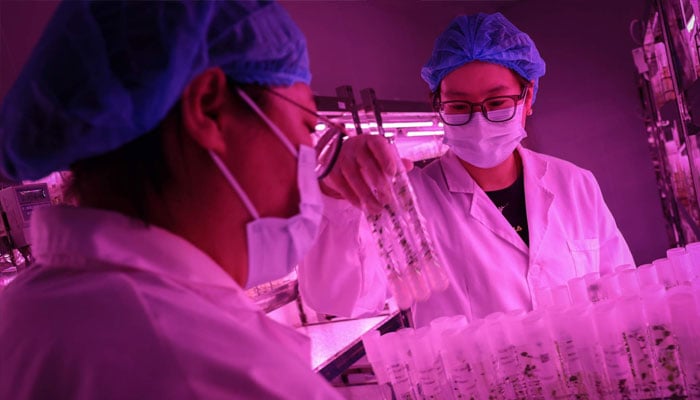
Li’s team grew the crop in a controlled chamber set 3 degrees Celsius above the current average temperature in northern Hebei and Inner Mongolia, regions where potatoes are traditionally grown in China.
In the context of global warming, which could reach 3.1°C above pre-industrial levels by 2100, the implications for agriculture are dire. In Inner Mongolia, heavy rains have already caused significant damage to potato crops, introducing diseases that delay harvests.
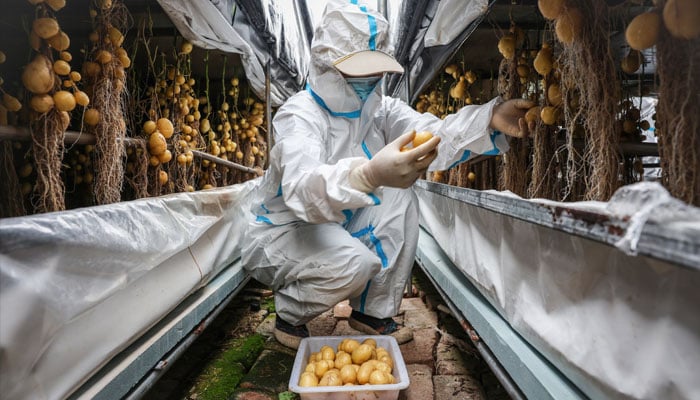
Meanwhile, seed potato companies like Yakeshi Senfeng are turning to innovative solutions, including aeroponic systems, to ensure higher yields and mitigate disease risks, particularly from late blight, which thrives in warmer, humid conditions.
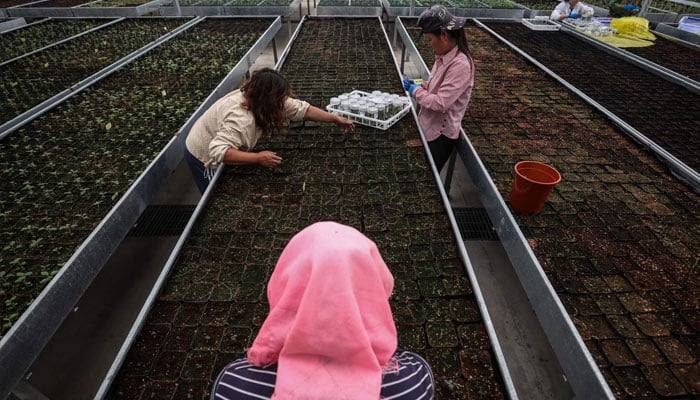
The collaborative research between the International Potato Center (CIP) and the Chinese government is part of an urgent effort to help farmers adapt to the changing climate.
Li's team is also developing heat-resistant potato varieties by experimenting with genetic modifications in greenhouses. Li stresses that within the next decade, Chinese farmers will need to adapt to these changes by adjusting planting schedules or moving crops to higher altitudes to escape the heat. Failure to do so could result in reduced yields, higher potato prices, and increased food insecurity.
“We need to act now,” Li said. “If we don’t find solutions, farmers will make less money, and consumers will feel the effects through rising prices.”


-
 New study explains 364-day Qumran calendar puzzle
 -
 Why does time feel faster as you age? Science explains
 -
 Scientists name newly discovered snake after Guns N' Roses' Slash
 -
 SpaceX secures three new NASA crew flights: What to know
 -
 Sovereign AI fund in talks to back Political Sciences: What to know
 -
 What recent discovered Moon Crater Means for Future Astronauts
 -
 Scientists discover new wild cat species in Bolivia for the first time in a century
 -
 SpaceX turns to failed startups for AI training: Here’s why