
UN urges action over alarming rate of HIV cases among girls in 2023
UN report cites lack of access to prevention, treatment as major cause of rising HIV cases in young women, girls
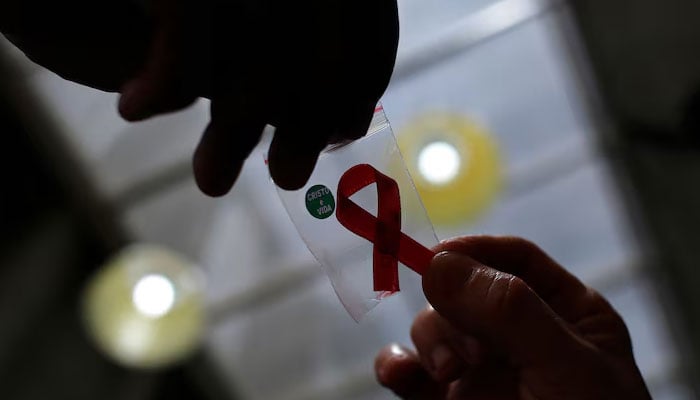
The United Nations International Children's Emergency Fund (UNICEF) sounded the alarm on Friday as it released a report in which it discovered an alarming rate of new human immunodeficiency virus (HIV) infections among young women and girls.
The report, which was released ahead of the world acquired immune deficiency syndrome (AIDS) day on Saturday, revealed that in 2023, 96,000 girls and 41,000 boys aged 15-19 were newly infected with HIV, with girls accounting for 70% of these cases.
The report warned that these new cases resulted from lack of access to prevention and treatment.
In sub-Saharan Africa, this disparity is even starker, with nine out of 10 new HIV infections in this age group occurring in girls in the most recent period for which data is available.
"Children and adolescents are not fully reaping the benefits of scaled up access to treatment and prevention services," said UNICEF associate director of HIV/AIDS Anurita Bains.
"Yet children living with HIV must be prioritized when it comes to investing resources and efforts to scale up treatment for all, this includes the expansion of innovative testing technologies."
As many as 77% of adults living with HIV have access to anti-retroviral therapy, but just 57% of children 14 and younger, and 65% of teenagers aged 15-19, can obtain lifesaving medicine.
Children 14 and younger account for only 3% of those living with HIV, but accounted for 12% — 76,000 — of AIDS-related deaths in 2023.
Around 1.3 million people contracted the disease in 2023, according to a report from the UNAIDS agency.
That is still more than three times higher than needed to reach the UN's goal of ending AIDS as a public health threat by 2030.
Around 630,000 people died from AIDS-related illnesses last year, the lowest level since a peak of 2.1 million in 2004, the report said ahead of World AIDS Day on Sunday.
Much of the progress was attributed to antiretroviral treatments that can reduce the amount of the virus in the blood of patients.
Out of the nearly 40 million people living with HIV around the world, some 9.3 million are not receiving treatment, the report warned.






-
 Teddi Mellencamp reveals medication side-effects landed her in the hospital
 -
 Billy Porter claims he came back from the dead amid sepsis battle
 -
 Childhood obesity crisis: 220 million kids may be affected by 2040, report warns
 -
 Christopher Reid gives update on his ‘heart failure’
 -
 Paris Hilton's power move to make 'neurodiversity relatable'
 -
 GLP-1 drugs linked to osteoporosis and gout: New study reveals higher risks
 -
 Selma Blair talks about how her debilitating disease is 'misunderstood'
 -
 Oliver 'Power' Grant cause of death revealed