Antarctic seas defy global warming thanks to chill from the deep
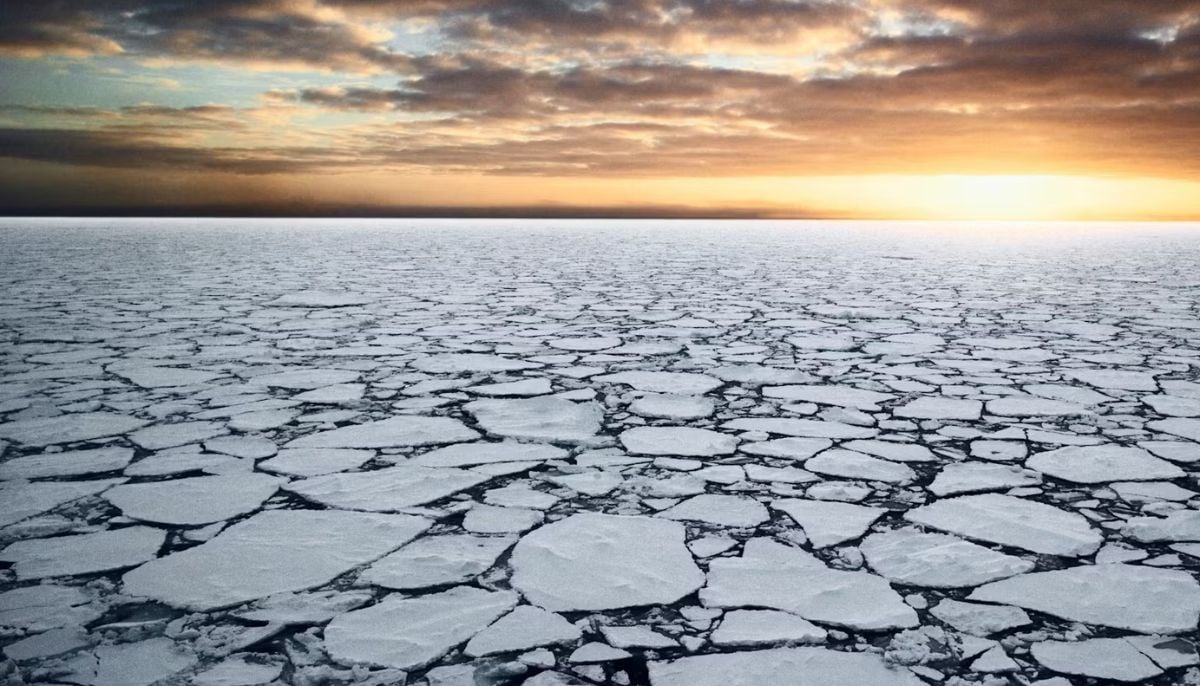
OSLO: A persistent chill in the ocean off Antarctica that defies the global warming blamed for melting Arctic ice at the other end of the planet is caused by cold waters welling up from the depths after hundreds of years, scientists said on Monday.
The Southern Ocean off Antarctica may be among the last places on Earth to feel the impact of man-made climate change, with a lag of centuries to affect waters emerging from up to 5,000 meters (16,000 ft) deep, the U.S. study said.
Many people who doubt mainstream scientific findings that human use of fossil fuels is warming the planet often point to the paradox of expanding winter sea ice off Antarctica in recent decades and a rapid shrinking of ice in the Arctic.
"Our findings are a step toward resolving the mystery," lead author Kyle Armour of the University of Washington, Seattle, told Reuters of the study in the journal Nature Geoscience.
He noted the upwelling of cold water helped to explain the persistence of sea ice but not its expansion, a trend other studies have linked to shifts in winds off the vast frozen continent.
Monday's report found that warm waters in the Gulf Stream cool as they flow north into the North Atlantic, then sink and loop south towards Antarctica as part of an aquatic conveyor belt that takes centuries to complete.
Eventually, gale force winds in the Southern Ocean around Antarctica blow surface waters northwards and draw the chill, ancient waters from the depths.
That upwelling helps explain why the surface of the Southern Ocean have warmed by just 0.02 degree Celsius (0.036 Fahrenheit) per decade since 1950, a fraction of the global average of 0.08 degree (0.144F), the study said.
It was unclear if the cold waters could delay a melt of ice locked up on land in Antarctica, the biggest worry about the continent that could sharply raise global sea levels.
Colin Summerhayes of the Scott Polar Research Institute, who was not involved in the study, said even the slight warming in waters to about 1 degree Celsius (33.8°F) had been bad news for ice shelves around the fringes of Antarctica.
"Even water that cool is still warm enough to melt the ice at the base of the ice shelves," he wrote in a comment.


-
 Four alien species recovered from crashed UFOs, Ex-CIA researcher claims
 -
 NASA delays Moon landing as Artemis III shifts to orbit mission
 -
 Scientists reveal shocking early sighting of 3I/ATLAS comet
 -
 Asteroid 2026 JH2 to pass extremely close to Earth on May 18: Should we be concerned?
 -
 Meet the ‘last titan’: Giant new dinosaur identified from fossils in Thailand
 -
 Can we finally find aliens? Scientists reveal a surprising new ‘organizational’ approach
 -
 Study reveals how to tell real alien life from chemical fakes
 -
 Scientists find hidden third ancestral group in Japanese genomes
-
 SpaceX ‘Space Junk’ is on a collision course with the Moon, scientists say
 -
Do you know what happened on May 10, 1967? NASA's M2-F2 disaster explained
-
Why the Southern Ocean is melting: Antarctica’s sea ice resilience reaches a breaking point
-
Giant black holes are cosmic ‘Frankensteins’ built by mergers, new study reveals