Two meteor showers to grace the sky this week
Southern Delta Aquariids and Alpha Capricornids will last through August
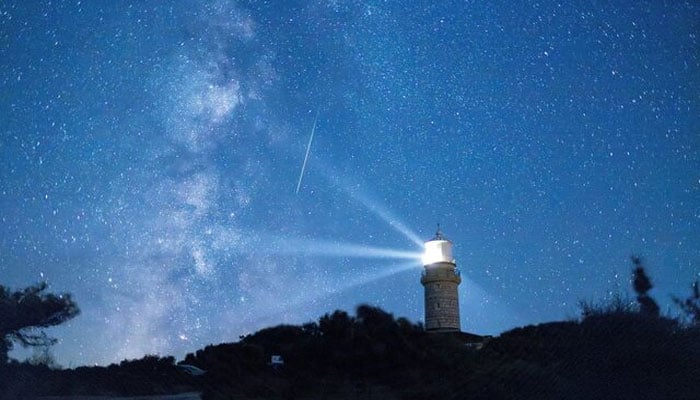
The Southern Delta Aquariids are expected to peak from Monday night through early Tuesday in the North American region. Those witnessing the meteor shower can view up to 25 meteors per hour but it depends on the location, according to the American Meteor Society.
The Southern Delta Aquariids will be joined by a minor meteor display, Alpha Capricornids, which resembles bright fireballs. During this shower, five meteors are expected to be seen per hour.
A fireball meteor is a term used for meteor showers that are brighter than Venus and are caused by a larger size meteor exceeding 1 meter in diameter, according to Nasa.
The Southern Delta Aquariids lasts till 21 August and the Alpha Capricornids lasts through August 15.
Meteor showers are the product of debris left behind by comets and asteroids in the orbit of the sun and the earth simply encounters the left behind debris annually during its orbital period.
According to Robert Lunsfold, the fireball report coordinator for the American Meteor Society, the debris path of the Southern Delta Aquariids is spread wide. Meaning that the shower can produce the same number of meteors during the peak days of the shower.
He also revealed that the night of Wednesday will be the ideal time to view both of the showers in their full display as the moon’s illumination decreases by 8% each night of the shower.
Additionally, the moon will be 16% full as compared to the 34% on Monday, as reported by Nasa’s Daily Moon Guide.
Nasa’s Bill Cooke has also remarked that your eyes will be better adapted to see a meteor shower if you stay away from digital screens as they ruin your night vision.


-
 SpaceX Starship Flight 14 reaches orbit after successful insertion burn
 -
 Asteroid Bennu: NASA samples reveal how it was born from fire and ice
 -
 Harvard scientists detect mysterious radio signal from planet outside our solar system
 -
 Scientists may have found a way to grow food on Mars
 -
 Why Earth’s 24-hour day isn’t quite as fixed as you think
 -
 Earth is splitting apart beneath the Pacific Northwest: Here’s why
 -
 Google's AI Satellite Prototype Launches on SpaceX October 1
 -
 Google plans first AI chip test in space under project Suncatcher