NASA’s PRIMA telescope has one big mission: 'Decode cosmic evolution'
NASA targets to launch PRIMA in 2033
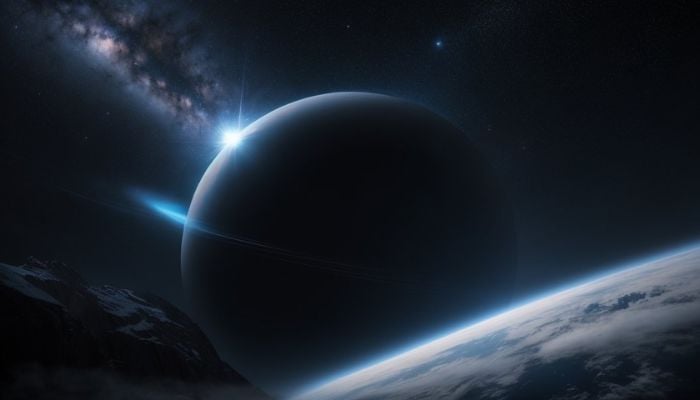
NASA has announced the advancement of its PRIMA (PRobe far-Infrared Mission for Astrophysics) telescope to the next stage with a significant mission to explore and decode the history and evolution of the Universe.
The space telescope is the first in a new class of NASA astrophysics missions, called Probe Explorers. The mission is a part of the space agency’s broad-spectrum Explorers Programme which is designed to unravel cosmic evolution by observing far-infrared wavelengths.
NASA explains that PRIMA's observations will bridge the gap between existing infrared telescopes, like the James Webb Space Telescope, and the radio spectrum, offering a broader view of the universe.
“A single mission alone can’t probe all the universe’s mysteries. But by extending the survey capabilities of our fleet into far-infrared wavelengths with PRIMA, we’re enabling an incredibly comprehensive look at the cosmos,” said Shawn Domagal-Goldman, director, Astrophysics Division.
Speaking about the progress, PRIMA has now entered Phase B, revolving around the mission’s preliminary design and technology development. Prior to moving into Phase C and full implementation, the project will be reviewed rigorously while assessing technical, programmatic and cost performance.
In the case of confirmation, the project will cost around $1.2 billion excluding launch. As per NASA, The launch is expected to take place in 2033.
Nicky Fox, associate administrator, Science Mission Directorate said, “The PRIMA mission is humanity’s next window into the deep universe. It will unveil the obscure across cosmic time to better understand the formation of planets, stars, black holes, and even how water on Earth came to be.”
One key objective is to understand the formation of planets beyond our solar system. It will also unlock mysteries related to black holes and galaxies like how they formed and evolved.
The focus of the observatory will be on assessing cosmic dust and heavy elements and any clue would help scientists explore cosmic origins of water on Earth.


-
 Blue Origin upgrades new Glenn rocket launch infrastructure to take on SpaceX
 -
 NASA’s next Mars mission targets Phobos and Deimos, not Red Planet
 -
 Is AI ready to rewrite our understanding of physics?
 -
 Astronomers identify possible first green star in 27 years of research
 -
 New study sounds alarm as Doomsday Glacier melts more aggressively than thought
 -
 Hubble data hints at planet born after its star died
 -
 NASA to brief public on Artemis III mission progress
 -
 ‘Time capsule beneath the sea’: World’s oldest shipwreck holds secrets from Great Pyramid era