Earth is splitting apart beneath the Pacific Northwest: Here’s why
Researchers discovered huge faults cutting through the sinking Juan de Fuca and Explorer plates
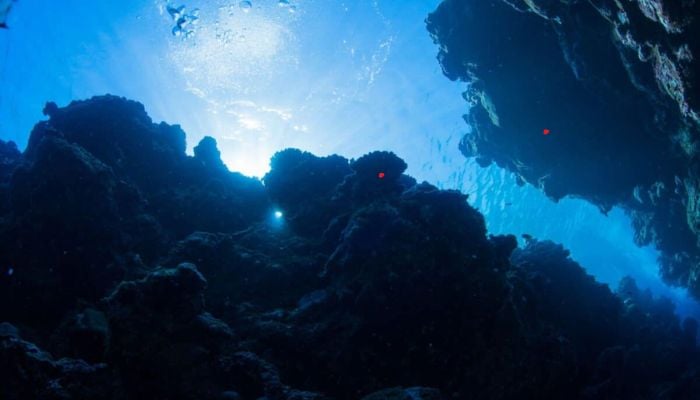
Scientists have found a detailed view of the Cascadia subduction zone beneath the Northwest beginning to tear apart.
Using the advanced seismic imaging, the researchers found that rather than shutting down in a single catastrophic event, the oceanic plate is actively breaking piece by piece over millions of years, similar to a train slowly derailing car by car.
Researchers used sound waves, via a 15-kilometer-long listening instrument streamer, and earthquake records to image beneath the seafloor, functioning similarly to a medical ultrasound.
They discovered huge faults cutting through the sinking Juan de Fuca and Explorer plates, including an enormous offset where a slab dropped by roughly 5 kilometers.
Brandon Shuck, a geologist at Louisiana State University and lead author of the study, said, "Getting a subduction zone started is like trying to push a train uphill -- it takes a huge effort.”
"But once it's moving, it's like the train is racing downhill, impossible to stop. Ending it requires something dramatic -- basically, a train wreck."
As per the findings published in the Science Advances, parts of the tear are unusually quiet seismically, indicating that sections have already completely detached and no longer experience rock-sticking stress.
The breakup creates gaps ("slab windows") that allow hot mantle material to rise, altering magma production and volcanic activity.
Speaking about the implications, the tectonic breakup unfolds over millions of years, meaning Cascadia remains fully capable of producing massive earthquakes and tsunamis on a human timescale.
These newly discovered structural tears into seismic models will eventually help scientists better understand how future earthquake ruptures might behave.


-
 Europe launched 8 orbital rockets last year, can it rival Starlink?
 -
 Japan launches world’s first mission to bring sample back from phobos
 -
 Orionid meteor shower 2026: Peak date, viewing tips and what to expect
 -
 Why Mars looks blue in NASA’s unedited curiosity panorama?
 -
 Blue Origin upgrades new Glenn rocket launch infrastructure to take on SpaceX
 -
 NASA’s next Mars mission targets Phobos and Deimos, not Red Planet
 -
 Is AI ready to rewrite our understanding of physics?
 -
 Astronomers identify possible first green star in 27 years of research