LONDON: Scientists have sequenced the genome of the giraffe for the first time, uncovering DNA quirks that help explain how the tallest animals on earth developed their remarkably long necks.
Being a giraffe is not easy. To pump blood two metres up from the chest to the brain calls for a turbo-charged heart and twice the blood pressure of other mammals. Giraffes also need special safety valves to let them bend down for a drink and raise their heads again without fainting.
The animals' unique body configuration has long been a puzzle for biologists, including Charles Darwin.
Now, by comparing the genome of the giraffe with its closest relative, the short-necked okapi, scientists have unpicked part of the puzzle by pinpointing changes in a small number of genes responsible both for regulating body shape and circulation.
This suggests that the development of a long neck and a powerful heart went hand in hand, driven by a relatively small number of genetic changes.
"There are many theories about how the giraffe's neck lengthened but it does seem that the development of the cardiovascular system evolved in parallel with the development of the skeletal system," said Morris Agaba of the African Institute for Science and Technology in Tanzania.
He and colleagues published their findings in the journal Nature Communications on Tuesday.
The unravelling of the genetic factors behind the giraffe's remarkable cardiovascular system could also be instructive for human health, since the animals appear to avoid the kind of organ damage often found in people with high blood pressure.
The more fundamental question of why giraffes evolved their long necks remains open, however.
The apparently self-evident idea that it was to reach ever-higher food supplies has been challenged in the past 20 years by a competing hypothesis that is it is actually due to sexual selection and competition among fighting males for mates.
Unlike long-necked birds, which have additional vertebrae, giraffes have the same seven vertebrae found in all mammals, although theirs are greatly extended.


-
 Beyond solar system: Astronomers discover magnetic fields on seven ‘hot Jupiter’ exoplanets
 -
 Blue Origin's next launch date? NASA chief reveals recovery timeline, lunar mission plans
 -
 What New Glenn’s explosion means for NASA’s next Moon missions
 -
 5 times video games actually went to space
 -
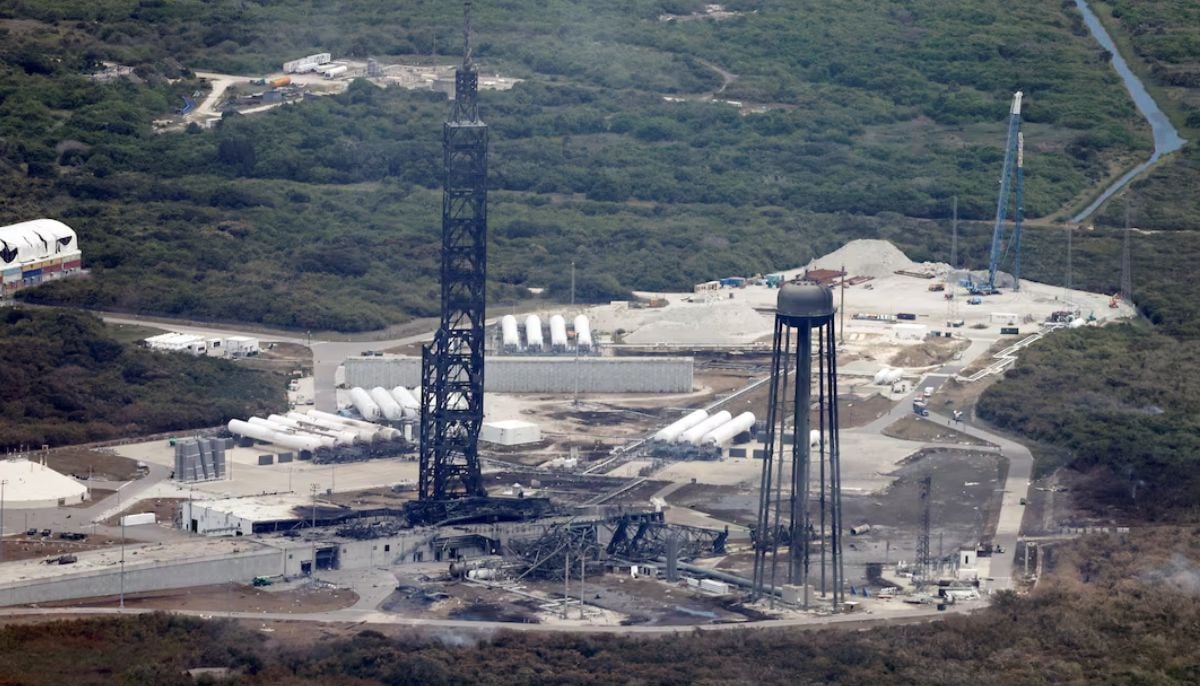 Blue Origin hit with months-long delays after rocket explosion damages launch pad
 -
 Blue Moon 2026: Everything to know about the rare celestial event
 -
 Blue Origin’s New Glenn rocket explodes: NASA responds to impact on lunar base mission
 -
 Scientists map hidden Antarctic Marginal Ice Zone in Southern Ocean for first time