Thousand more solar system objects found shocking scientists
More than 1.3 million space pebbles have previously been found by scientists
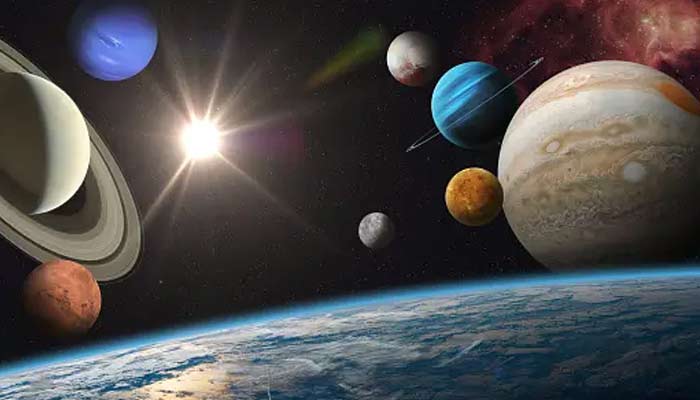
More than 1,000 previously undiscovered space rocks have been found in the solar system after covertly interfering with other cosmic objects for decades.
A new study demonstrates how artificial intelligence and citizen scientists worked together to find the asteroids concealed in Hubble Space Telescope archive photographs, according to Live Science.
According to Nasa, more than 1.3 million space pebbles have previously been found by scientists; the majority are located in the asteroid belt between Mars and Jupiter.
There are probably millions or perhaps hundreds of thousands of asteroids out there that have yet to be found.
But it's likely the case that the remaining space rocks are the smallest and thus faintest entities in the solar system as a whole, making them incredibly elusive.
In the current study, 1,031 previously unclassified asteroids from historical Hubble data were highlighted by researchers and published on March 15 in the journal Astronomy and Astrophysics.
Artificial intelligence that was trained to recognise the faint light streaks produced by the small space pebbles by hundreds of citizen scientists was able to identify them.
"We were surprised to see such a large number of candidate objects," study lead author Pablo García-Martín, a researcher at the Autonomous University of Madrid in Spain, said in a statement.


-
 Hunter’s Moon 2026: When and how to watch October’s full moon
 -
 Elon Musk’s Mars colonization dream faces reality check from Nobel laureate
 -
 NASA competition model 2.0 cuts mission selection by 45%
 -
 A ‘neglected’ neutrino may hold the key to why the Universe exists
 -
 Can cancer drugs be made in space? Here’s what the new mission aims to find out
 -
 SpaceX Falcon 9 successfully launches Bandwagon-5 mission with 32 payloads
 -
 Europe launched 8 orbital rockets last year, can it rival Starlink?
 -
 Japan launches world’s first mission to bring sample back from phobos