World's oldest book goes on sale for $2.6 million
Earliest Christian manuscript from 250-350 AD goes on sale at Christie’s
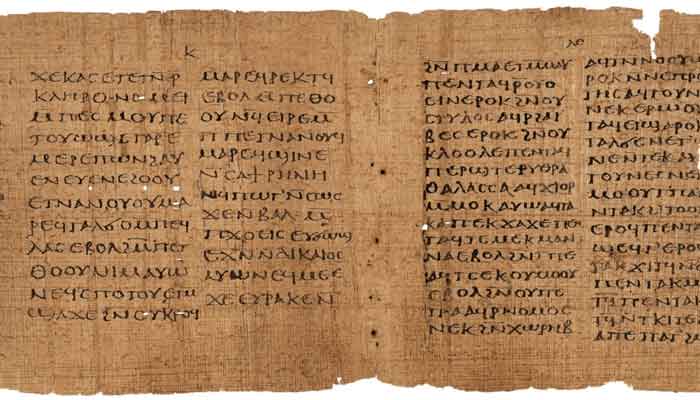
A handwritten book from Egypt, belonging to the earliest Christian civilisations will go up for auction in June in London, at a staggering price of $2.6 million to $3.8 million, Times of India reported.
According to the Christie’s website, the Crosby-Schoyen Codex, is one of the oldest known books to exist. The ancient manuscript is written on papyrus in the Coptic language between 250-350 AD.
The manuscript consists of 104 pages or 52 leaves and contains epistles from Peter and the book of Jonah.
Senior specialist for books and manuscripts at Christies, Eugenio Donadoni, said that the text is of "monumental importance as a witness to the earliest spread of Christianity around the Mediterranean".
"The earliest monks in Upper Egypt in the earliest Christian monastery were using this very book to celebrate the earliest Easter celebrations, only a few hundred years after Christ and only a hundred or so years after the last Gospel was written."
The book was discovered in the 1950s and has since been part of the prestigious Shoyen Collection, owned by Norwegian collector Dr Martin Schoyen.
On June 11 it will go on sale, along with several other ancient manuscripts at the Christie’s, till then it is being displayed at Christie’s New York.


-
 What is the Lindsay Clancy 'copycat' theory?
 -
 Danish PM Mette Frederiksen expresses optimism for peaceful arctic resolution amid US pressure over Greenland
 -
 Boris Johnson narrowly escapes drone strikes near polish border as moscow escalates NATO-border attacks
 -
 Russia welcomes Trump’s push to halt Ukraine strikes on diesel facilities
 -
 UK faces fresh breakup calls as Scotland, Wales and Northern Ireland look to EU
 -
 EU leaders push new Arctic policy as China, Russia expand presence
 -
 Trump mail ballot order blocked by second Federal Judge as US Supreme Court prepares to weigh in
 -
 UK Parliament urges comprehensive AI bill to tackle human rights threats and regulatory gaps