Did James Webb Telescope really detect alien life and Nasa covered it up?
UK astronaut Tim Peake says Nasa's James Webb telescope may have discovered alien life
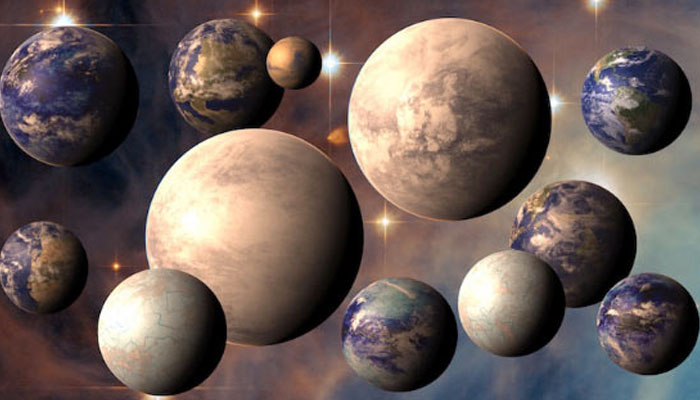
We may soon receive "strong evidence" of a biosignature on a far-off exoplanet, as per an an article titled "Have We Just Discovered Aliens?" that appeared in the British news magazine The Spectator earlier this month.
"They don't want to release or confirm those results until they can be entirely sure," said UK astronaut Tim Peake, whose theory that Nasa's James Webb telescope had already discovered evidence of alien life was perhaps the most memorable comment, according to Futurism.
The article included a remark from UK astrophysicist Becky Smethurst, who stated that "we are going to get a paper that claims to have strong evidence for a biosignature in an exoplanet's atmosphere very, very soon" in a late-year YouTube video.
As we mentioned yesterday, astrobiologists are quite interested in the extremely intriguing observations that the James Webb spacecraft has begun to make. More on that in a bit. However, as usual, there's cause for doubt regarding these extravagant assertions.
As an illustration, the experts cited by the British magazine have begun to voice their opinions and call into question the entire concept.
"So turns out something I said in a YouTube video has been jumped on by UFO enthusiasts and then bizarrely The Spectator," Smethurst tweeted.
"I said that in 2024 we could see a claim of a biosignature found in the atmosphere of an exoplanet with JWST," she added. "This was just an enthusiastic and hopeful guess."
"The leap from 'potential biosignature' to full on 'aliens' is ridiculous," Smethurst added in a follow-up. "By biosignature, we're talking tiny molecule in atmosphere of an exoplanet that's big enough that JWST can even do this. Not aliens on a rocky planet."


-
 Elon Musk’s Mars colonization dream faces reality check from Nobel laureate
 -
 NASA competition model 2.0 cuts mission selection by 45%
 -
 A ‘neglected’ neutrino may hold the key to why the Universe exists
 -
 Can cancer drugs be made in space? Here’s what the new mission aims to find out
 -
 SpaceX Falcon 9 successfully launches Bandwagon-5 mission with 32 payloads
 -
 Europe launched 8 orbital rockets last year, can it rival Starlink?
 -
 Japan launches world’s first mission to bring sample back from phobos
 -
 Orionid meteor shower 2026: Peak date, viewing tips and what to expect