Starless galaxy leaves astronomers scratching their heads
Astronomers suggest that rare insight could challenge understanding of how stars and galaxies form
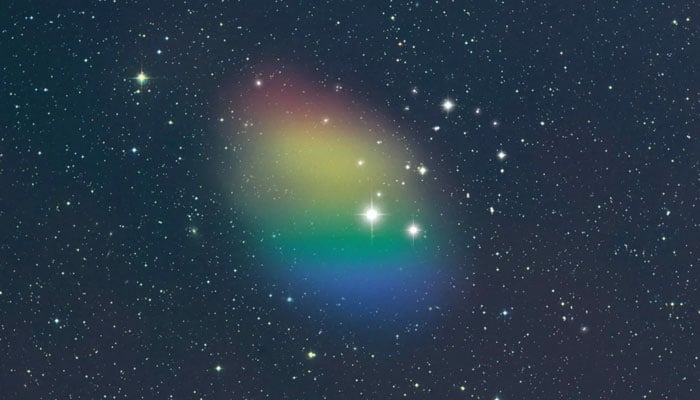
Astronomers have discovered an entire galaxy with abundant gas but no visible stars, providing a rare insight into the formation of stars and galaxies, Futurism reported.
The discovery, presented at the American Astronomy Society's annual meeting, could challenge our understanding of how stars and galaxies form, according to astronomers.
According to a Big Think article on the finding, the strangely empty object, known as J0613+52, is situated 270 million light-years away and at the very least seems to be a low-surface brightness galaxy (LSB), as reported by Futurism.
An LSB is less bright than other night sky elements due to the spread of gasses, resulting in few stars. However, this classification suggests that such a galaxy would have some stars, and J0613+52, which seemingly has no stars, could be a rare, primordial galaxy.
"This could be our first discovery of a nearby galaxy made up of primordial gas," Karen O'Neil, a senior scientist of the Green Bank Observatory, said in a statement about the research.
O'Neil and her team discovered an object in a galaxy while studying LSBs due to a discrepancy in data between two telescopes. They discovered the galaxy was lacking stars despite being rich in gas, containing between one and two billion solar masses of hydrogen and was extremely isolated.
"The [Green Bank Telescope] was accidentally pointed to the wrong coordinates and found this object," O'Neil said. "It's too far from other galaxies for them to help trigger star formation through any encounters.”
O'Neil added: "J0613+52 appears to be both undisturbed and underdeveloped."
O’Neil and her team’s observation suggests that the "dark" galaxy, a remarkably stable relic of the early years of the cosmos, has remained that way for billions of years without significant gravitational interactions or nearby galaxies intruding on its near-perfect equilibrium.
This makes it an uncannily preserved relic of the cosmos, so perfect that it almost defies understanding.
According to Big Think, astronomers are likely to search for heavy metals indicating the presence of stars in future observations. If no such metals are found, it could strongly support J0613+52 as the fabled dark galaxy that has eluded detection.


-
 NASA Curiosity captures strange ‘wind-carved’ Mars landscape in dawn image
 -
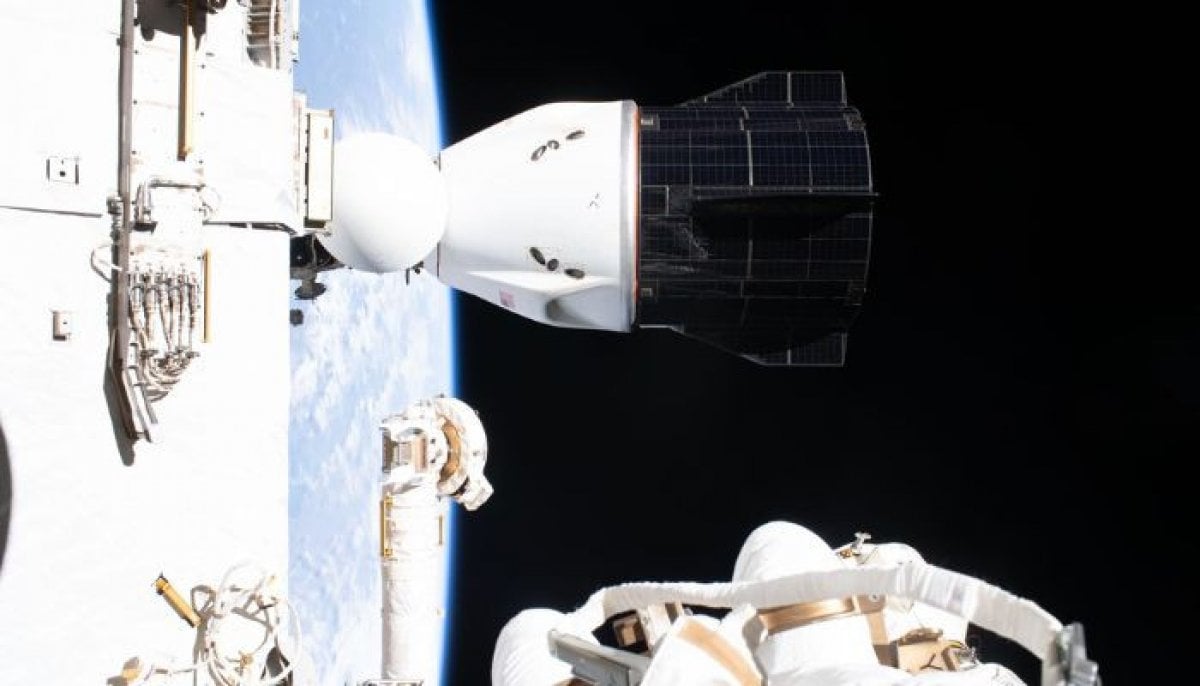 NASA's Crew-12 Dragon begins return trip from space station
 -
 Mysterious ‘phoenix planet’ found around the remains of a dying star
 -
 First possible evidence of Planet Nine found in infrared data
 -
 Elon Musk announces SpaceXAI rebrand to SpaceXSI following presidential order on 'Super Intelligence'
 -
 ISS Command changes hands in emotional ceremony
 -
 Moon water acts nothing like it does on Earth, study finds
 -
 Hawaii’s Hōlei sea arch collapses after centuries on Big Island: What happened