Chinese exchange students fall victim to trend of 'cyber kidnapping'
"Crimes have gotten much more targeted and much more expensive," says cyber security expert

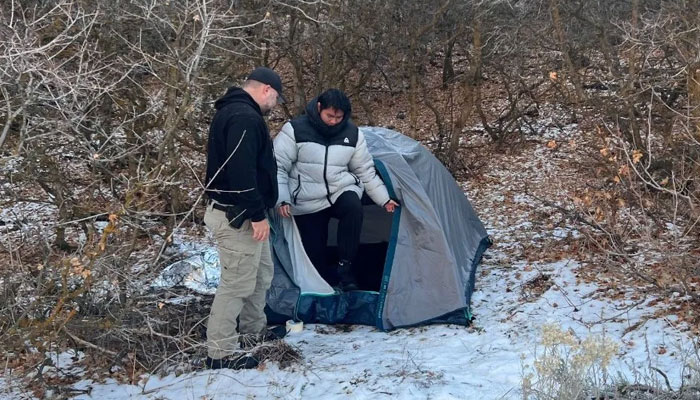
A Chinese foreign exchange student Kai Zhuang, studying in the US, was reported missing by his high school last week and was later found "very cold and scared" in a tent in rural Utah after falling victim to the "cyber kidnapping" scam.
According to local police, anonymous scammers had convinced the 17-year-old to isolate himself. Once the teenager was alone in the wilderness, the kidnappers sent a ransom demand and a picture — that Zhuang took of himself — to his parents in China and claimed he had been abducted.
Zhuang's family eventually paid $80,000 to the perpetrators.
However, experts have warned that the "cyber kidnapping" scam is part of a global criminal trend, with advancements in technology making it easier for criminals to pursue such schemes.
While there is no clear data on the number of cases, Zhuang's experience is not an isolated occurrence, they told BBC.
"The way it's being perpetrated in most cases, [it] could happen to anyone," said Joseph Steinberg, a cyber security expert who has advised business firms and governments. "The crimes have gotten much more targeted and much more expensive."
What is cyber kidnapping?
Typically, cyber kidnappings involve criminals calling or messaging a victim to trick them into thinking a loved one has been kidnapped, though the person is actually safe, Steinberg said.
"They will do anything to keep you on the phone," said Marie-Helen Maras, the director of the Center for Cybercrime Studies at John Jay College of Criminal Justice. "They'll threaten to cause harm if you hang up or if you try to contact anyone to frighten their targets into making rushed decisions."
How can it be prevented?
Steinberg suggests that simply being aware of the problem, knowing what personal information is public and staying vigilant can help prevent such scams. Those who are targeted should report it to the authorities.
After initially receiving an emergency call or message, Steinberg also recommends trying to reach the loved one to verify their location.
Families can also come up with specific phrases or keywords to use in emergency situations that perpetrators would not be aware of, he said.
Law enforcement agencies and telecommunications companies may play a role in preventing the crimes in the future as well by making improvements in authenticating and tracing the source of calls, Steinberg said.


-
 First radio emission detected from planet beyond our solar system
 -
 Nexus rules are changing for Americans and Canadian next year: Here’s what you should know
 -
 Man arrested after alleged death threats to Canadian PM Mark Carney on X
 -
 US Coast Guard seizes Cuba-bound ship carrying ‘large quantities’ of fuel
 -
 US urged to halt death penalty after Christa Pike’s failed lethal injection
 -
 Kennedy Center honors relocates to Capital One arena amid Trump naming dispute
 -
 Cornell student groups to protest university’s handling of alleged gang rape
 -
 G7 leaders convene emergency talks on diesel crunch as UK forecourt prices hit £2 a litre: report