Rescue workers recover 9 bodies stuck in flooded tunnel in South Korea
South Korea experienced rainfall total of nearly 300mm on Saturday that devastated various local regions
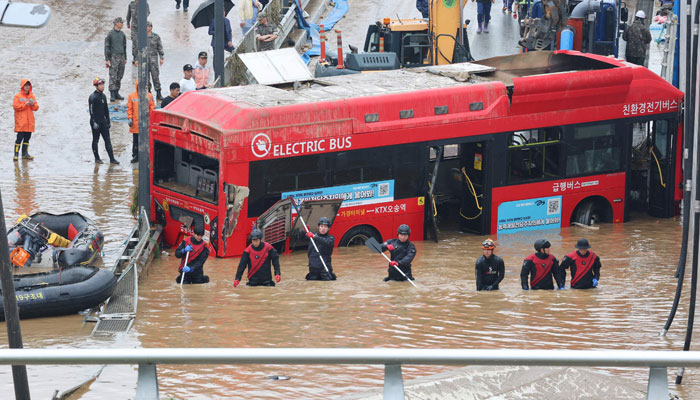
Nine bodies were recovered by rescuers in Cheongju, South Korea, from cars stuck inside a flooded tunnel after days of persistent rain caused many buildings to become submerged in water, trapping many people inside.
Authorities have reported that up to 37 fatalities may have occurred so far as a result of the heavy rains, landslides, and power outages that plunged the majority of the nation into darkness.
Nine people are reportedly missing, according to earlier reports from the authorities.
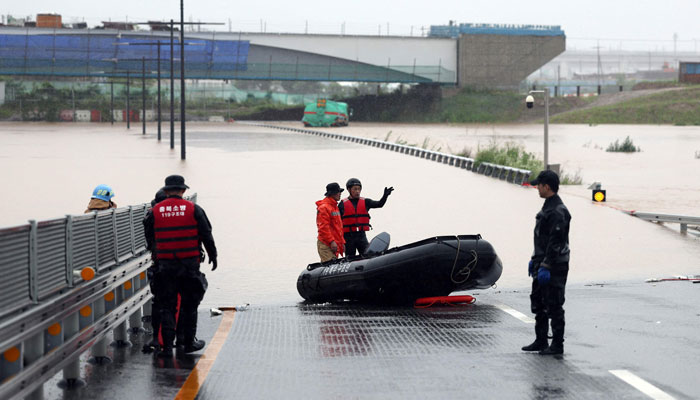
Although the number of people trapped inside the 685-meter-long submerged tunnel in the town of Osong is unknown, it is reported that 15 vehicles are there.
While nine people were rescued on Saturday, some bodies were found on a bus.
In the hilly regions of the North Gyeongsang region, where landslides destroyed long-standing homes, additional fatalities were reported.
According to reports, South Korea experienced a Saturday rainfall total of nearly 300mm (11.8in).
The country typically receives 1,000mm (39.4in) to 1,800mm (70.9in) of precipitation per year, most of which falls during the summer, according to the Korean Meteorological Association.
Due to evacuations by various local governments, thousands of residents have been impacted. Han Duck-soo, the prime minister, also requested assistance from the armed forces.According to reports, more than 6,000 residents have been evacuated after the Goesan Dam, also in North Chungcheong, began to overflow.
Areas and residences lying low were flooded, leaving residents confined to their homes.
A landslide incident Friday caused a train — with no passengers — to derail in North Chungcheong, in which one person was hurt.
South Korea’s rail operator, Korail, announced the suspension of all slow trains and some bullet trains, saying other bullet services would be disrupted.
The Korea Meteorological Administration forecast more rainfall through Wednesday next week. It also issued a warning that the weather conditions pose a "grave danger".
Similar acute weather conditions and devastations have caused inundation and landslides in other countries, such as India, China, and Japan, in the past few weeks.
According to scientists, a warming atmosphere caused by climate change makes extreme rainfall more likely.


-
 Save over $100 per fill' ;Trump signs executive order for tax-free diesel in Nebraska
 -
 Francis Halzen wins 2026 Nobel Prize in Physics for IceCube neutrino discovery
 -
 Burnham weighs delaying defence spending plan amid NATO pressure
 -
 South Korea orders emergency probe after AI-powered cyberattacks target major banks
 -
 Pakistan, Turkiye, Saudi Arabia activate Makkah pact's defense commitments
 -
 Quebec voters could bring back separatist Parti Québécois to power
 -
 Toronto Pearson gold heist trial begins more than 3 years after $20mn theft
 -
 France school protests: 15-year-old loses hand after picking up police grenade
-
 Cornell police sought phone evidence that lawyer says never reached prosecutors
 -
Warnings over Christa Pike’s veins were raised before failed execution, lawyer says
-
Karoline Leavitt joins Fox News after stepping down as White House press secretary
-
Ex-House speaker Dennis Hastert dies at 84, years after molestation allegations