Clinical trials for first AI-generated drug being conducted on humans
Insilico Medicine's first AI-designed drug features a novel target and design while other AI-designed drugs are in trials
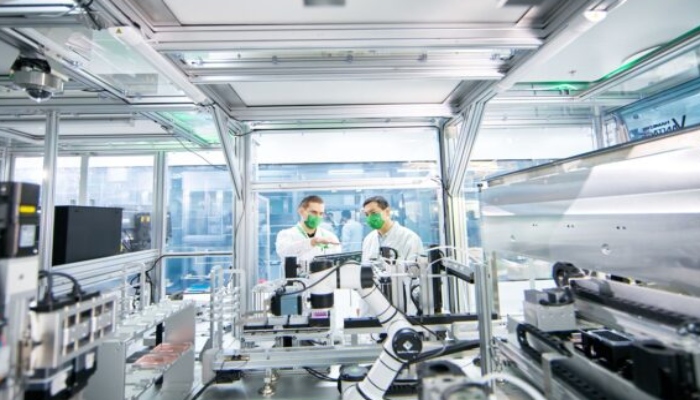
After having natural human-like conversations with humans, AI could potentially be treating them medically, as the first drug fully generated by artificial intelligence has now entered clinical trials with human patients this week.
The drug, INS018_055, was developed by Hong Kong-based Insilico Medicine, a biotech startup with more than $400 million in funding, as a treatment for idiopathic pulmonary fibrosis, a chronic condition that results in lung scarring.
According to the National Institutes of Health, the condition, which has become more common in recent years and currently affects about 100,000 people in the US, can be fatal if left untreated for two to five years.
"It is the first fully generative AI drug to reach human clinical trials, and specifically Phase II trials with patients," said Alex Zhavoronkov, founder and CEO of Insilico Medicine, according to CNBC. "While there are other AI-designed drugs in trials, ours is the first drug with both a novel AI-discovered target and a novel AI-generated design."
According to Zhavoronkov, the drug discovery process for the new treatment started in 2020 with the intention of developing a "moonshot" medication to address problems with the condition's current treatments, which mainly aim to slow down progression and sometimes have unpleasant side effects.
He continued by saying that although the company has two other drugs partially developed by AI in the clinical stage, Insilico chose to focus on IPF in part due to the condition's implications for ageing.
One is a COVID-19 medication that is currently undergoing phase one clinical trials, and the other is a cancer medication, specifically a "USP1 inhibitor for the treatment of solid tumours," that just recently received FDA approval to begin clinical trials.
"When this company was launched, we were focused on algorithms — developing the technology that could discover and design new molecules," Zhavoronkov said.
"I never imagined in those early days that I would be taking my own AI drugs into clinical trials with patients. But we realised that in order to validate our AI platform, we needed to not only design a new drug for a new target, but bring it into clinical trials to prove that our technology worked."
The IPF medication is currently being tested in a 12-week, randomised, double-blind, placebo-controlled trial in China. Insilico intends to increase the testing population to 60 participants at 40 sites in the US and China.
In the event that the current phase two study is successful, it will move on to a study involving a larger cohort and then possibly phase three studies involving hundreds of participants.
"We expect to have results from the current Phase II trial next year," Zhavoronkov said, adding that it's difficult to predict exact timing for future phases, especially since the disease is relatively rare and patients must fulfill specific criteria.
He added, "We are optimistic that this drug will be ready for market, and reach patients who may benefit from it, in the next few years."


-
 FDA clears first age-reversal gene therapy trial for vision loss
-
 Cancer cells can turn back into normal cells, claim Korean scientists
-
 Does smoking increase infertility risk? WHO explains the dangers
-
 Doctor sheds light on how to detect sugar problems early with simple sign
-
 COP31 climate talks in Turkey near a close: Delegates issue reactions
-
 Gordon Ramsay reveals morning habit that could lower cancer risk
-
 Kidney disease warning signs laid bare: Signs that need attention
-
 Is workplace stress taking a toll on your mental health? How to recognise anxiety
-
 Virginia reports first measles-related death amid measles elimination status loss
-
Pancreatic cancer treatment sees major breakthrough with latest medicine
-
Higher cholesterol linked to severe depression? Research answers pressing question
-
New pancreatic cancer drug makes tumours disappear in some patients during trial