
How is AI helping recycling become more efficient?
Experts share the promising improvements AI has brought about in recycling and its challenges
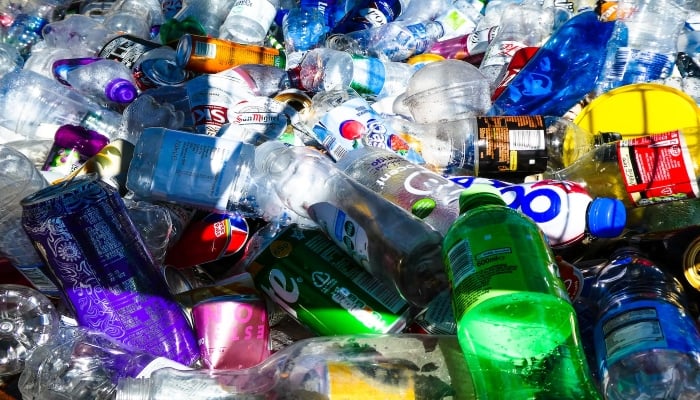
Based on recent developments, artificial intelligence (AI), with its ability to recognise recyclable waste, has once again demonstrated why it is one of science's greatest inventions and can help improve the world.
According to the World Bank, solid waste production reached 2.24 billion metric tonnes in 2020. By 2050, the number is predicted to increase by 73% to 3.88 billion metric tonnes.
Plastic presents particular difficulties. More than 8.3 billion metric tonnes of plastic waste were produced between the 1950s when mass production of the material began, and 2015, according to research from the Universities of Georgia and California.
As the founder of Greyparrot, a UK start-up that developed an AI system designed to analyse waste processing and recycling facilities, Mikela Druckman has spent a lot of time examining what we discard.
While speaking with the BBC, she said: "In a single day, you will have literally mountains of waste in one facility coming through, and what's very shocking and surprising is that it never stops. There are no holidays for waste; it just keeps coming."
Around 50 waste and recycling facilities in Europe have cameras installed above their conveyor belts by Greyparrot, which uses AI software to analyse what is moving through in real time.
As AI advances with sophisticated image processing capabilities, Druckman claims that it is still challenging to train a system to identify garbage.
"A product like a Coke bottle, once it goes into the bin, will be crumpled, crushed and dirty, and makes the problem much more complex from an AI standpoint," she said.
Currently, 32 billion waste objects are tracked annually by Greyparrot's systems, and the company has amassed a sizable digital waste map. Waste managers can use this knowledge to improve the operational effectiveness of their operations, but it can also be widely disseminated.
"It is allowing regulators to have a much better understanding of what's happening with the material, what materials are problematic, and it is also influencing packaging design," says Druckman.
She claims that climate change and waste management are interlinked, as resources are often used without recovery.
Additionally, she also said that stricter rules on consumption and packaging design could impact resource usage and the value chain. Duckman expressed hopes that other brands and designers would also use GreyParrot's data to help design reusable products.
In addition, Troy Swope, who owns a business dedicated to producing better packaging, replaced Gillette's plastic razor trays with ones made of plant-based fibre.
Swope asserts in a blog entry on Footprint's website that a "myth of recycling" is deceiving consumers. He made a specific mention of a plastic salad container marked "ready to recycle" and inquired as to what that actually meant.
"It's less likely than ever that their discarded single-use plastic ends up anywhere but a landfill," wrote Swope. "The only way out of the plastics crisis is to stop depending on it in the first place."
"We've seen a lot of claims about eco or green packaging, but sometimes they are not backed up with real fact, and can be very confusing for the consumer," Druckman says.
The UK firm Polytag uses ultraviolet tags on used plastic bottles to inform retailers about recycling numbers. The tags are read by a machine, and the number is uploaded to a cloud-based app for real-time tracking. Polytag has collaborated with UK retailers Co-Op and Ocado.
According to the BBC, the UK government, Wales, and Northern Ireland plan to launch a deposit return scheme in 2025, allowing people to deposit used plastic bottles and metal drink cans in reverse vending machines.
The scheme will pay around 20 pence per item. However, the trend towards e-cigarettes and vaping addiction continues to create a mountain of electronic waste that is difficult to recycle.
"It's a huge problem. And it's getting bigger," said Ray Parmenter, head of policy and technical at the Chartered Institute of Waste Management.
He adds that disposable single-use vapes are a fundamental issue, opposing the circular economy. Disposal vapes, made from plastics, metals, and lithium batteries, are thrown away 1.3 million times per week in the UK.
This results in 10 tonnes of lithium going into landfills annually, enough to power 1,200 car batteries. According to Parmenter, the use of raw materials like lithium from deep mines is not sustainable. Industry and policymakers play a role in making products more recyclable or reusable, but consumers can make the biggest change by "consuming less."






-
 Shanghai Fusion ‘Artificial Sun’ achieves groundbreaking results with plasma control record
 -
 Polar vortex ‘exceptional’ disruption: Rare shift signals extreme February winter
 -
 Netherlands repatriates 3500-year-old Egyptian sculpture looted during Arab Spring
 -
 Archaeologists recreate 3,500-year-old Egyptian perfumes for modern museums
 -
 Smartphones in orbit? NASA’s Crew-12 and Artemis II missions to use latest mobile tech
 -
 Rare deep-sea discovery: ‘School bus-size’ phantom jellyfish spotted in Argentina
 -
 NASA eyes March moon mission launch following test run setbacks
 -
 February offers 8 must-see sky events including rare eclipse and planet parade