China to launch lunar telescope in 2026
Experts from China's space agency suggest that this project will help them peek into the Dark Ages
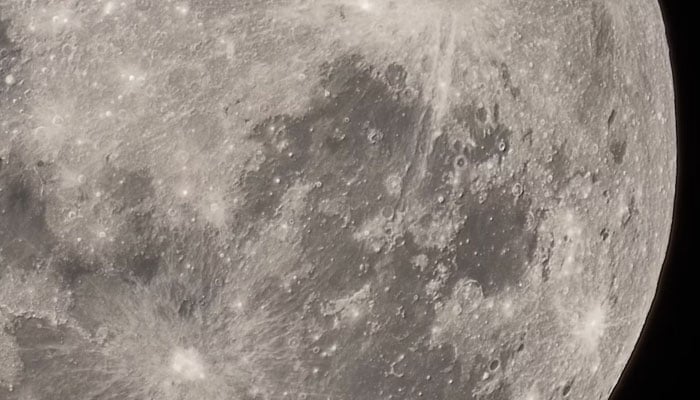
Just when people believed there were enough satellites in space, China announced its plans to launch a satellite constellation that orbits the moon in an attempt to explore the early days of the universe as early as 2026.
According to Space.com, one "mother" satellite and eight little "daughter" craft would make up the array.
According to Xuelei Chen, an astronomer with the China National Space Administration (CNSA), at the Astronomy From the Moon conference held earlier this year in London, the mother would process information and communicate with Earth, and the daughters would detect radio signals from the farthest reaches of space.
Technically, it would be more feasible to place such an array in orbit around the moon than to erect a telescope on the moon's surface, which Nasa and other space agencies are considering as one of the next big steps in astronomy.
"There are a number of advantages to doing this in orbit instead of on the surface because it's engineeringly much simpler," Chen said during the conference.
He added that solar power can be used to observe the lunar night as the lunar orbital period is two hours, making it easier than providing energy for 14 days on the lunar surface.
"There is no need for landing and a deployment, and also because the lunar orbital period is two hours, we can use solar power, which is much simpler than doing it on the lunar surface, which, if you want to observe during the lunar night, then you have to provide the energy for almost 14 days."
He also said that this proposed "Discovering Sky at the Longest Wavelength," or Hongmeng Project, could be ready as early as 2026.
Astronomers are interested in the low-frequency part of the electromagnetic spectrum, which is impossible to study from Earth's surface due to strong absorption by Earth's atmosphere.
They believe this radiation could allow them to peer into the Dark Ages, when the universe was filled with hydrogen atoms and their light couldn't get through, with the aid of a lunar telescope.


-
 Hawaii’s Hōlei sea arch collapses after centuries on Big Island: What happened
 -
 Solar system may have a much shorter lifespan than we thought
 -
 Singapore builds world’s ultra-precise clock outperforming US, China
 -
 NASA expands Moon base research with three new investigations
 -
 Are Europe's data centres hiding their water use?
 -
 SpaceX set to send Google AI chips into space for data centers
 -
 New report warns of record ocean warming and rising seas
 -
 Why NASA scientists believe Scotland holds clues to Mars’ ancient past