VIDEO: Meet deep-water robot OceanOneK who's 'your avatar in water'
OceanOneK is a deep-water humanoid robot that is named after its capacity to dive 1,000 metres deep into the ocean
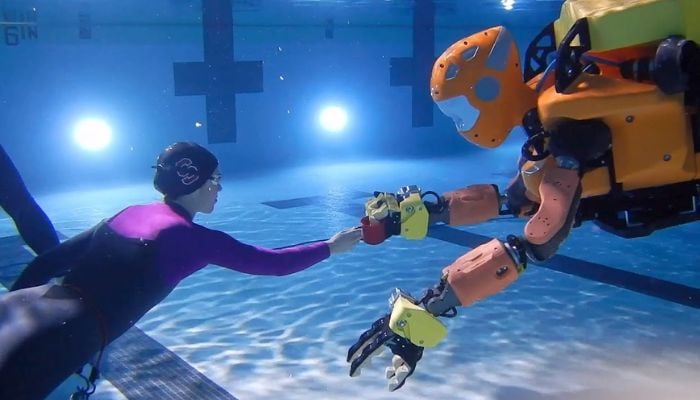
The OceanOneK, a deep-water robot that is named after its capacity to dive 1,000 metres deep into the ocean, is a humanoid robot with humanlike control and is being called a "robot mermaid" by some.
Developed at Standford University's Robotics Lab in a project led by roboticist Oussama Khatib, OneK has a mobile head with cameras and two arms. It can reach out to objects and manipulate them using its very much functional fingers.
At the university's rec centres, Claire Reilly from the popular tech website CNET decided to swim with OneK. With a GoPro attached to her body to record the marvellous bot, she captured it in its element.
OneK has propellers all across its body which help it move through the water. However, the main control is done via a human operator from outside the water who uses joysticks to instruct the robot and move its limbs.
The stereoscopic cameras attached to OneK provide a three-dimensional view of underwater to the outside world. The operator can watch views from both cameras at the same time on a split screen.
The robot was developed to efficiently reach depths that humans cannot.
"OneK is your avatar in the water," Khatib remarked.
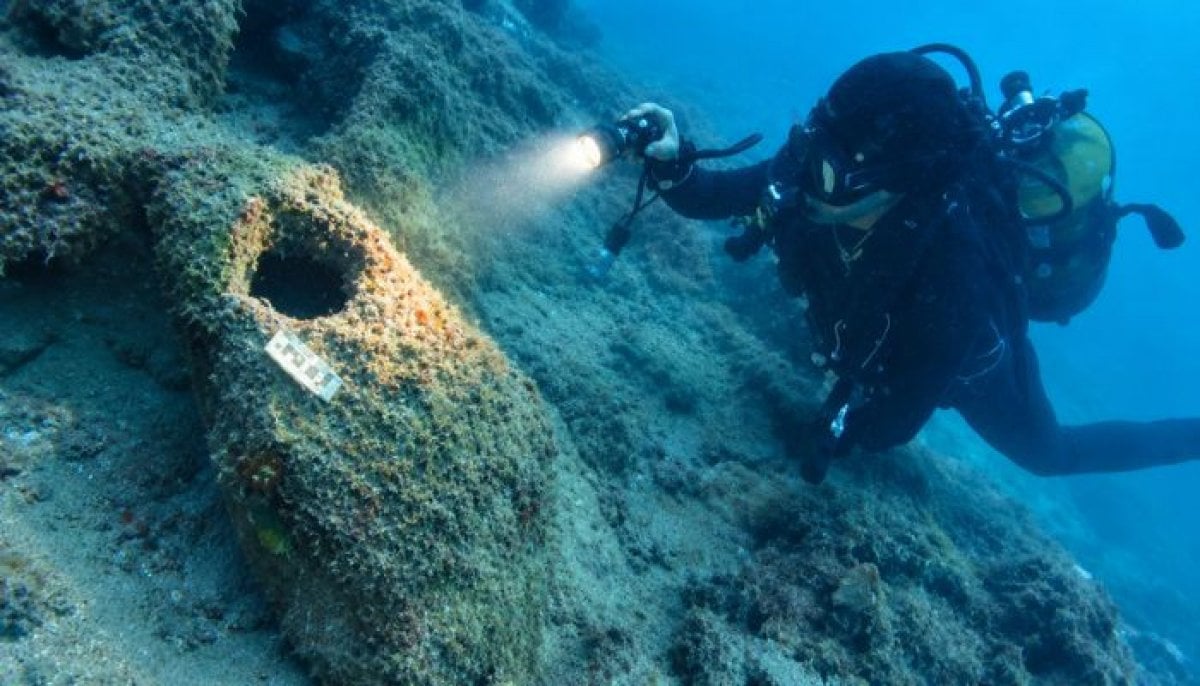
In 2016, OneK, which was at the time just OceanOne, was taken to the Mediterranean for a proper test dive. While the prototype worked perfectly, Khatib and his team decided that they wanted the bot to be able to dive deeper.
Therefore, the team has to redesign the whole machine, which now goes 10 times deeper than its initial model, so that it could survive the immense atmospheric pressure underwater.
Scientists filled OneK's arms with oil as well as "installed special spring mechanisms", the site reported.
Khatib said that they wanted to build a "robot Aquaman" despite the existence of several deep-water exploration vehicles and bots to develop something even more functional. He said that in cases of shipwrecks, for example, it was important to have a body that would be able "handle delicate objects" easily.


-
 Europe launched 8 orbital rockets last year, can it rival Starlink?
 -
 Japan launches world’s first mission to bring sample back from phobos
 -
 Orionid meteor shower 2026: Peak date, viewing tips and what to expect
 -
 Why Mars looks blue in NASA’s unedited curiosity panorama?
 -
 Blue Origin upgrades new Glenn rocket launch infrastructure to take on SpaceX
 -
 NASA’s next Mars mission targets Phobos and Deimos, not Red Planet
 -
 Is AI ready to rewrite our understanding of physics?
 -
 Astronomers identify possible first green star in 27 years of research