
UN lists Pakistan among drought-hit countries
Pakistan have experienced drought emergencies in the last two years, UNCCD report
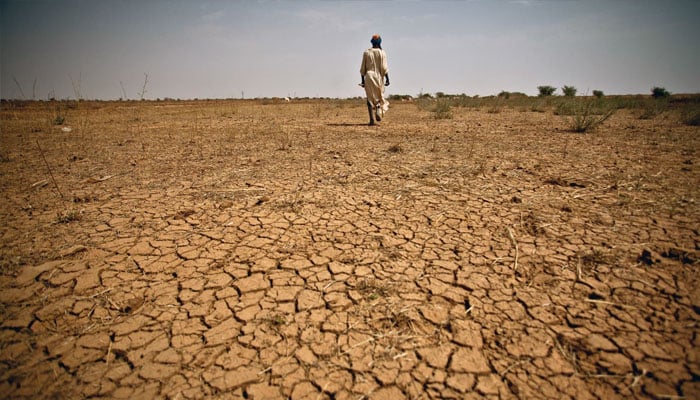
NEW YORK: The United Nations has listed Pakistan among 23 countries on Sunday which are facing drought emergencies. According to the report released by the United Nations Convention to Combat Desertification (UNCCD) stated that 23 countries including Pakistan have experienced drought emergencies in the last two years.
The 23 countries listed by the report include Afghanistan, Angola, Brazil, Burkina Faso, Chile, Ethiopia, Iran, Iraq, Kazakhstan, Kenya, Lesotho, Mali, Mauritania, Madagascar, Malawi, Mozambique, Niger, Somalia, South Sudan, Syria, Pakistan, the United States and Zambia.
The report also stated that an additional 4 million square kilometres will need to be rehabilitated by 2050 while emphasising the need to provide immediate funding to developing countries. United Nations Global Land Outlook says about Pakistan that desertification Control through Sustainable Land Management Productive land is scarce in Pakistan – 80 percent of the country is arid or semi-arid. Land degradation and desertification are caused by unsustainable land management practices, coupled with increased demand for natural resources, and driven by a rapidly growing and largely rural population dependent on dry lands for their livelihoods.
To address these problems, in 2007, the Pakistani government began implementing a Sustainable Land Management program across nine dry land districts. Over eight years, 120 square kilometers of degraded rangeland were rehabilitated through reseeding and community-based grazing management, and a further 80 square kilometers under sustainable rainfed agriculture and water conservation measures.
In 2015, the project was extended and rolled out more widely, utilising water control and storage structures, creating shelterbelts and rangeland management plans, restoring degraded dry land forest (e.g., community tree nurseries and plantations for domestic fuel), and implementing sand dune stabilisation measures. As a result, some 13,000 households directly or indirectly benefited from nearly 200 square kilometers of improved land health, better access to water for livestock, and reduced wind erosion.
This success of the program inspired the Billion Trees Afforestation Project in Pakistan’s mountainous Khyber Pakhtunkhwa, which saw 3,500 square kilometers of forests and degraded land restored in just two years.
In 2018, the popularity of this initiative gave impetus to the world’s largest reforestation initiative — the Ten Billion Tree Tsunami Programme – as part of a suite of nature-based solutions to fight desertification and climate change in Pakistan.
In the province of Balochistan, Pakistan, indigenous management techniques, known as the karez system, utilize tunnels that follow a natural gradient to deliver groundwater without employing mechanical energy.


