
High court lacks jurisdiction to hear govt officials’ service matters: SC
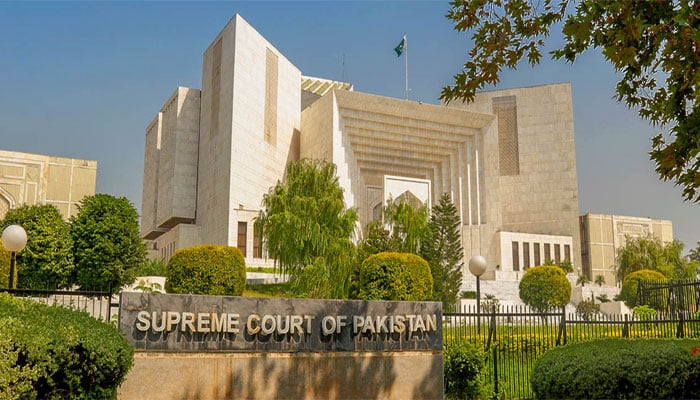
ISLAMABAD: The Supreme Court (SC) has held that the high court has no jurisdiction to entertain any proceedings in respect of terms and conditions of service of a civil servant, which can be adjudicated upon by a tribunal under the Act.
A two-member SC bench comprising Justice Sajjad Ali Shah and Justice Syed Mansoor Ali Shah set aside an order, passed by the Lahore High Court (LHC) on February 19, 2020, directing the Services and General Administration Department (S&GAD), Government of the Punjab, to grant proforma promotion to one Shamim Usman to grade 20.
The Punjab chief secretary had challenged the LHC order on the ground that the high court had no jurisdiction to entertain the said matter in the light of the constitutional bar contained in Article 212 of the Constitution.
The five-page judgment, authored by Justice Syed Mansoor Ali Shah, held that the high court had no jurisdiction to entertain any proceedings in respect of terms and conditions of service of a civil servants, which can be adjudicated upon by a tribunal under the Act.
It is only under Section 4(1)(b) of the Act that no appeal could lie to a tribunal against an order or decision determining the “fitness” of a person to be appointed or promoted and falls outside the purview of the jurisdiction of the tribunal,” says the judgment adding that in order to fall in the exception envisaged under Section 4(1)(b) of the Act, the order must determine “fitness” of a civil servant to an appointment or promotion.
The court noted that in the instant case, the order under challenge before the high court pertained to the eligibility of the petitioner to be even considered for proforma promotion due to the seniority of a large number of officers awaiting promotion before her and in no manner determined the “fitness” of the respondent. The court held that high court, as a constitutional court, should always be mindful of the jurisdictional exclusion contained under Article 212 of the Constitution.
“Any transgression of this constitutional limitation will render the order of the high court void and illegal,” the court held and ruled that unless the jurisdiction of the tribunal was ousted under Section 4(1)(b) of the Act, as described above, assumption of jurisdiction by the high court in respect of matters of terms and conditions of a civil servant is unconstitutional and impermissible.
“Even the direction passed in the earlier constitutional petition, in this case, was impermissible under the Constitution,” the judgment noted.
For the above reasons, the petition is converted into an appeal and allowed. The impugned order dated 19-2-2020 is, therefore, set aside and the constitutional petition of the respondent is dismissed,” the court held adding that the respondent is free to challenge order dated 19-11-2012 before an appropriate forum, in accordance with the law, if so advised.


