
Illicit tobacco trade, tax evasion in Pakistan: I quit after PM’s advisers opposed my revenue service idea, says Zaidi
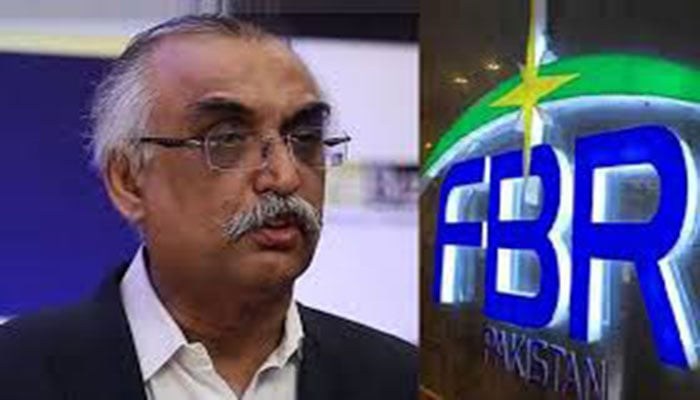
LAHORE: Former chairman of Federal Board of Revenue (FBR), Shabbar Zaidi, said Friday he resigned as he could not realise his vision of creating the Pakistan Revenue Service out of the FBR. He stated this at “Breakfast with Jang” session on “tax evasion and illicit tobacco trade in Pakistan” Tax Expert, Adjunct Faculty LUMS, Huzaima Bukhari was also a guest.
Zaidi lamented that Prime Minister’s Advisers — Arbab Shahzad and Dr Ishrat Hussain — opposed his proposal of creating the service. The two guests expressed their views on the illicit tobacco trade and tax evasion. They highlighted that the illicit cigarette trade nears 40 per cent of total cigarette market, causing Rs77 billion annual loss to the national exchequer. Besides, locally manufactured illicit cigarettes by local illicit manufacturers is also a major problem. The main driver of overall growth of the illicit sector is due to minimum price and tax violations. More than 200 local illicit cigarette brands are selling at Rs20 to 40 whereas minimum tax per pack as per is Rs42.12 and minimum price is Rs62.76. This minimum tax and minimum price law violations compromise government’s fiscal objectives and the public health agenda.
The tobacco sector has a potential of Rs 150 billion revenue generation with strict implementation on rules and regulations, curbing the smuggling of imported brands of tobacco products, stopping the illicit cigarettes sale alongside implementation of the track and trace system without further delays.
The provincial governments should play their due role in reinstating the Green Leaf Threshing (GLT) plant tax which was levied with the only purpose of documenting the supply chain and manufacturing of both local and multinational tobacco brands cigarettes. However, the government abolished this tax on the pressure of ‘holy cows’.
questioning the role of the multinational companies (MNCs), Zaidi, asked how top world brands land in Pakistan and are openly sold in the country. “We need to check which brands these MNCs are producing in Pakistan,” he said, and stressed the need for curbing the smuggling forcefully as it was not limited to cigarettes rather every smuggled item which is destroying the local industry and manufacturing. He suggested closing of all eight crossings on the River Indus that will halt the smuggling. Further, he suggested changing the tax regime for the tobacco sector as a huge tax regime was a reason of tax evasion and local manufacturers were exploiting it by all means. “There is 74 to 80 per cent tax evasion when one stick of cigarette is sold without tax. This is a huge margin and a lot of attraction for the tax evaders,” he said, suggesting reinstating the Green Leaf Threshing (GLT) plant tax as without that process, cigarette could not be produced.
Once the government documents the quantity of tobacco process at GLT plant, it would be easy to trace and established a trail of cigarettes produced from it. However, he believed that the government could not be able to do this due to heavy pressures from parliamentarians, senators and investors. These illicit cigarettes are produced in FATA, Mardan and other areas of KP while they are sold from Central Punjab to Upper Sindh by flouting all health regulations and offering incentive schemes, Shabbar mentioned.
He said the government has also faced governance issues so it could not be able to stop smuggling as well as locally-produced illicit cigarettes trade. These factories are openly operating. Responding to a question, Zaidi said the establishment of the track and trace system was started 10 to 15 years ago. However, it did not reach the implementation phase and should be introduced quickly.
Huzaima Bukhari asked the provincial government to play its role in reinstating the GLT Plant tax in order to document the sector. Further, she asked the federal government to improve its governance. She urged making required correction in the legislation for the provision of a level-playing field to manufacturers and industry by ending the withholding tax regime. She believed the withholding tax regime was also adversely affecting the direct taxation as people did not pay correct income tax.


