
Power producers plan $200mln investment in renewable energy projects
Major electricity sources at present are thermal and hydro generation, meeting approximately 97 percent of the country's annual electricity demand.
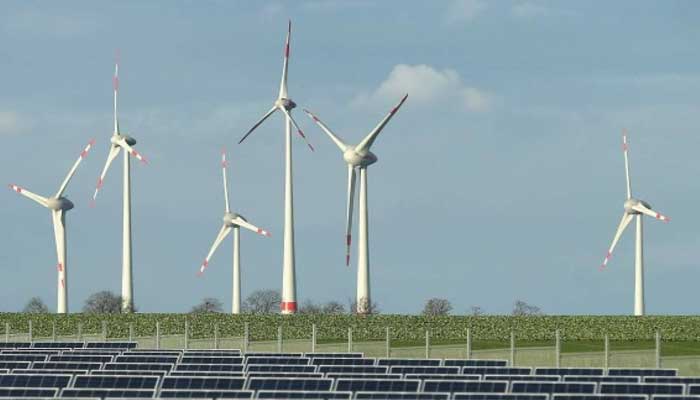
KARACHI: At least four new companies have planned more than $200 million worth of investment to cumulatively set up 154 megawatts of renewable energy projects in Sindh and Khyber Pakhtunkhwa, The News learnt on Friday.
The investors sought generation licences from the National Electric Power Regulatory Authority, a document showed.
Sino Well (Private) Limited planned to set up a 50 megawatts of wind power plant in the wind corridor of Jhimpir in Sindh with an estimated investment of $85.4 million. The proposed project is expected to achieve commercial operation by June 2020.
Shafi Energy (Private) Limited planned to set up a 50MW wind power plant in Thatta, Sindh with an estimated investment of $75.07 million. The proposed project is expected to achieve commercial operation by June 2021.
Javed Solar Park (Private) Limited also intended to set up a 49.5MW solar power plant in Dera Ismail Khan in Khyber Pakhtunkhwa with an estimated investment of $49.27 million. The proposed project is expected to achieve commercial operation by December 2019.
Similarly, Grid Edge (Private) Limited sought licence to set up a two megawatt of solar power facility in Port Qasim with an estimated investment of Rs168.12 million, while the company also intended to develop a 2.67MW solar generation plant in Lahore with an investment of Rs250 million.
Demand for electricity continues to outpace growth rate of the economy. Power shortfall at times crosses 6,000MW.
The shortfall in supply could be the major cause of a stunted growth in the industrial sector in the country.
The industry, having capacity of self- generation on gas, has a suspended supply of gas for two to three days a week during winters.
Major electricity sources at present are thermal and hydro generation, meeting approximately 97 percent of the country's annual electricity demand.
The primary thermal generation fuels are furnace oil and gas. While gas is produced domestically, its demand has outstripped supply by a considerable amount.
Oil imports are exerting a significant burden on national exchequer and the increasing import bill continues to weigh down foreign exchange reserves. Securing alternative fuels and the technical management should be strengthened to solve problems and wind power can play a very important role in overcoming the growing energy crisis.
Power sector’s inefficiencies cost the Pakistan’s economy $17.7 billion (6.5 percent of GDP) during the fiscal year of 2014/15, a latest World Bank’s report said, underscoring need to focus on reforms, eliminating waste, promoting the shift towards cleaner energy and attracting private investments.







-
 Late Princess Diana Threatened Camilla Over Phone Call?
 -
 Taylor Swift, Travis Kelce's Wedding Guest Reveals No One Knew Anything About The Ceremony
 -
 Kate Middleton Given Standing Ovation By Celebrity Wife Of William's Eton Friend At Wimbledon
 -
 Millie Bobby Brown Shares Details About Playtime With Her Daughter
 -
 Jayden Adams 'quiet' Moment Resurfaces In Viral Video After Sudden Death
 -
 Inside Cara Delevingne's Struggles With Addiction
 -
 Jesse L. Martin Shares How Grieving Widow Begged 'Law & Order' To Change Controversial Episode
 -
 South Africa Footballer Jayden Adams Dies At 25 Days After Grandmother's Death
 -
 Sylvester Stallone Reacts To Piers Morgan's Birthday Tribute
 -
 Kate Middleton, Prince William Join Hands As King Charles Meets Meghan Markle, Harry
 -
 Kate Middleton Sends Personal Message After British Duo Win Wimbledon Doubles Title
 -
 Prince Harry, Meghan Markle Booed In UK After King Charles Meeting?
 -
 Prince Harry Breaks Silence After Meghan Markle, Archie, Lilibet Meeting With King Charles
 -
 GTA 6 Preloading: Everything You Need To Know
 -
 What Happens When A Whale Dies? Scientists Explains Surprising Process
 -
 China's Long March-10B Rocket Recovery Shakes Up Space Race