
Polio hour-glass
Campaign aims to immunise over 45 million children under five years of age
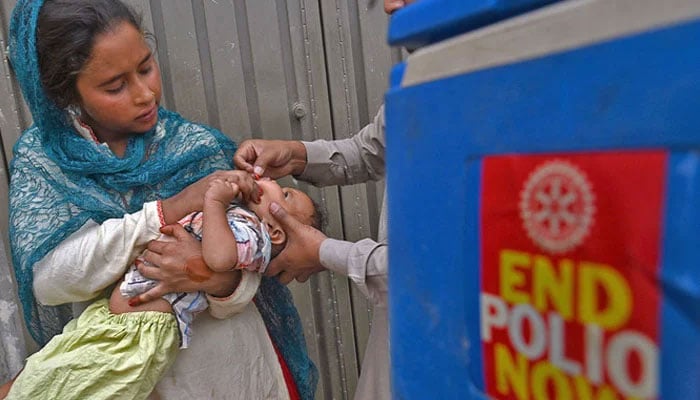
Earlier this month, the federal health minister reportedly said during a meeting with the president of global development at the Gates Foundation that the country has pledged to eradicate polio by the end of this year. In the time that has elapsed since then, Pakistan’s total confirmed polio cases for 2025 have risen to 10 after the health authorities confirmed two new cases of wild poliovirus in the Lakki Marwat and Bannu districts of Khyber Pakhtunkhwa, villagers in the Kohat Road area of Peshawar briefly boycotted the latest nationwide anti-polio campaign to protest the 18-hour loadshedding in their regions, and a police constable providing security to a polio vaccination team was martyred when unidentified gunmen opened fire in Nushki, Balochistan. These developments highlight the multi-faceted challenges that Pakistan faces when it comes to eradicating polio and just how hard it will be for the government to meet its aim of getting rid of the virus by the end of the year. The latter two incidents both took place in the days following the launch of the third National Immunisation Days (NIDs) campaign on May 26. The campaign aims to immunise over 45 million children under five years of age.
While one wishes this campaign every success and hopes that 2026 will be the dawn of a polio-free Pakistan, this is not the first such campaign the country has seen and the challenges that face polio eradication seem as formidable as they have ever been. The virus remains widespread, having been detected in samples in 50 out of 89 districts of Pakistan and this year’s confirmed cases spanning Sindh, Punjab and Khyber Pakhtunkhwa. It is hoped that Balochistan, which saw 27 polio cases last year, will not join the list. Aside from the public health challenge, the continued attacks on polio teams and their security escorts and the refusal of many across the country to have their children vaccinated only complicate the challenge. If polio could be treated like a simple health problem, Pakistan would not be one of the two countries, along with Afghanistan, where the virus remains endemic. But polio has become political, which is why we see it being used as a bargaining chip in protests and health workers and their security having to put their lives on the line just to give children a shot at a healthy life. If there are any positives we can draw, it is that the rate of new polio cases seems less steep than last year. The current tally of 10 for the ongoing year averages out to about two cases per month. Sadly, this is still far too high.
As has always been the case, the success of the nation’s polio programme hinges less on the ability of health authorities to vaccinate all children and meet the other health-related goals, and more on the government’s ability to counter any misinformation related to the polio vaccine and to convince all communities that vaccinating their children should come before anything else. There appears to be a stubborn view among many Pakistanis, even the ones that do not mistakenly believe that the vaccine is harmful, that the polio vaccine is just another irritating government requirement. The government must drive home to this cohort that the vaccine is just as crucial to the well-being of their communities as uninterrupted power, if not more so.





-
 Nvidia In Talks To Back OpenAI With $250 Billion Financing Guarantee For Mega Data Center: WSJ
 -
 Netanyahu Says He Will Speak At UN In NYC Despite Zohran Mamdani’s Calls For His Arrest
 -
 Trump Border Czar Orders Review Of ICE Vetting After Maine Incident
 -
 'Remove Mamdani': Hundreds Of New Yorkers Chant For Mayor To Step Down
 -
 Shania Twain Recalls Finding Love Again After Ex-husband's Affair
 -
 Trump Mail-in Voting Order Remains Blocked After Appeals Court Ruling
 -
 Pentagon Faces Scrutiny After Updating Iran War Casualty Database
 -
 Matt Damon Shares The Unexpected Injury Many 'The Odyssey' Stars Suffered
 -
 Paul Wesley Surprises Pal Jalen Brunson After Finding Out His Love For 'Vampire Diaries?'
 -
 Cuba Marks July 26 Revolution Anniversary Without Raúl Castro
 -
 Robert Pattinson Trolls Team Jacob With Hilarious 'Twilight' Joke
 -
 Morocco Names Massive 1,055km Highway After US President Donald Trump
 -
 Prince Harry Recalls Queen Camilla's Advice To Meghan Markle About Media Scrutiny
 -
 Reason King Charles Wanted Princess Diana, Queen Camilla To Be Friends
 -
 Sam Asghari Opens Up About Life After Divorcing Britney Spears
 -
 Robert Downey Jr. Gushes Over Original 'X-Men' Stars Kelsey Grammer, Rebecca Romijn