
Shanghai standard
Shanghai has world’s fastest elevator, reaching 73.8 km/h, Shanghai has largest single-dish radio telescope
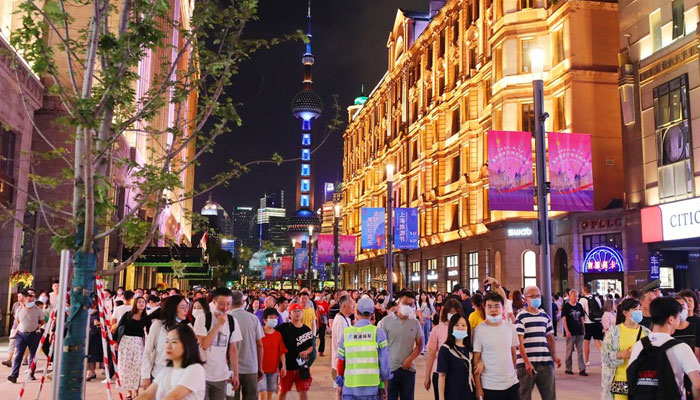
There isn’t a city like Shanghai anywhere on the planet. Shanghai sits at the mouth of the Yangtze River. Shanghai winters are mild, and summers are warm and wet. Shanghai is a biodiversity hotspot, hosting 290 bird species. Shanghai has geography, climate and ecology like no other city.
There isn’t a city like Shanghai. Shanghai has the world’s fastest elevator, reaching 73.8 km/h. Shanghai has the largest single-dish radio telescope. Shanghai has the busiest container port. Shanghai has the longest metro system, 802 km, with 508 stations. Shanghai has the tallest observation deck. Shanghai has the largest indoor ski resort. Shanghai has the most advanced autonomous driving zone. Shanghai has the largest planetarium. Shanghai has the longest sea bridge.
The people who transformed Shanghai into a global metropolis possess a bold, forward-looking vision. Their visionary ambition drives global firsts, from the world’s fastest elevator (73.8 km/h) to the tallest observation deck (561 m). Engineering ingenuity shines in the 32.5 km Donghai Bridge. Collaborative efficiency coordinates 10,000 workers for Yangshan Port, which handles 49 million TEUs. Technological innovation and future-oriented pragmatism pioneer Jiading’s 56 sq km autonomous driving zone.
Yes, preserving 290 bird species reflects environmental integration. Yes, designing the 632 m, typhoon-proof Shanghai Tower demonstrates resilient adaptability. Creating the 38,000 sq m Shanghai Astronomy Museum honours China’s astronomical heritage. Building the 802 km Shanghai Metro showcases global competitiveness. Constructing the 90,000 sq m Wintastar Ski Resort exemplifies workforce dedication.
Look at how the Ministry of Public Security (MPS) categorises vehicles by type, ownership, and energy source, using colour-coded plates to enforce traffic, environmental, and urban policies. Blue plates indicate combustion engine vehicles are subject to restrictions, including odd-even driving rules, low-emission zone limits, costly plate auctions and congestion fees. Green plates mark new energy vehicles (electric, hybrid), that are exempt, with free plates and subsidies, promoting China’s 2060 carbon neutrality goal.
Imagine China's unparalleled strides: a 45,000 km high-speed rail network (HSR), 70 percent of the global total, outpaces Europe’s 11,203 km, which trails by 15 years, while the U.S. lacks operational HSR entirely.
Yes, China has five of the world’s ten longest bridges, while Los Angeles’ congested port, with outdated cranes, underscores America’s $2 trillion infrastructure gap. In technology, China’s 3.20 million 5G base stations – 60 per cent of the global total – and 250,000 AI patents (2024), led by Baidu Apollo and Huawei, surpass Europe’s 400,000 stations and America’s 500,000.
China, with 1,200 GW of solar and wind power, 50 per cent of the world’s capacity, aligns with Europe’s 2035 Green Deal targets, far ahead of America’s 200 GW. Economically, China’s 1.5 million annual STEM graduates and 50 per cent of global unicorns thrive in a unified market, unlike Europe’s fragmented one. With 500 smart city pilots, China has achieved the infrastructure, technology, and urban scale that Europe targets for 2030, leaving America trailing in these domains.
For Pakistan, China’s bipodal model – meritocratic leadership and a unified political vision – offers a blueprint. By emulating Shanghai, Pakistan can transform its cities, harness STEM talent and drive CPEC forward, forging a future where Karachi rivals Shanghai’s global stature.
The writer is a columnist based in Islamabad. He tweets/posts @saleemfarrukh and can be reached at: farrukh15@hotmail.com







-
 King Charles' Sister Praised For Supporting Veterans During Aston Martin Event
 -
 Meghan Markle Will Leave Harry And Children In US To Visit Switzerland
 -
 UK Backs Human Rights Plan To Curb Illegal Migration
 -
 Joshua Fox's 'criminal Record' Used To Justify Chud The Builder's Actions
 -
 UK Regulators Warn Firms To Limit Risks From Frontier AI Models
 -
 Chud The Builder Held On $1.25M Bond, Joshua Fox's Wife Raises $60K On GoFundMe
 -
 Super El Nino 2026: Why Forecasters Say It’s Just Around The Corner
 -
 OnePlus Removed From Best Buy Stores In The US
 -
 Martin Short And Meryl Streep Split After Family Tragedy
 -
 Trump China State Dinner Food Draws Attention
 -
 Wall Street Tumbles From Record Highs As AI Stocks Sink Globally: Here’s Why
 -
 Dolly Parton 'desperately Missing' Reba McEntire During Health Struggles
 -
 Trump Says China Has Agreed To Buy US Oil, Fox News Reports
 -
 Henry McMaster Pushes New Congressional Map After Trump Pressure
 -
 Ebola Returns To DR Congo, Africa CDC Confirms
 -
 North America’s Busiest Commuter Rail System Faces Possible Shutdown