
Forex reserves to reach $14bn by June: SBP governor
SBP chief stated that govt was committed to maintaining budget deficit of 6%, thanks to significant fiscal relief
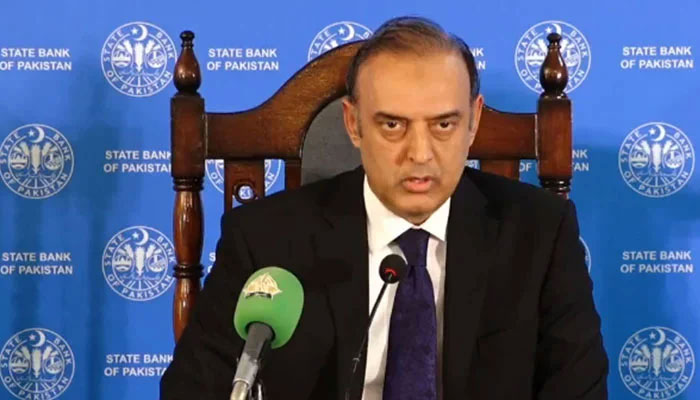
ISLAMABAD: State Bank of Pakistan (SBP) Governor Jameel Ahmad hoped on Monday that Pakistan’s total forex reserves would reach $14 billion by June this year.
Speaking on Geo News’ current affairs programme “Aaj Shahzeb Khanzada Ke Saath”, he noted that $2 billion in external payments were due over the next two-and-a-half months, while $4 to $5 billion in foreign inflows were expected in the same period. This, he said, would result in a net addition of $2 to $3 billion to reserves, potentially taking country’s total forex reserves to $14 billion by June, 2025.
To a question, he said Pakistan’s exports to the United States stood at $5.2 billion, with $4.2 billion comprising textile exports. He noted that while new tariffs could have a limited impact, that was expected to be mitigated by falling global oil prices — ultimately resulting in a positive net effect.
To another question, he said while the import bill had increased by $500 million, a concurrent $1 billion decline in oil imports provided a net relief of $500 million. He further revealed that the State Bank had resumed dollar purchases, which were helping to stabilise both foreign exchange reserves and the exchange rate.
The SBP chief stated that the government was committed to maintaining a budget deficit of 6 per cent, thanks to significant fiscal relief. “We’re to make payments of Rs8.8 trillion, instead of Rs9.8 trillion, which means we’ll have Rs1,000 trillion relief in payments,” he explained. “Therefore, even if some revenue targets fall short, it should not be a major concern.”
Ahmad said that the real fiscal challenge lied in achieving the promised 2.1 per cent primary surplus as agreed with the International Monetary Fund (IMF), which remains a key performance benchmark.
On the external front, the governor projected a current account surplus for the remainder of the fiscal year, including the month of March. He attributed this to several factors: economic recovery in Gulf countries, the effective crackdown on informal remittance channels, narrowing of the gap between open market and interbank exchange rates, and a seasonal rise in remittances during Ramazan.


