Tiny cell wreaks havoc across Europe
A cell has affected almost 200 children across Europe with a mutation
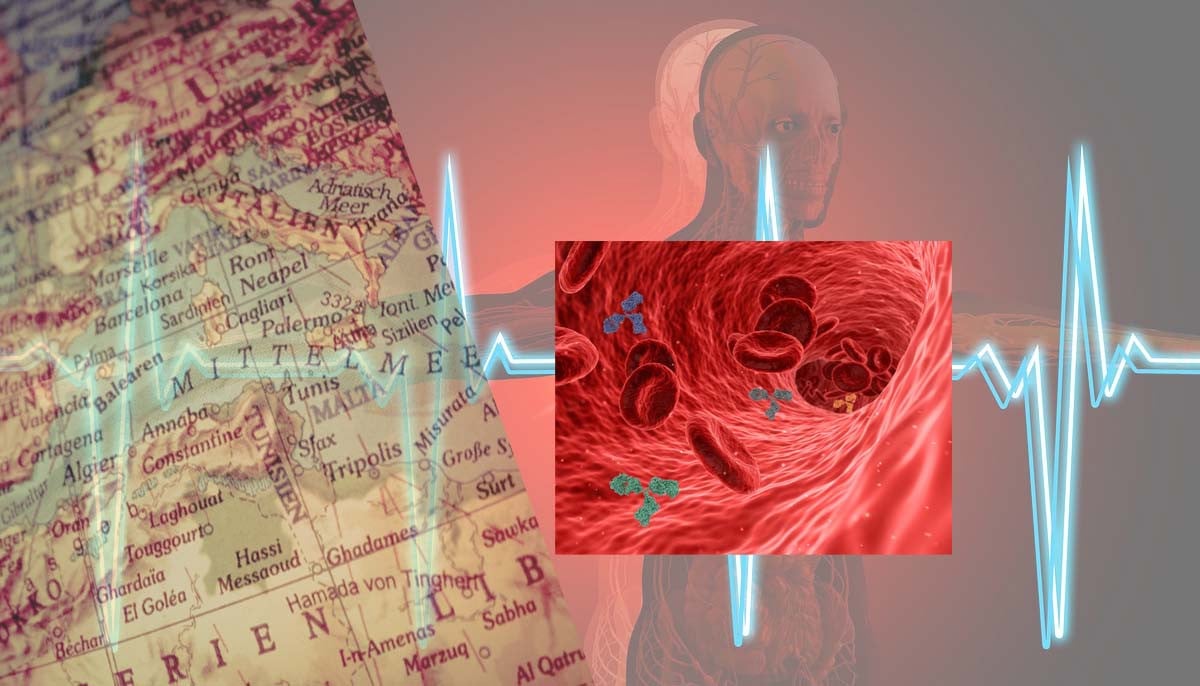
A major investigation has revealed that a sperm donor who unknowingly contained a genetic mutation that dramatically raises the risk of cancer, has fathered at least 197 children across Europe.
The investigation was conducted by 14 public service broadcasters, including the BBC, as part of the European Broadcasting Union's Investigative Journalism Network.
Some children have already died and only a minority who inherit the mutation might dodge cancer in their lifetimes.
Even though the sperm was not sold in UK clinics, BBC reported that a "very small" number of British families, who have been informed, used the donor's sperm while having fertility treatment in Denmark.
Denmark's European Sperm Bank, which sold the sperm, said families affected had their "deepest sympathy" and admitted the sperm was used to make too many babies in some countries.
The sperm, which is being used for almost 15 years, came from an anonymous man who was paid to donate as a student, starting in 2005.
He was a healthy individual and passed the donor screening checks, however, the DNA in some of his cells mutated before he was born.
It damaged the TP53 gene – which has the crucial role of preventing the body's cells from turning cancerous.
Most of the donor's body does not contain the dangerous form of TP53, but up to 20% of his sperm does.
However, any children made from affected sperm will have the mutation in every cell of their body.
This is known as Li Fraumeni syndrome and comes with an up to 90% chance of developing cancer, particularly during childhood as well as breast cancer later in life.
Professor Clare Turnbull, a cancer geneticist at the Institute of Cancer Research in London, had a conversation with BBC and said, "It is a dreadful diagnosis. It's a very challenging diagnosis to land on a family, there is a lifelong burden of living with that risk, it's clearly devastating."
Meanwhile, the European Sperm Bank said the "donor himself and his family members are not ill" and such a mutation is "not detected preventatively by genetic screening." They also assured that they "immediately blocked" the donor once the problem with his sperm was discovered.



-
 Virginia Sen. Louise Lucas indicted on racketeering and marijuana charges
 -
 France confirms world's first human case of Shamonda virus; patient dies
 -
 OpenAI agents uncover brain disease leads: Here’s how
 -
 AI tool can now predict cancer survival by a single patient selfie: Find out how
 -
 Scientists identify a new type of depression affecting 1 in 4 patients
 -
 Everything to know about US FDA’s new guidance on apps used with prescription drugs
 -
 ‘Immortal’ jellyfish could hold clues to slowing human ageing
 -
 Ebola crisis worsens in DR Congo as virus reaches eighth province with over 4,500 dead
-
 Study finds eating blueberries every day can surprisingly boost your mood
 -
Eli Lilly’s Foundayo weight-loss pill gets European approval recommendation
-
What is BPC-157? Trump administration considers easing rules on popular peptide injections
-
West Nile virus: Europe reports 141 deaths as human cases rise in 2026