
Banks reluctant to finance conversion of power plants to local coal
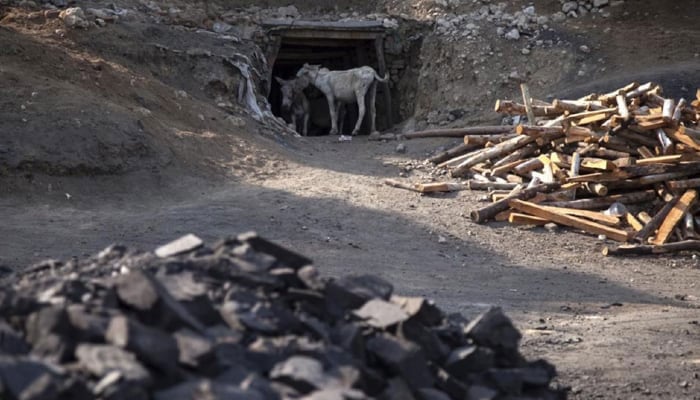
KARACHI: The government’s plan to convert coal-fired power plants from imported to local coal is encountering significant hurdles, primarily due to local banks’ reluctance to provide financing.
Officials from the Thar Coal & Energy Board informed The News that progress on securing financing has stalled since the federal government recently sought local bank support for the conversion project. This request followed a high-level meeting held a few days ago.
The government believes that transitioning to local coal is essential for improving generation capacity, reducing fuel costs per unit and scaling up Thar coalfields. This move aims to lower the cost of coal per tonne while enhancing energy security.
However, the scheme is facing challenges as local banks are hesitant to extend loans for these projects. According to Thar Coal Board officials, no local bank has indicated a willingness to finance the conversion.
A bank official confirmed that concerns over pollution from coal power projects are a major obstacle to financing in this sector. The central bank has shown a preference for financing renewable energy projects.
Provincial government officials pointed out two main reasons for the banks’ reluctance. First, banks are more inclined to invest in green energy projects as part of green energy financing initiatives. With many parts of the world moving away from coal due to climate change concerns, coal-fired power plants in Pakistan are experiencing similar issues. Second, the saturation of the power sector in Pakistan, caused by overproduction of electricity and payment recovery problems, has made banks hesitant to lend for these projects.
The chief minister of Sindh had previously requested that the State Bank of Pakistan mandate commercial banks to increase their financing for Thar coal projects. Despite this, no favourable financing conditions have emerged so far.
Pakistan currently has over 5,000MW of coal-fired power plants that rely on imported coal. The cement industry also depends on imported coal. It is estimated that substituting imported coal with local coal could save Pakistan more than $3 billion in foreign exchange, benefitting the country by conserving valuable reserves and reducing energy costs.
Despite government plans to convert power plants from imported to local coal, these efforts have not yet yielded results. Sindh’s chief minister proposed a lending quota, requiring scheduled banks to increase their advances to indigenous energy projects to 1.0 per cent of deposits by June 2024 and up to 3.0 per cent by June 2027.


