
Scholars agree injustices by West Pakistan led to creation of Bangladesh
By denying ethnic diversity, the enforced hegemony for nation-building in East Pakistan did not work. Ironically, the same strategy continues today.
After the tragedy of the separation of East Pakistan in 1971, neither was Pakistan nor was Bangladesh ready to accept the war-affected people. They are still living a miserable life in camps in the hope that they would be accepted as citizens in either Pakistan or Bangladesh.
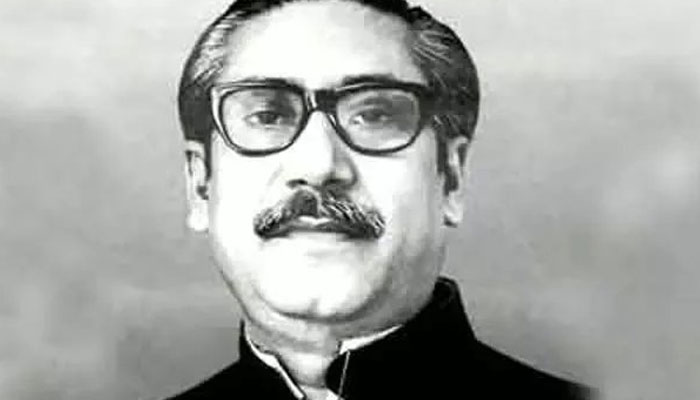
East Pakistan did not become Bangladesh overnight but years-old oppression forced the Bengalis to resist. West Pakistan never respected the mandate of East Pakistan and soon after the Partition, West Pakistan continued the same policies of colonialism in it eastern wing, forcing it to become Bangladesh.
These views were expressed at a seminar titled ‘The East Pakistan Tragedy Revisited: Contemporary Concerns’ organised by the Pakistan Institute of International Affairs (PIIA) on Saturday.
The speakers included Quaid-i-Azam University School of Politics and International Relations Director Dr Farhan Hanif Siddiqui, Institute of Business Administration Karachi Executive Director Dr S Akbar Zaidi, former dean of University of Karachi faculty of social science Dr Moonis Ahmar and PIIA member Zafar Shafique. The talk was moderated by PIIA chairperson Dr Masuma Hasan.
In his talk titled ‘Homogeneity via hegemony: fault lines in Pakistan’s nation building experiment’, Dr Siddiqui said the East Pakistan debacle was a collective failure of politicians, military and bureaucracy.
He said West Pakistan never accepted the reality of the largest ethnic population of Pakistan at that time. “When we speak about nation building, we search its roots in Islam and Urdu language. This misconception creates a lot of problems within the nations. We simply undermine the realities of various ethnic groups.”
He said Jinnah had given the concept of a secular state. “If we look at the definition of a Pakistani, we find two things — Urdu and Islam,” he remarked, and added that this definition was incomplete because only 7 per cent of the people spoke Urdu while there were also people living in Pakistan whose religion was not Islam. “Therefore, we have to understand the importance of diversity, local cultures and languages.”
He said we were again normalising majoritarianism instead of promoting diversity. He added that this issue had become a challenge for Pakistan because all major political parties had adopted the approach of majoritarianism causing ethnic and religious minorities to suffer.
Speaking on ‘The plight of Pakistan’s forgotten citizens in Bangladesh’, Dr Ahmar said that as many as 66 camps still existed in Bangladesh where Biharis and ‘forgotten’ citizens of Pakistan had been living. Of them, the biggest camp was located in Mohammadpur housing 66,000 people.
He said there were two schools of thought in Pakistan regarding those stranded people in Bangladesh. One group, Dr Ahmar said, believed that there were no Pakistanis in Bangladesh and the issue had already died while another school of thought believed that the people in those camps in Bangladesh were Pakistani citizens who needed to be brought into the country.
He remarked that the last batch of such Pakistanis arrived in the country in 1993 to Punjab’s Mian Channu and they were accepted by the Pakistani government through an agreement between Pakistan, Bangladesh and India. He explained that three categories of such people were defined including standard Pakistanis inclusive of government employees, those who suffered hardships by taking sides, and those whose close relatives had stayed behind in Pakistan.
Dr Ahmar said neither was Bangladesh nor was Pakistan ready to accept those thousands of people even after the passage of 50 years. “The funds worth Rs2.5 billion allocated for rehabilitation of the people living in camps in Bangladesh were frozen after 9/11. The Pakistani government should make efforts to unfreeze those funds for the rehabilitation of Pakistanis in Bangladesh so that they could live a dignified life there,” he remarked.
In his talk titled ‘Economic causes and consequences of the secession of East Pakistan’, Dr Zaidi said we were never a united Pakistan since Partition. He remarked that it was like one buy one get free offer.
He was of the view that there was nothing common between East and West Pakistan.
He maintained that Bengalis were considered inferior to West Pakistanis and even people like Sir Syed Ahmad Khan discriminated against them. “This deep-rooted discrimination, prejudice and oppression forced Bengalis to resist.”
He said resources were not equally distributed and the funds Pakistan received in aid were all spent on West Pakistan. Industries were set up in Karachi while their raw material would come from East Pakistan and after the production, the benefit and income would remain in West Pakistan, he added.
“The tragedy of 1971 was a result of injustice that led to massacre,” he said and remarked that West Pakistan behaved as if East Pakistan was its colony.
Dr Zaidi remarked that now Bangladesh’s per capita income was far greater than India and Pakistan. The progress of Bangladesh is now a reality and in the coming decades, Bangladesh would be a developed country in the region, he added.
Dr Moonis Ahmar laments Pakistan has forgotten thousands of its ‘citizens’ stranded in camps in Bangladesh; Dr Farhan Siddiqui says ethnic diversity still being denied in country; Dr Akbar Zaidi says East Pakistan was treated as if it was West Pakistan’s colony


