
Exchange firms suggest higher dollar rates to help boost remittances
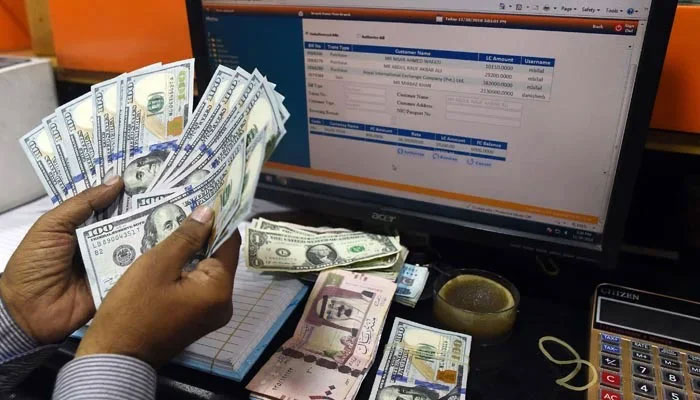
KARACHI: Exchange Companies Association of Pakistan (ECAP) has suggested the government increase the dollar price for remittances to reduce currency market volatility as the country grapples with a severe economic crisis amid depleted foreign reserves.
“It is advised to fix the rupee/dollar exchange rate for export-import bills and remittances,” said M Zafar Paracha, the general secretary of ECAP in a statement on Monday. These remittance proceeds could be brought in by banks and money changers at a fixed rate of 240 per dollar, he added.
Rupee ended at 228.34 per dollar, compared with the previous close of 228.15 in the interbank market. In the open market, the rupee was trading at 238.75 against the dollar. It was available at 238.50 on Friday.
For the overseas Pakistanis and for receiving inward remittance, the offer could be 240 rupees per dollar. It would help increase remittances, reduce Hundi/Hawala, strengthen the official channel, and eventually eliminate the grey market, Paracha said.
The rate of the dollar in the grey market has reached 267/270 versus the greenback, according to Paracha. For the purpose of getting the exporters’ proceeds, the offer could be made at 228 rupees to the dollar. And the rate for importers would be based on the weighted average of home remittance and exporter rates. It would benefit exporters and remittances, he explained.
“It will encourage exporters to bring dollars into the country, enhance the foreign exchange reserve, and strengthen the remittances segment of the exchange firms.” The most common solution suggested by analysts to tackle a problem is to devalue the rupee. Forex reserves, which are at their lowest point in decades, are currently Pakistan's most pressing problem. Because the central bank does not have enough dollars to cover imports, they are already being rationed harshly. The lowest demand in the world hurts exports. But remittances to undeveloped countries have been continuously declining. The emergence of the grey market is held responsible for Pakistan.
Remittances from Pakistanis working abroad dropped 19 percent to $2.0 billion in December. During the first six months (July-December) of the current fiscal year, the nation received $14.1 billion in remittances, which is a decrease of 11.1 percent from a year earlier.
Pakistan’s forex reserves held with the State Bank of Pakistan dropped by $1.2 billion to $4.3 billion as of January 6 — enough to cover barely three weeks’ worth of imports. The country is currently experiencing a balance of payments crisis due to large foreign debt repayments and a lack of external finance, which have severely depleted Pakistan’s foreign reserves and led to persistent dollar shortages. The government has restricted several imports to save dollars, and some businesses have shut down as a result of being unable to import machinery or parts.


