This week You! talks to the author about the book and the work that inspired this journey…
interview
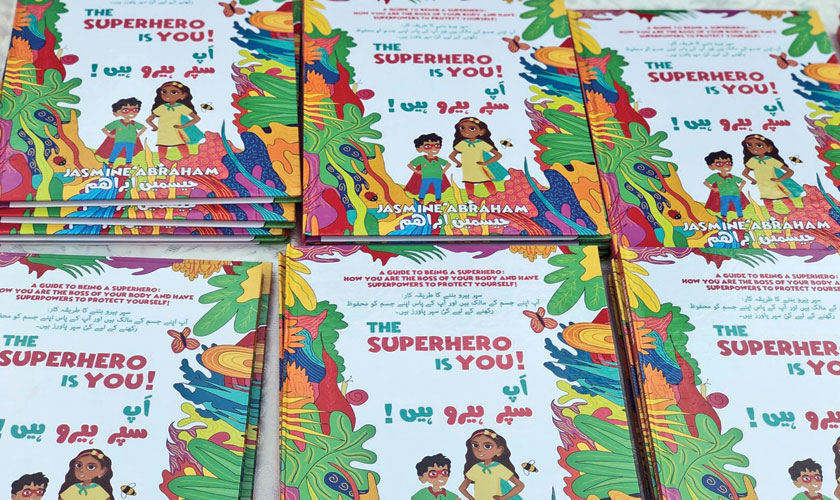
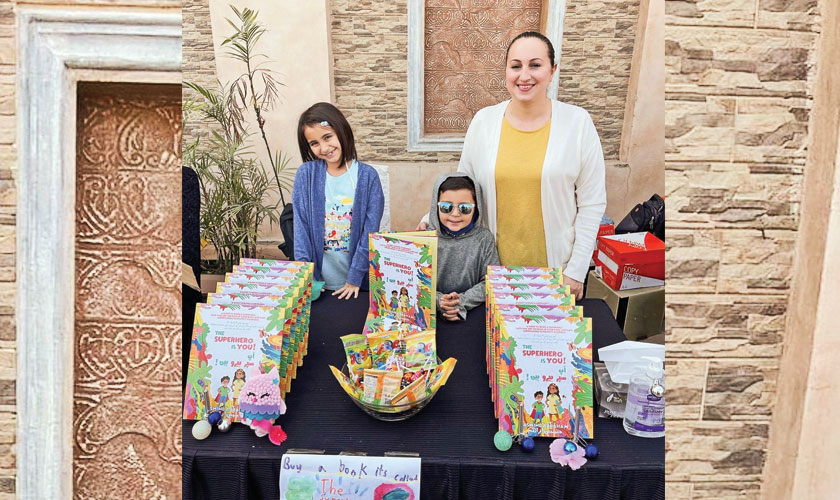
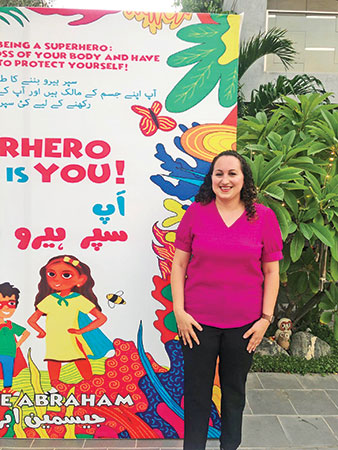
Jasmine Abraham has been working in the education and social development sectors in diverse capacities for several years. She holds a BA degree in Political Science and a MSEd in Literacy and Language Education from Purdue University (USA). Abraham is a writer and has recently authored ‘The Superhero is You!’ a bilingual children’s book on body safety. “I was born and raised in the United States and my family is from Lebanon. However, I have lived in Pakistan for many years now and I have a decent grasp of Urdu language. From the get-go, I decided that the book must be bilingual with the goal of reaching a wider audience with the contents of this book since it is such a critical topic for everyone, across all linguistic and socioeconomic backgrounds,” shares Jasmine. This week You! talks to the author about the book and the work that inspired this journey…
What inspired you to write ‘The Superhero is You’ and who’s the target audience?
I recall that in one particular week, I read about a few horrific cases of child sexual abuse in the news that made me quite emotional. It is so painful to imagine what countless children go through daily in Pakistan and across the world. We cannot as a society become so desensitised to such atrocities. I thought about how we lack preventative measures in Pakistan and that when cases do unfortunately come up, we do not address them properly. I wanted to create a tool which is engaging and informative for children to learn about all things body safety. At the same time, for adults (parents, caregivers and educators) to know the facts and realities of how important it is for us to play an active role in preventing future cases of child sexual abuse. The book caters to a wide audience ranging from age 3-10 and it has a separate section serving as a guide to adults as well.
Tell us more about the book and the idea behind it?
“The Superhero is You” is broken down into 10 ‘Superhero Rules’ that children can understand and follow to protect themselves. We need to empower children to have a voice, a choice and understand how they can play an active role in ensuring they are comfortable within their own skin. Moreover, the book discusses issues such as a safe vs. unsafe touch, having a safety circle, surprises vs. secrets, private parts, consent and much more. It also includes a section for adults on the warning signs to look out for if a child may have been sexually abused.
How long did it take you to write the book?
From the time that I started writing the book to the time that the book was published, it was almost exactly one year. Ironically, I found that the process of illustrating and editing the book took longer than the process of researching and writing the content.
How has the response been so far?
I am very pleasantly surprised by the extremely positive response that the book has received so far. Adults are finding it to be useful and appropriate guides to help them talk to children about body safety and to better understand relevant facts around this topic.
How can parents help their children understand good and bad touch better?
Currently, the terminology is shifting from using the terms ‘good’ touch and ‘bad’ touch to ‘safe’ touch and ‘unsafe’ touch. It is important to differentiate between them because a specific touch or physical interaction may be good/safe with one person, but it could be considered bad/unsafe with a different person. Also, calling something ‘bad’ will associate shame and guilt with that type of touch or physical interaction if and when it does happen.
A safe touch is a type of touch which is commonly with someone within one’s safety circle. The concept of a safety circle is also discussed in the book. A child should know and have 3-5 adults that they trust to talk to about anything. It should be people who they feel comfortable with and who will support and believe them if anything happens.
How can a parent recognise if their child is being victimised?
There are some warning signs that parents should be aware of and look out for in case a child has been sexually abused or violated. Some warning signs include (not an exhaustive list): if a child shows hesitation while changing clothes or removing clothes for bathing; if there are unexplained physical marks on certain parts of the body; if a child develops new fears of particular places or people; becoming more clingy (more common with younger children); becoming more distant/withdrawn (more common with older children); sudden changes in personality: anger, rage, depression, anxiety and insecurity; pain during urination or bowel movement; acting out in inappropriate or provocative ways.
Are there any resources in Pakistan a sexually abused child, or parent of the child, can use?
Yes, I have included a section in my book on resources available working in the area of child protection. Thankfully, there are several organisations and resources available in Pakistan which are providing email, phone and in-person psychological and legal support for victims and their families through helplines. For example, Sahil, Rozan and the Ministry of Human Rights (1099) have direct helplines.
How can schools help?
Schools can play a very positive and active role in helping to prevent child sexual abuse. In this day and age, we cannot view schooling and education as simply the traditional academic subjects, but see topics such as understanding body safety as a form of education as well. These matters are more commonly taught within school in other parts of the world. With Pakistan being a more conservative society, it is something we shy away from here.
However, there have been initiatives such as the Life-Skills Based Education (LSBE) which has been implemented and adopted by numerous schools in Sindh and beyond. This shows us that there is hope and room for growth and change. I believe we still have a way to go for this to be more widely understood and accepted, especially with regards to getting parents to be more open about having their children learn about body safety at school as well as at home.
Why do you write?
I have always enjoyed writing. I find that writing is a meaningful and therapeutic way to express myself and share my thoughts, feelings and experiences in hopes that some people may find it relatable, comforting or informative in some way.
Do you agree that writing is a strong tool to change mindsets?
Absolutely. The written word is a very powerful way to share information and experiences with the world. In many ways, the written word shapes our understanding of history, current events, and social issues and plays a significant role in our overall lives.
What is it like publishing a book in Pakistan?
Publishing in Pakistan is not easy for many reasons. There are limited publishing houses available to begin with, the industry is not as professional and streamlined as it is in other countries and some publishers still shy away from publishing or being associated with controversial content. However, I feel there is a great deal of potential in Pakistan and several new publishing houses have come about to fill the gaps in the industry.
Do you think that in twenty years, people will still gravitate towards print or ebooks will dominate?
That is an interesting question and to be honest, I am a bit ‘old school’ when it comes to technology. I have always preferred traditional methods such as writing by hand over typing, hard copies of books and articles over electronic versions and so on. While I do believe technology has been very beneficial in many ways, I do feel nostalgic about the simplicity and way things were when I was growing up in relation to the way my children are now growing up.
What’s next on your agenda?
My work around the cause of preventing child sexual abuse is not nearly over. I am currently working on getting the book integrated into the curriculum of various schools across Pakistan so that this topic becomes mainstream. I have also wanted to write more about my experience with being in an intercultural relationship and living as an indefinite expat for a more mature audience.