The International Day of Rural Women, observed each year on 15th October, serves as a reminder of the critical link between gender equality, women’s empowerment and the fight against poverty, hunger and malnutrition. You! takes a look…
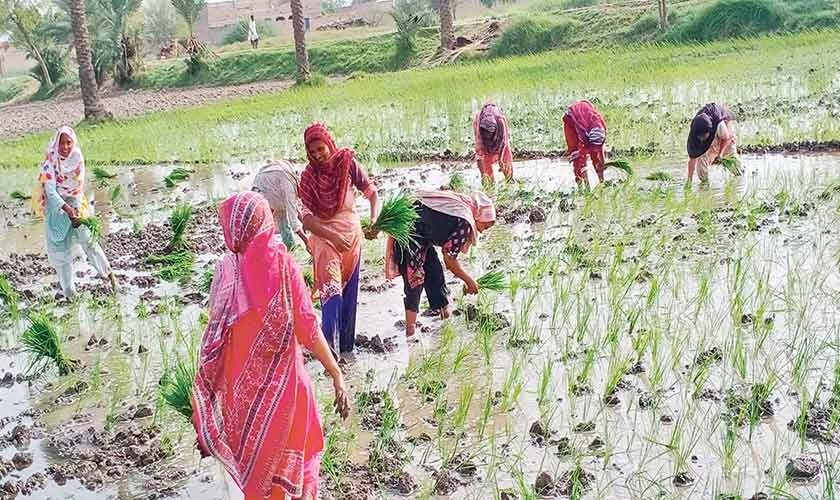
Rural women make up a significant portion of Pakistan’s population. Approximately 64 million women, more than half of the country’s total female population, live in rural areas. Data from June 2025 highlights deep disparities, showing that these women face barriers to education, economic opportunities and decision-making power. In rural settings, these challenges are further compounded by limited access to digital tools, low labour force participation (especially in agriculture) and persistent gender inequality - all of which directly impact national progress and GDP potential.
Over the years, several initiatives have been introduced to address these issues by improving access to finance, mobile technology and agricultural resources for rural women. Thankfully, their contributions are gaining recognition. The first International Day of Rural Women was observed on 15 October 2008. It was established by the United Nations General Assembly through a resolution passed on 18 December 2007. This day recognises the critical role and contributions of rural women, including indigenous women, in enhancing agricultural and rural development, improving food security and eradicating rural poverty.
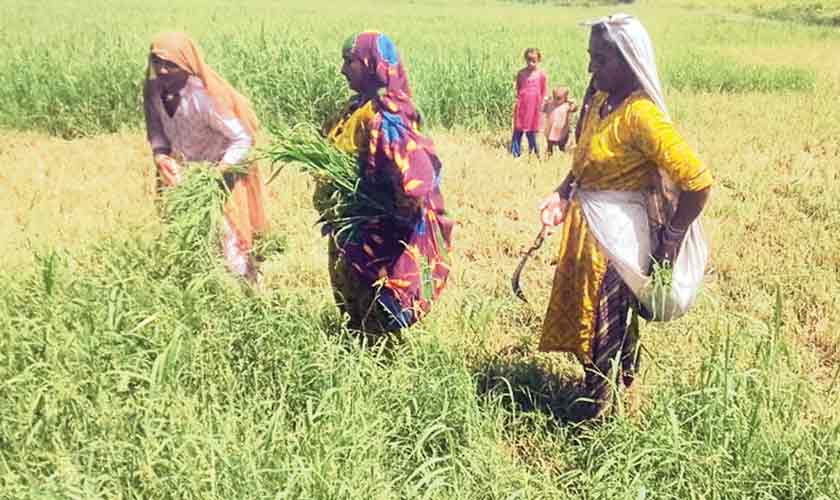
Rural women are the backbone of agriculture and rural economies. They are responsible for a significant share of the world’s food production and unpaid care work. Yet in Pakistan, many of these women, despite growing and cultivating food, do not have enough to feed their own families. They are often deprived of access to quality healthcare and good education for their children.
Across Pakistan, a staggering 90 per cent of rural women toil as agricultural labourers, struggling each day just to survive. Their work is undervalued and underpaid; women earn less than half of what men receive and agricultural labour remains outside the scope of minimum wage laws.
From dawn to dusk, they labour for 10 to 12 hours in the fields, often earning no more than 250 to 300 rupees a day. Even this meagre income is uncertain, with wages frequently delayed or withheld, plunging families into deeper stress and vulnerability.
Sindh took a progressive step by passing the Women Agriculture Rights Act, which seeks to safeguard the rights of women agricultural workers and address long-standing inequalities in the sector. However, despite this progress, implementation remains a challenge and many women still struggle to access the rights promised to them under the law. There is no social security, no old-age pension and no safety net - leaving them to navigate a cycle of exploitation and poverty entirely on their own.
The International Day of Rural Women serves as a reminder of the critical link between gender equality, women’s empowerment and the fight against poverty, hunger and malnutrition.
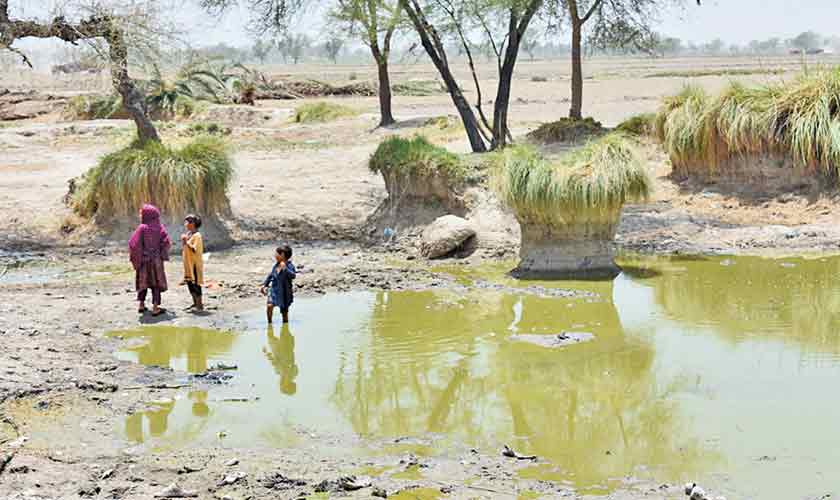
Rural women are also on the frontline of climate change. Year after year, floods and heavy rains wash away ready-to-harvest crops and fertile lands, leaving families empty-handed. Under the scorching sun, women engage in backbreaking labour, battling extreme weather conditions with no policies or strategies to protect them. This is not a struggle limited to villages alone - women in deserts, mountains and remote coastal communities face similar hardships. Climate change has left its mark on every corner and rural women are among its first and most vulnerable victims.
This year’s devastating floods have once again exposed the fragility of rural livelihoods in Pakistan. In Punjab alone, nearly 1.8 million acres of farmland have been swallowed by floodwaters, submerging entire villages and wiping out livelihoods. According to recent reports, over 220,000 hectares of rice fields have been destroyed, with cotton and maize crops suffering losses of up to 60 per cent, while vegetable growers in some districts faced an almost 90 per cent wipe out of their produce. The disaster in Sindh and Khyber Pakhtunkhwa, where flash floods and landslides displaced millions, has left families homeless and food-insecure. The economic toll is staggering, with damages estimated in the trillions of rupees (Reuters, September 2025). Stagnant floodwater surrounding villages has become a breeding ground for disease, further threatening the health and lives of vulnerable communities.
I once ran a campaign to raise awareness about food wastage - a deeply overlooked issue. Food wastage is not just about throwing away leftovers; it is a direct insult to the women who toil endlessly in the fields. We see the painful contrast at weddings and large events, where food is wasted in abundance while those who grow it struggle to feed their families.
Food loss and waste undermine the sustainability of our food systems. When food is wasted, all the resources used to produce it - water, land, energy, labour and capital - are wasted as well. Furthermore, discarded food in landfills releases greenhouse gases, worsening climate change. It also disrupts food security, increases costs and deepens hunger.
Stories of resilience
Behind these statistics are the real women whose lives reflect resilience and determination.
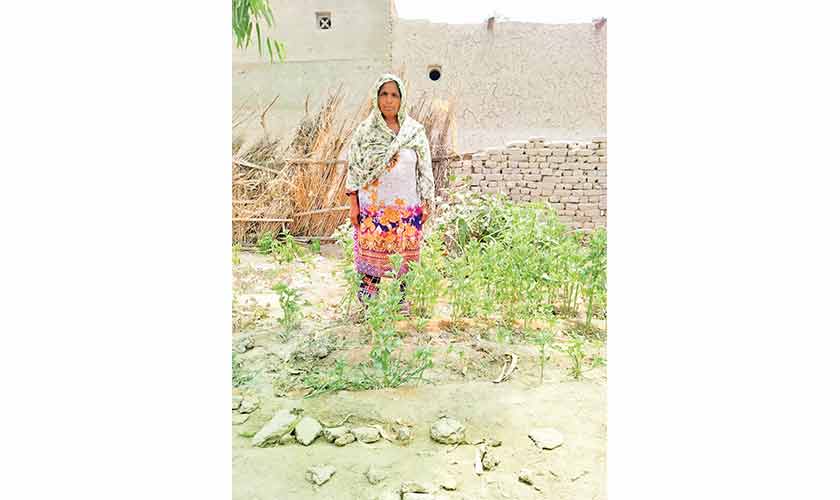
This is the story of Noor Bano, from Lohi village, Union Council Lohi, Tehsil Khangar. Noor is an elderly widow with four daughters and a young son. After her husband’s death, she was left with no land and no source of income.
Inside her modest home, Noor had a small patch of land which she turned into a tiny vegetable farm to sustain her family. But access to water was a constant struggle. Each day, she walked five kilometers to fetch water, carrying heavy containers on her shoulders. This exhausting routine became her daily reality - a burden made heavier by her age and responsibilities.
The Village Development Organization (VDO) recognised her hardship and extended a helping hand. With their support, a hand pump was installed at her home. This simple intervention transformed Noor’s life. Now, she has easy access to water for her farm, can grow more vegetables and provide better food for her family. This has not only improved her household’s livelihood but has also uplifted her socio-economic status - giving her hope and dignity.
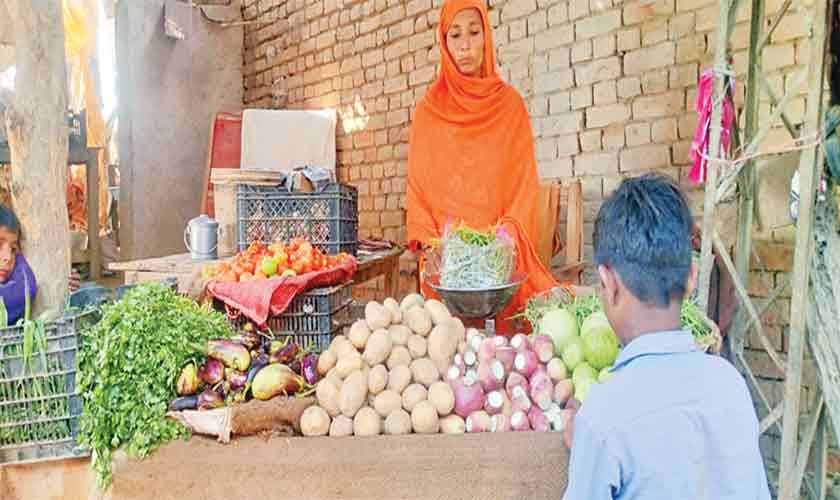
Ambal, also from Lohi village, lives in a community where most families don’t own even a small piece of land. The women here struggle every day, working as labourers or running tiny businesses - just to keep food on the table.
Ambal’s story is one of quiet strength. Outside her home, she has set up a small vegetable shop. It may look simple to others, but for her, it is a lifeline. Through this little shop, she earns just enough to feed her family and send her daughters to school - something she never had the chance to do herself.
Each morning, she goes to local markets and nearby towns to bring back fresh vegetables. With every basket she carries, she carries hope too - hope that her daughters will grow up with choices she never had. This modest shop has become more than a source of income; it is a symbol of her determination to break the cycle of poverty and give her children a better tomorrow.
Uplifting marginalised communities
Ali Hassan Mehar, the CEO of the Village Development Organization (VDO), shares that their work revolves around uplifting marginalised communities, with a special focus on rural women. At the heart of their mission lies women’s empowerment - creating pathways through education, healthcare, livelihoods and practical solutions to the everyday challenges these women face.
VDO’s efforts extend to ensuring access to clean drinking water, essential services and better opportunities in health, education and employment. Their programmes are diverse and holistic, ranging from skill development and training to the promotion of smart agriculture, livestock management, disease prevention, land preparation, kitchen gardening and tree plantation initiatives.
Recognising the deep-rooted issue of malnutrition, VDO also works with women, children and the elderly to improve food availability and nutrition. Each year, they commemorate International Women’s Day and the International Day of Rural Women, organising events to raise awareness and educate women about their rights, resources and opportunities for growth.
One of their most remarkable initiatives is the facilitation of interest-free loans in collaboration with Bank Alfalah. Through this partnership, loans worth 80 million rupees have been provided to 78 rural women, enabling them to purchase cows and buffaloes. These women are now empowered to generate sustainable incomes by selling milk, butter and other dairy products. Alongside this financial support, they receive training to identify seasonal livestock diseases, ensuring the health of their animals and the stability of their livelihoods.
VDO’s People’s Action for Climate Resilience (PACR) programme focuses on engaging rural youth. In collaboration with government departments such as agriculture, livestock, forestry and environment, the organisation has trained 185 young individuals in modern farming techniques, kitchen gardening, forest conservation and climate-smart practices.
Their commitment to climate action is visible in the thousands of trees planted in partnership with local communities, promoting forest conservation as a shield against climate change. A milestone achievement has been the establishment of a Climate Resilience Information Centre in collaboration with Faisalabad University. This centre serves as a hub for grassroots knowledge-sharing, empowering communities to directly address the climate challenges threatening their lives and livelihoods.
Pathways to empowerment
Imagine a future where women celebrities, successful entrepreneurs and business leaders come forward to adopt villages - nurturing them without harming biodiversity or natural resources. These adopters could provide healthcare facilities and introduce modern, sustainable techniques for farming and crop production.
A real-world example can be seen in villages across Nepal and Bhutan, where communities have built model eco-villages. These villages focus on sustainable development using low-cost renewable technologies, capacity building and climate change adaptation - all planned and carried out with the active involvement of local people.
In these villages, women play a central role. They are trained in kitchen gardening, clean energy use and sustainable farming techniques, helping them grow food for their families while protecting the environment. This approach not only improves livelihoods but also strengthens communities to face the growing challenges of climate change.
As we mark this year’s International Day of Rural Women, let us remember that these women are not just farmers, labourers or caretakers - they are the backbone of our economy. Their resilience in the face of poverty, climate disasters and systemic neglect is a testament to their strength and spirit. It is our collective responsibility as individuals, organisations and policymakers to stand beside them - to create spaces where their voices are heard, their work is valued, and their rights are protected.
By investing in rural women through education, healthcare, climate-smart farming and sustainable livelihoods, we are not only uplifting families and villages but also shaping a stronger, more inclusive future for our nation.
The writer has over 20 years of experience as a development professional. She writes on climate change, education and social issues. She can be reached at quratmudasar@gmail.com