Pakistan is largely dependent on its agriculture sector, which is heavily influenced by weather and water availability. As climate change intensifies, farmers across the country are finding it more difficult to plan and harvest their crops.
CLIMATE CHANGE
Pakistan is largely dependent on its agriculture sector, which is heavily influenced by weather and water availability. As climate change intensifies, farmers across the country are finding it more difficult to plan and harvest their crops.
The unpredictability of rainfall, combined with the rising temperatures, is reducing crop yields and creating more food insecurity. In areas like Sindh and Balochistan, where water resources are already limited, the effects are even more worrisome. These changes also have a strong impact on poor and rural communities, who have fewer resources to adapt.
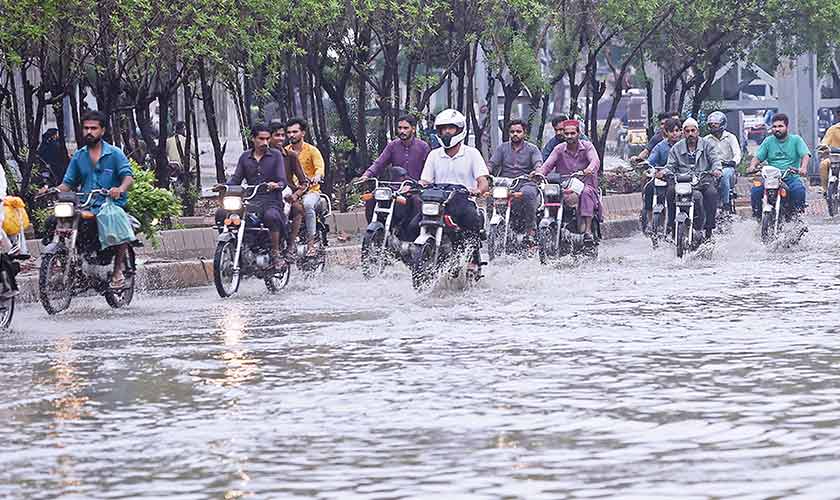
The 2022 floods were one of the worst in the country’s history, affecting over 33 million people. The damage was not limited to rural areas; urban flooding in major cities like Karachi and Lahore has also become a common sight, damaging infrastructure and causing serious disruption to daily life.
Despite contributing less than one per cent to global greenhouse gas emissions, Pakistan is paying a high price for climate change. This has led to increasing awareness at both the government and community levels. The government of Pakistan has taken several measures to tackle the crisis, though much more remains to be done.
The government has also introduced national policies and frameworks to address climate change. The National Climate Change Policy and the Framework for Implementation aim at building resilience by promoting renewable energy, water conservation, disaster preparedness and better land use planning. The Ministry of Climate Change works closely with the provincial governments, local authorities, and international partners to monitor environmental risks and implement adaptation strategies.
Pakistan is also a signatory to the Paris Agreement. To achieve this, the government is encouraging investment in solar, wind and hydropower projects. Several large-scale renewable energy projects have already started, particularly in Sindh and Punjab, where solar and wind farms are helping reduce dependence on fossil fuels. These efforts not only help the environment but also create jobs and boost local economies.
International cooperation is another part of Pakistan’s climate strategy. The country is working with the UN, World Bank, Asian Development Bank and other global institutions to secure funding and technical support for climate projects. One such initiative is the Green Climate Fund, from which Pakistan has received financial assistance to support climate resilience in vulnerable regions. The Pakistan Climate Change Council, which includes government officials, experts, and civil society members, plays a major role in advising on climate policies and monitoring progress.
The private sector and non-governmental organisations are also contributing to climate action. Various companies are investing in green technology, sustainable agriculture and energy-efficient solutions. Some banks such as the State Bank of Pakistan, Habib Bank Limited, National Bank of Pakistan, Bank Alfalah Limited, Allied Bank Limited and MCB are offering green loans and incentives for businesses that adopt eco-friendly practices. The corporate sector is increasingly aware of its role in reducing environmental impact and many organisations are now adopting sustainability goals in their operations.
Multinational corporations operating in Pakistan, such as Nestle, Unilever and Engro, have launched several green initiatives. These include reducing plastic use, recycling waste, cutting emissions in their supply chains, and supporting small farmers to adopt climate-smart practices. The role of the media, educational institutions and youth-led movements is also growing in creating awareness about climate change. Climate education is becoming part of school curricula, and many universities are offering research opportunities and courses focused on environmental science and sustainability. Civil society groups are working on the ground to help communities prepare for climate risks.
However, there are still many challenges. Funding remains a major issue, as the country needs billions of dollars to deal with the impacts of climate change. Much of this depends on international support, but there are delays and limitations in accessing global climate finance. Coordination among government departments is often weak and there is a need for stronger implementation and enforcement of environmental laws. Corruption, mismanagement, and the lack of public participation also slow progress.
Urban planning is another area that needs attention. Rapid and unplanned urbanisation has led to concrete jungles, disappearing green spaces and poor drainage systems. Cities like Karachi, Lahore and Islamabad are struggling with heatwaves, pollution and water shortages. To build climate-resilient cities, Pakistan needs better infrastructure, greener public transport and stricter construction regulations that take climate change into account.
Water scarcity is emerging as one of the most urgent climate-related threats. Pakistan’s water availability per person has dropped sharply, putting pressure on agriculture, industry, and daily household needs. Melting glaciers in the north, which feed the country’s rivers, are a warning sign of a future water crisis. The construction of dams and better water management systems is essential but must be done in a way that respects ecological balance and local communities.
Pakistan's youth have shown great promise in leading climate action. Many young people are becoming climate activists, researchers, entrepreneurs and educators. Initiatives like climate marches, tree plantation drives, eco-innovation contests and awareness campaigns are encouraging wider public involvement. Social media has become a powerful tool to spread information, mobilise support and demand accountability from decision-makers.
The role of religion and culture should not be ignored in shaping environmental attitudes. Pakistan’s Islamic scholars and religious leaders are increasingly joining the conversation, promoting environmental stewardship as a moral duty. Messages from mosques and community leaders can play a powerful role in changing behaviour, from waste management to water conservation.
Ultimately, climate change is no longer a distant threat for Pakistan; it is a daily reality. While the government, private sector, and civil society are all making efforts to respond, the scale of the challenge requires greater urgency, unity, and action. Pakistan needs to strengthen its institutions, improve climate education, invest in green infrastructure and ensure that the most vulnerable communities are protected and supported.
International cooperation and funding are necessary, but so is national commitment and leadership.
The writer is a seasoned journalist and a communications professional. He can be reached at: tariqkik@gmail.com