In an exclusive interview, Mumtaz talks about her life and passion for providing education to under-privileged children of Mubarak Village and much more. Read on...
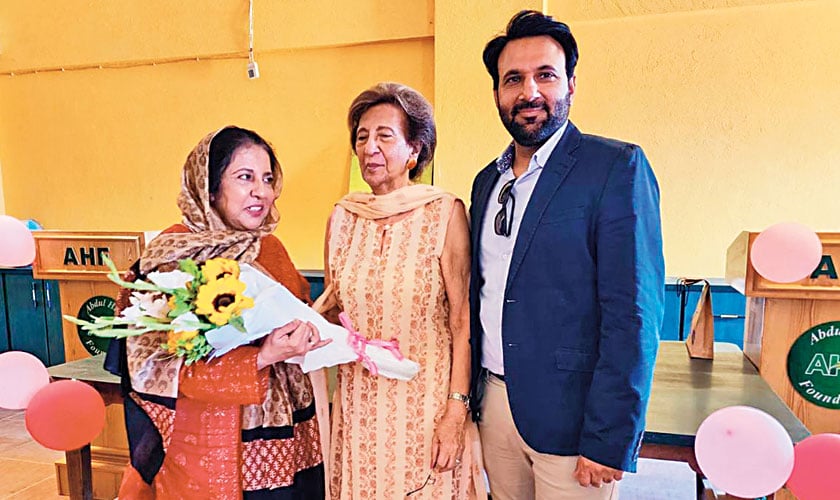
woman @ work
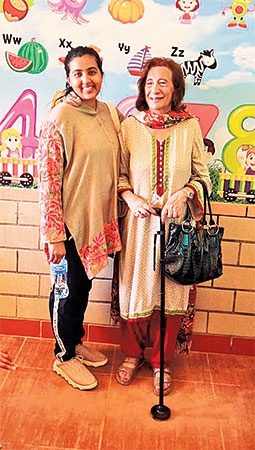
Mumtaz Maker is an entrepreneur, educationist and philanthropist. She was born and brought up in Nairobi, Kenya. She went for higher studies to England where she earned a Bachelor’s degree in Geography and Economics. She moved to Pakistan after she got married to Hameed Maker and taught at Karachi Grammar school for several years. Mumtaz started her own business in the early ’70s by exporting pharmaceuticals with the support of her family and contacts in Kenya. Royal Group, her company, grew rapidly and is now one of the leading pharmaceutical companies in Pakistan.
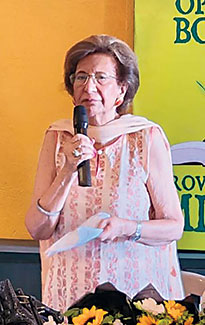
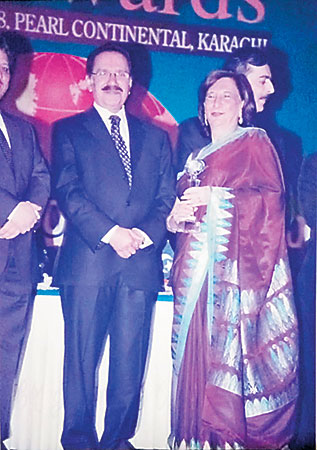
Mumtaz has been actively involved in a number of social work. She is associated with The Hunar Foundation (THF) as a Representative for Friends of Hunar (FOH). FOH is a group within THF that collaborates with the organisation to support its mission of empowering marginalised youth through vocational and technical skills.
Mumtaz is also a member of Board of Directors of Abdul Hai Foundation, Mubarak Village. In an exclusive interview, Mumtaz talks about her life and passion for providing education to under-privileged children of Mubarak Village and much more. Read on...
You! What’s the best memory of your early days when you moved to Pakistan after tying the knot?
Mumtaz Maker: One of my best memories is how warm and welcoming my husband’s family was. They accepted me graciously. Another favourite memory is discovering Karachi as a lively city and a hub of social mingling.
You! Was settling down a smooth transition?
MM: No, it wasn’t that easy. Since I spoke only English and Gujarati and couldn’t understand Urdu, I often felt left out in conversations. But slowly and gradually, I picked up the language. Also, I was used to eating mildly spiced, semi-European food, so when I came to Pakistan, it was quite a task adjusting to spicy food loaded with chillies. Even now, I prefer meals with minimal spices.
You! What did you like most about the ’70s; was the era progressive for women?
MM: I believe it was the best era for Pakistan. There was peace, businesses were thriving, and women had found their freedom, making the most of it both in terms of education and social life.
You! Can you shed light on the Abdul Hai Foundation?
MM: Founded by Abdul Hai and registered in 2016, our organisation draws inspiration from the legacy of Abdul Sattar Edhi. Initially dedicated to environmental and community services, our focus gradually shifted towards education. In 2019, we acquired land for Mubarak Village School and initiated its refurbishment, laying the groundwork for our educational mission.
In 2023, after completing the refurbishment, we officially opened Mubarak Village School, marking the start of our first academic year.
You! How is the Mubarak Village School progressing?
MM: Today, Mubarak Village School serves over 400 students across 17 classrooms, with a dedicated team of approximately 20 teachers. We offer comprehensive education from kindergarten through matriculation, complemented by sports activities, inter-school competitions, and medical camps, including eye check-ups. Nestled in a green environment, our school reflects our vision of providing a nurturing and holistic learning space.
Looking forward, we are expanding our efforts at this location to introduce vocational training programs and skill development initiatives, furthering our commitment to empowering underprivileged communities through education and practical skills.
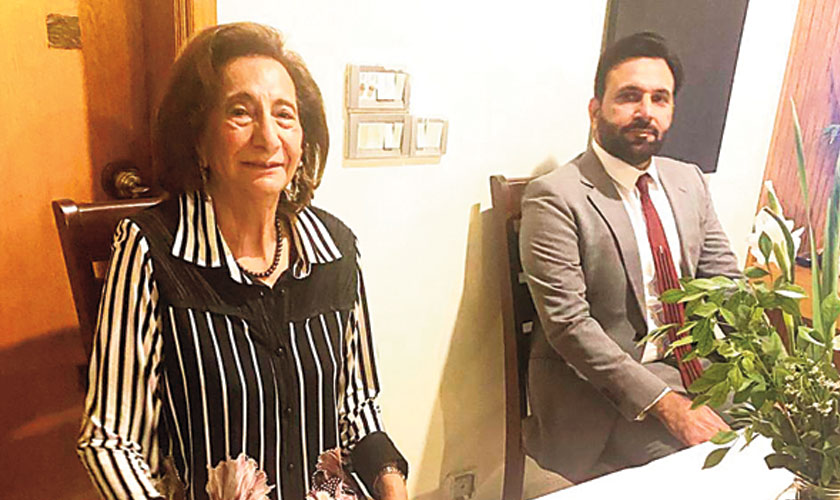
You! What is your role in Friends of Hunar (FOH)?
MM: I am an executive member of Friends of Hunar. We raise funds by organising various fundraisers, and the income generated is used to pay college fees for bright students who cannot afford their tuition.
You! What is the biggest challenge women are facing all over the world today?
MM: Misogyny.
You! What is your most treasured possession?
MM: My resilience. I am a tough cookie to crack.
You! What is the biggest relationship lesson you have learnt so far?
MM: Be kind with people but don’t go overboard. People may take advantage of your kindness.
You! What did you like to read when you were a little girl?
MM: I loved reading books by Enid Blyton and Agatha Christie. I was also a regular subscriber to Reader’s Digest. Recently, I donated my whole collection of Reader’s Digest to a library.
You! What’s the secret of a happy, healthy life?
MM: Keep stress at bay.
You! What advice do you want to give to women of your age?
MM: Age is just a number. Don’t feel redundant. Don’t stop living. Keep walking and try to do simple exercises as part of your daily routine. Dress well and look good. Even at this age, I go out, socialise, and entertain guests.
You! Any regrets in life?
MM: My fragile health does not allow me to travel anymore.
You! How do you unwind?
MM: Now that I am retired, I have a lot of leisure time. I enjoy watching old English movies of Cary Grant, Elizabeth Taylor, and Audrey Hepburn. Also, I love playing cards and helping my gardener in my leisure time.
You! What does a typical day look like for you?
MM: Life is at a slow pace for me. My mornings are usually calm. After having breakfast, my physiotherapist comes and helps me do some exercises. In the afternoons, I attend meetings regarding my social welfare work. Evenings are usually spent socialising or inviting guests over.
You! What’s next on your agenda?
MM: I just want Mubarak Village School to succeed. However, we are in constant need of donations for the successful running of the school.
You! Any life advice or tip you would like to share with our readers?
MM: If God has given you money, don’t hoard it. Spend it. Spend on yourself and spend on those who need it. Help others. You leave this world empty-handed, so better to make good use of your money.
You! What keeps you going at 84?
MM: My willpower!